THE United Nations on Tuesday (6) expressed its shock over the death of Stan Swamy, an 84-year-old priest-activist in judicial custody on Monday (5) saying it was “disturbed by the death”. In a statement, the UN High Commissioner for Human Rights said, “No one should be detained for exercising their rights to freedom of expression, of peaceful assembly and of association.”
India saw a huge uproar on Monday over the death of the veteran activist who was arrested in October last year under the anti-terror Unlawful Activities (Prevention) Act in connection with the Bhima Koregaon case of 2018. The health of the Jesuit priest deteriorated while he was in Mumbai’s Taloja Central Jail. He made repeated applications for bail on medical grounds but they were rejected. The ailing man died on Monday as the Bombay High Court was considering an appeal against the rejection of his bail petition. Even the court expressed shock to hear the news of Swamy’s demise.
ALSO READ: India liberals mourn activist Stan Swamy death: ‘Murder by the State’
Stan Swamy, 84-year-old activist arrested under anti-terror law, dies in custody
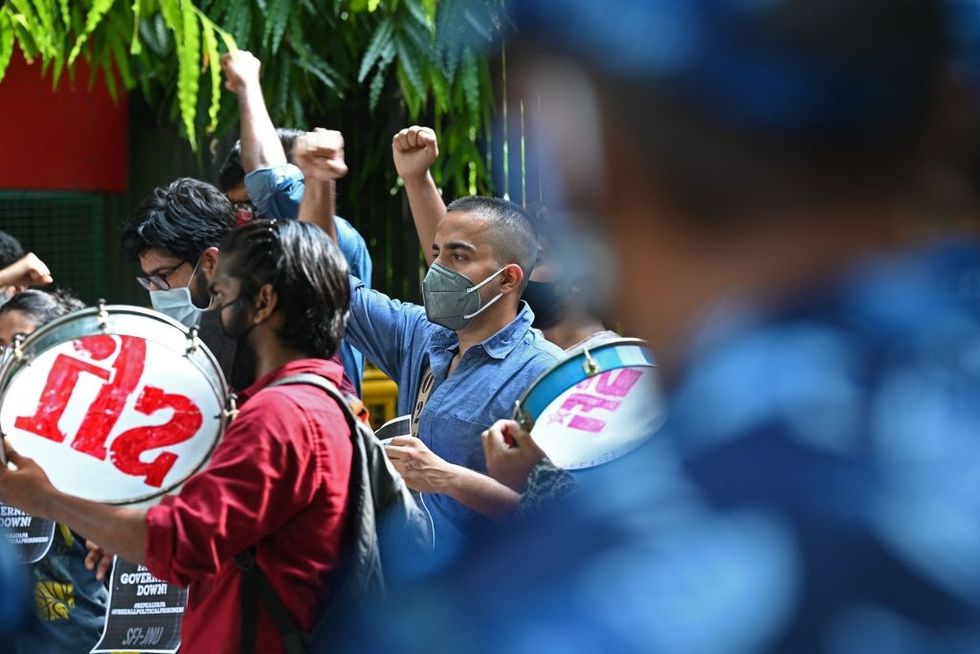 Students take part in a demonstration in New Delhi on July 6, 2021, after the Indian rights activist and Jesuit priest activist Stan Swamy died. (Photo by SAJJAD HUSSAIN/AFP via Getty Images)
“With COVID-19, it is even more urgent that States release every person detained without sufficient legal basis,” the global body said.
Swamy had in the past alleged medical negligence inside the jail and particularly in times of the coronavirus pandemic. He suffered from Parkinson’s disease and even contracted the virus.
Stan Swamy was detained under ‘due process of law’: India government
Mary Lawlor, UN special rapporteur for human rights defenders, said on Twitter on Monday, “The news from India today is devastating Human Rights Defender & Jesuit priest Fr Stan Swamy has died in custody, nine months after his arrest on false charges of terrorism.”
“Jailing HRDs is inexcusable,” she added, referring to human rights defenders.
Swamy was the oldest of a dozen people who have been accused of violence in 2018.