THE US House of Representatives has passed by voice vote a legislative amendment that approves waiver to India against the punitive CAATSA sanctions for its purchase of the S-400 missile defence system from Russia to help deter aggressors like China.
The legislative amendment was passed on Thursday as part of an en bloc (all together as a single unit) amendment during floor consideration of the National Defence Authorisation Act (NDAA).
CAATSA authorises US to penalise countries that buy major military hardware from Russia
Authored and introduced by Indian-American Congressman Ro Khanna, the amendment urges the Biden administration to use its authority to provide India with a Countering America's Adversaries Through Sanctions Act (CAATSA) waiver to help deter aggressors like China. CAATSA is a tough US law that authorises the US administration to impose sanctions on countries that purchase major defence hardware from Russia in response to Russia's annexation of Crimea in 2014 and its alleged meddling in the 2016 US presidential elections.
"The United States must stand with India in the face of escalating aggression from China. As Vice Chair of the India Caucus, I have been working to strengthen the partnership between our countries and ensure that India can defend itself along the Indian Chinese border," said Khanna, the US representative from California's 17th congressional district. "This amendment is of the utmost importance, and I am proud to see it pass the House on a bipartisan basis," he said.
The law was brought in 2017 and provides for punitive actions by the US government against any country engaged in transactions with the Russian defence and intelligence sectors. In October 2018, India signed a USD 5 billion deal with Russia to buy five units of the S-400 air defence missile systems, despite a warning from the then-Trump administration that going ahead with the contract may invite US sanctions.
The S-400 is known as Russia's most advanced long-range surface-to-air missile defence system.The US has already imposed sanctions on Turkey under the CAATSA for the purchase of a batch of S-400 missile defence systems from Russia. Following the US sanctions on Turkey over the procurement of S-400 missile systems, there were apprehensions that Washington may impose similar punitive measures on India. The US has not yet made any decision on potential sanctions or waivers to India under CATSAA law for its purchase of the S-400 missile defence system from Russia, Secretary of State Antony Blinken said in April.
India's ministry of external affairs has said that the country was pursuing an independent foreign policy and its defence acquisitions are guided by its national security interests. In his remarks on the House floor, Khanna said there is no relationship of greater significance to US strategic interests than the US-India partnership.
"My bipartisan NDAA amendment marks the most significant piece of legislation for US-India relations out of Congress since the US-India nuclear deal," Khanna, a Democrat, said.
The legislation says that the United States-India Initiative on Critical and Emerging Technologies (ICET) is a welcome and essential step to developing closer partnerships between governments, academia, and industry in the two countries to address the latest advances in artificial intelligence, quantum computing, biotechnology, aerospace, and semiconductor manufacturing.
Such collaborations between engineers and computer scientists are vital to help ensure that the United States and India, as well as other democracies around the world, foster innovation and facilitate technological advances which continue to far outpace Russian and Chinese technology, it said.



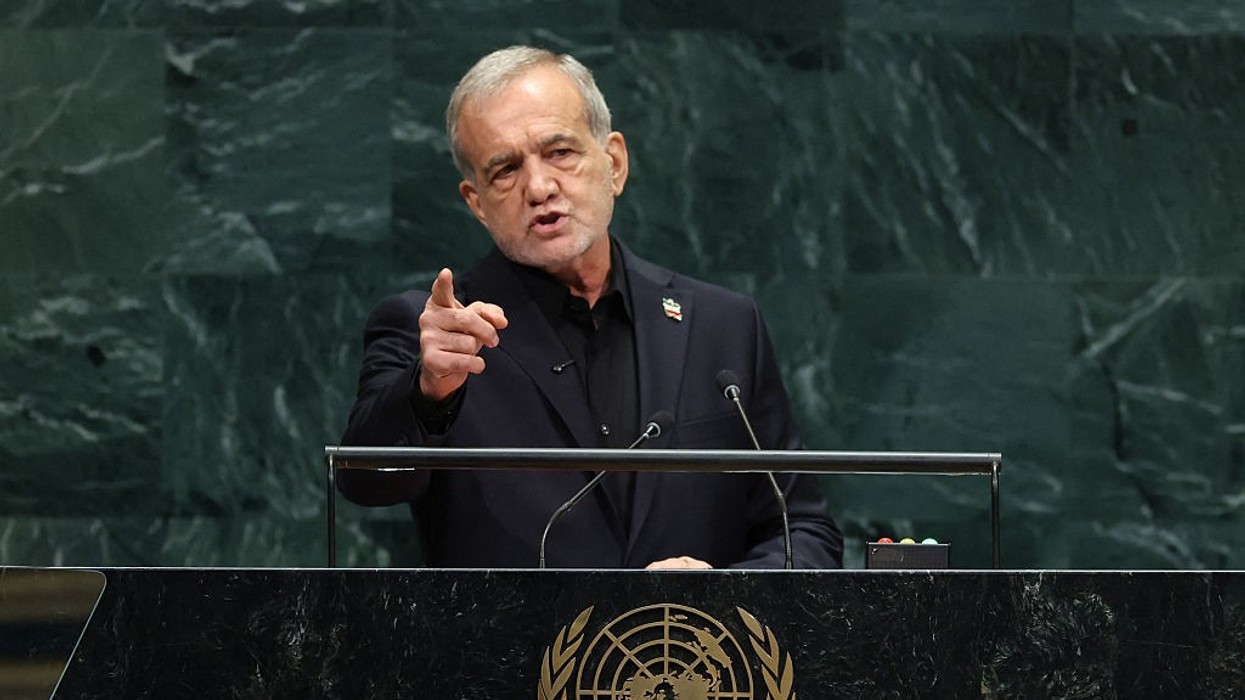
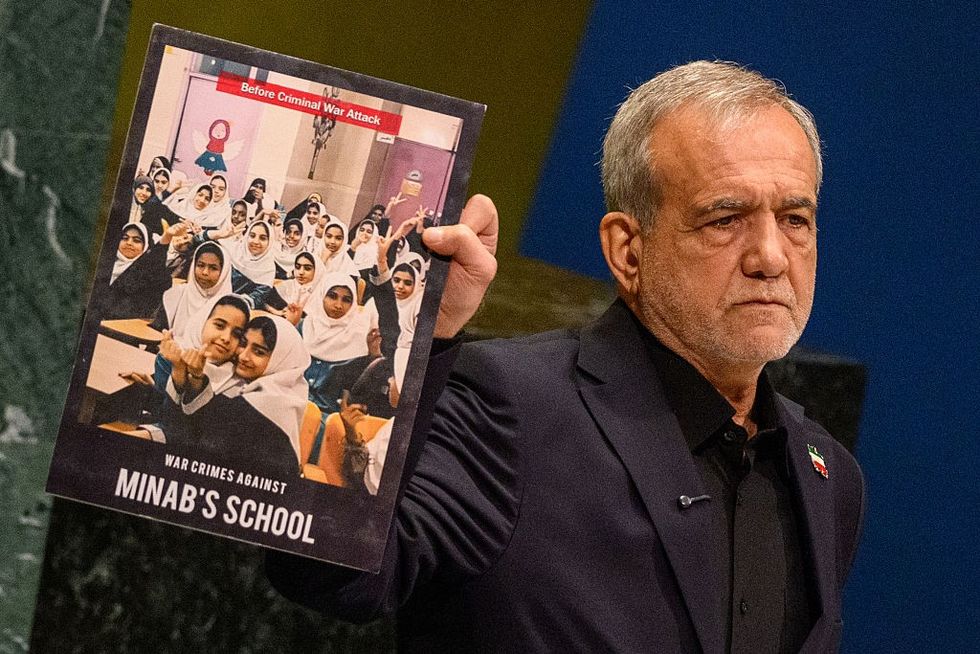 President of Iran Masoud Pezeshkian holds up a poster of a girl's school that was attacked while addressing the 81st session of the United Nations (U.N.) General Assembly at U.N. Headquarters on September 23, 2026 in New York City. World leaders have gathered in New York for the annual session of the United Nations General Assembly, with this year's global issues ranging from the threat of artificial intelligence to the continued wars in Ukraine and Gaza. Getty Images