Highlights:
For most footballers, the journey to the World Cup starts with scouts, youth academies, and national team coaches tracking their progress for years.
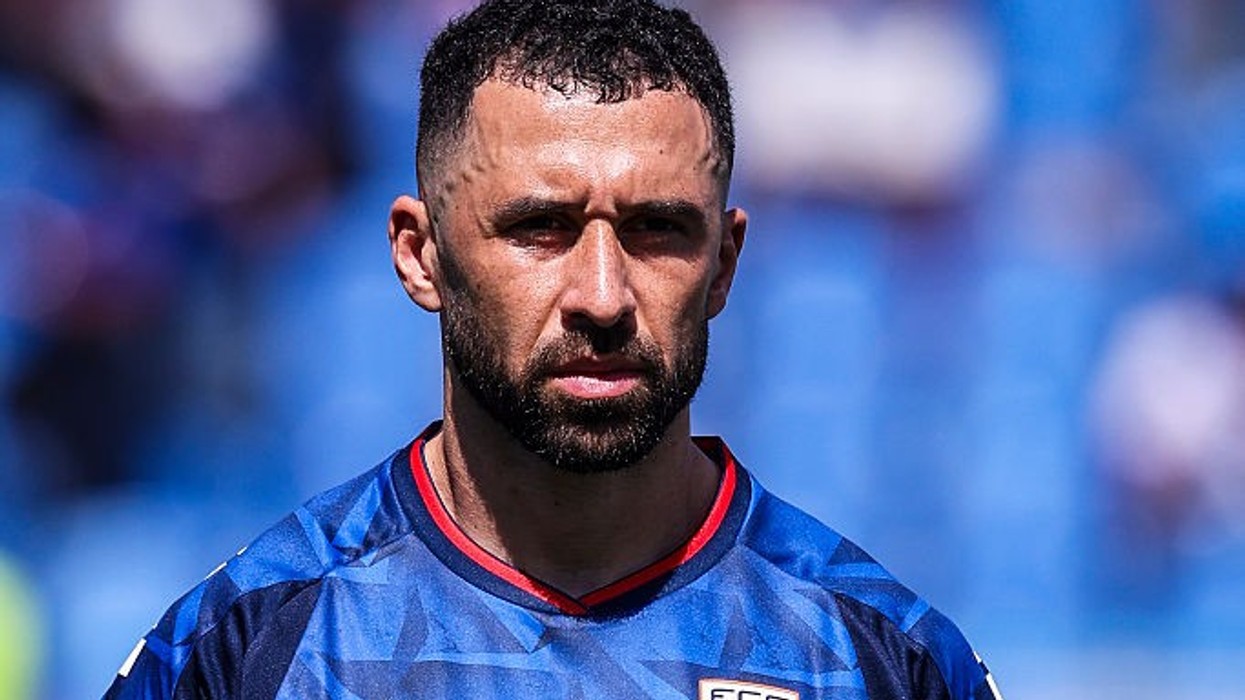
For Roberto Lopes, it started with a message he never intended to open.
The Cape Verde defender was one of the heroes of his country's historic 0-0 draw against Spain at the 2026 FIFA World Cup. His disciplined defensive display helped the tournament debutants frustrate one of the biggest names in international football.
Yet years earlier, that moment seemed impossible.
The invitation that eventually led Lopes to the World Cup sat unread in a forgotten LinkedIn inbox because he believed it was spam.
What makes the story even more remarkable is why Cape Verde went looking for him in the first place.
Cape Verde whose population is less than an American city, it is around 600,000. New York City alone has more than 8 million residents, making it over 13 times larger than the entire island nation. Yet while New York has never fielded a national football team, Cape Verde has qualified for its first World Cup and announced itself to the world by holding Spain scoreless.
Why Cape Verde needed Roberto Lopes
Cape Verde, officially Cabo Verde, is one of Africa's smallest nations. Located roughly 600 kilometers off the west coast of Africa in the Atlantic Ocean, the country consists of ten volcanic islands with a population of around 600,000 people.
Its size creates a unique challenge in football.
Unlike major football powers that can draw from millions of potential players, Cape Verde has a limited domestic talent pool. To remain competitive internationally, the country has long looked beyond its borders.
In fact, there are more people of Cape Verdean descent living overseas than in the country itself. Large Cape Verdean communities exist in Portugal, the United States, France, the Netherlands, and other countries.
Football officials recognized that many players with Cape Verdean heritage were developing in stronger football systems abroad. If those players could be convinced to represent their ancestral homeland, the national team could significantly improve.
Roberto Lopes fit that profile perfectly.
Born in Dublin to a Cape Verdean father and an Irish mother, Lopes was eligible to represent Cape Verde under FIFA rules. At the time, however, he was building his career in Irish football and had little expectation of playing international football.
The challenge for Cape Verde was finding him and getting his attention.
The LinkedIn gamble
Former Cape Verde coach Rui Águas eventually identified Lopes as a potential addition to the national team.
There was one problem.
Traditional football channels were not working.
Rather than giving up, Águas tried something unconventional. He contacted Lopes through LinkedIn.
“It is a crazy story of how I started in international football. Basically during college, I set up a LinkedIn account, connected with a few friends and left it in the dark for a few years."
“Then one day, I got a message from the manager of the Cape Verde team at the time, Rui Águas. He dropped a welcome message in Portuguese, which I didn’t speak at the time. I just assumed it was like, ‘thanks for connecting with me,’ message or spam."
The message was ignored.
For nine months.
While one of Africa's rising football nations waited for a response, Lopes simply moved on with life.
Like many players outside Europe's elite leagues, football was not always his only focus. Earlier in his career, he balanced football with work away from the sport before eventually becoming a full-time professional.
Then came a second message.
This time it arrived in English.
The follow-up prompted Lopes to finally translate the original communication.
The discovery stunned him.
“I thought it was a spam message and I took no notice of it."
After realizing Cape Verde genuinely wanted him, his reaction changed immediately.
“I was absolutely buzzing with that."
“I was like, ‘Yep, 100 percent I’d love to be a part of the squad.'"
“It was a weird angle to come at (via LinkedIn)."
“But when I saw the opportunity was there in front of me, I was 100% behind it from minute one."
Within weeks, the paperwork was completed and Lopes was preparing for international football.
From diaspora recruitment to World Cup history
Lopes' story became part of a larger football strategy.
Over the years, Cape Verde successfully recruited several players with family roots in the islands but careers elsewhere. The approach strengthened the squad and helped the nation compete against some of Africa's traditional powers.
Confidence grew through appearances at the Africa Cup of Nations and strong qualifying campaigns.
Eventually, the Blue Sharks achieved something never seen before.
They qualified for their first FIFA World Cup.
For a nation of roughly 600,000 people, spread across a chain of Atlantic islands, simply reaching the tournament was historic. Holding European champions Spain to a scoreless draw on their World Cup debut elevated that achievement even further.
And among the players helping write that chapter was a defender who nearly never received the invitation.
A forgotten LinkedIn account changed Roberto Lopes' career.
At the same time, it helped strengthen a national team representing one of the world's smallest countries.
Years later, when Cape Verde stood on football's biggest stage and matched Spain blow for blow, the journey could be traced back to a single unanswered message and a coach who decided it was worth sending one more.


 A US military image of the strike on the vessel off OmanUS Centcom