
HOTEL owners across host cities in the US said the tourism boom expected from the FIFA World Cup has yet to fully materialise.
While room rates remain above normal levels and demand has strengthened in several major markets, booking trends have been more uneven than many operators anticipated, ahead of the tournament, which began on Thursday (11).
In a first, the US, Canada and Mexico are together hosting the tournament. A total of 104 matches will be played across 16 host cities, including 11 in the US, with 48 teams taking part. Indian American hotel owners, who have a significant presence across the US hospitality industry, anticipated the tournament would provide a major boost in occupancy, room rates and tourism spend.
Atlanta, one of the tournament’s host cities, is seeing a mixed picture as kick-off approaches.
Nilesh “Nelly” Patel, AAHOA regional director for Georgia and a hotel owner in the Atlanta market, said expectations have shifted significantly over the past year.
 Nilesh Patel.
He told India Weekly, “A year ago, many of our members were modeling near sell-out conditions across the 30-day window. The reality is more nuanced; Atlanta is outperforming most other host cities, but bookings are pacing behind what we saw last summer when Beyoncé, the MLB All-Star Game, and major conventions were in town.”
“Our members are now focused on capturing the game-day surges and the back-end knockout rounds, where we expect much stronger compression.”
On the west coast, hotelier Sunil (Sunny) Tolani said bookings have been weaker than many in the industry anticipated.
“FIFA-related hotel bookings are significantly trailing our expectations, with us and many hotel owners I have spoken too reporting booking levels below their forecasts,” the California-based hotelier told India Weekly.
“Despite millions of tickets sold, an oversupply of rooms has emerged, prompting most hotels to offer discounts to clear inventory.
“Travel barriers and visa processing delays, geopolitical concerns, and strict entry requirements have dampened international demand.
“Also, steep secondary-market ticket prices and high overall costs have caused fans to favor short-term rentals (like Airbnb and Vrbo) over hotels.”
 Bhavik Patel.
Tolani said room rates initially jumped after FIFA announced the tournament schedule and match draws, but momentum later weakened.
“They are not meeting expectations,” he said, adding, “Because of sticker shock and massive room-block cancellations by FIFA, bookings in many US host cities are actually lagging behind typical seasonal levels.”
Nelly Patel said demand in Atlanta remains strongest around match days.
“Rates are holding firm at properties closest to Mercedes-Benz Stadium; downtown and midtown hotels are commanding $300 to $500-plus per night on match days, with some boutique properties pricing the semifinal weekend well above $1,000.”
“But suburban and airport submarkets have softened, and you’re seeing some rooms listed under $100 on nonmatch nights.”
He said the booking window was shorter than many operators expected.
“The booking window was compressed because FIFA finalized ticket distribution only at the end of April, which delayed travel planning for a lot of international fans.”
Tolani also said international visitors appear to be waiting longer before making reservations.
“Instead of the traditional advanced travel planning, data from the American Hotel & Lodging Association (AHLA) and hospitality analysts shows that world cup demand is significantly delayed, more price-sensitive, and heavily skewing domestic rather than international,” he said.
Los Angeles hotels are seeing a similar pattern, with room rates holding up better than occupancy levels. Mina Dahya, whose company operates properties near the Los Angeles stadium area, told India Weekly that demand is improving as the tournament approaches but remains uneven.
“Yes, we are starting to see an uptick but not as expected especially shoulder dates.”
She said demand is expected to be strongest around match days. “We expect demand to be very high, around just the game days but shoulder dates is yet to be determined.”
Dahya said room rates have largely held up, although occupancy remains below earlier forecasts. “Rates are generally matching, but occupancy is slightly lower than projected at this early stage. Rates are high just the few game nights and good occupancy seen but not yet sold out.”
She also pointed to operational and safety concerns during the tournament. “Staffing and logistics around the stadium area will be the main hurdles. But I have steady long term staff. Safety is key issues to consider during these dates. Traffic and traveling too and from stadium maybe challenging. Plus any strikes and other protest may affect guests from coming also is the biggest challenge for safety concerns.
 Sunil Tolani.
Hospitality analytics and technology firm Kalibri said hotel markets in world cup cities remain well above normal pricing levels, although rates have moderated as the tournament approaches.
Earlier this year, many host-city submarkets were seeing year-over-year rate increases of 30 per cent to 60 per cent, but those gains have moderated to roughly 20 per cent overall as June begins.
“That is still a strong performance by historical standards and reflects continued confidence in demand, even as pricing becomes more rational,” according to Kalibri. Travel costs and immigration-related concerns are also influencing booking patterns, Tolani said.
“Visa concerns, escalating costs, and economic uncertainty are noticeably dampening demand for the FIFA World Cup, leading to sluggish ticket sales and a wave of hotel cancellations across North American host cities,” he said.
“Lengthy processing times, geopolitical tensions, and strict immigration rhetoric are keeping thousands of international fans away. Several host cities are seeing lagging international passenger traffic, and diplomatic disputes have even complicated travel for overseas staff and journalists.”
The Asian American Hotel Owners Association (AAHOA), which represents hotel owners across the United States, said members entered the tournament period expecting a significant economic boost.
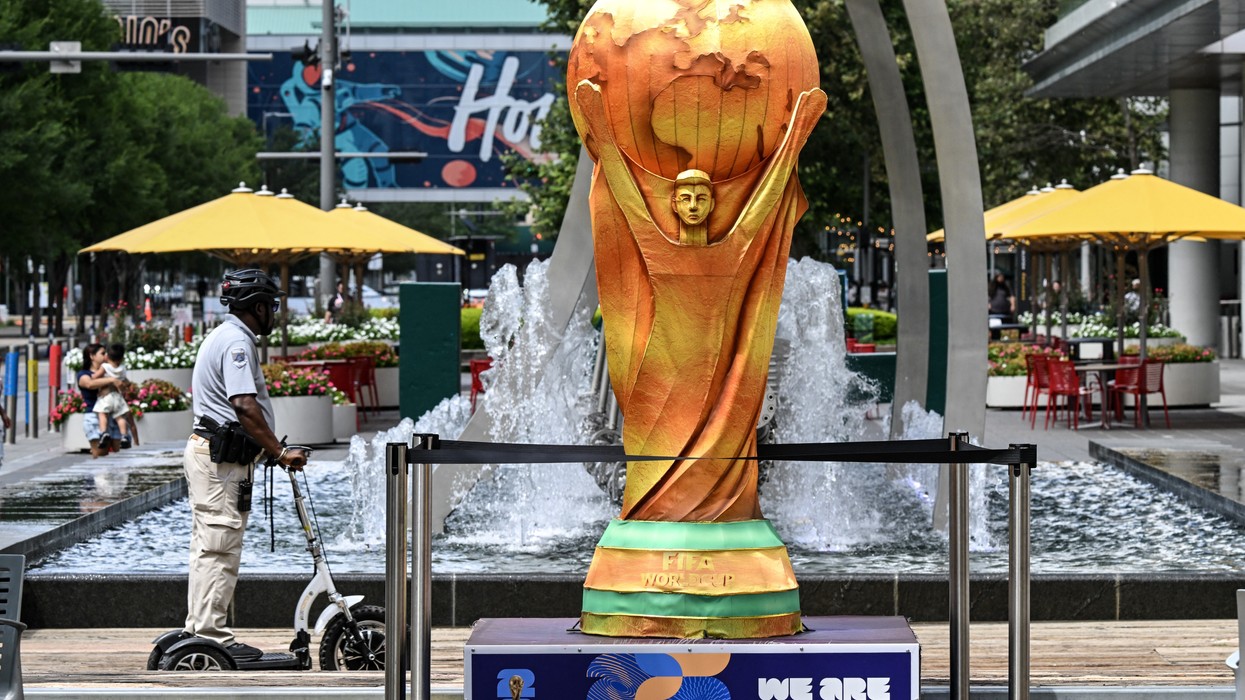
 The World Cup is expected to bring millions of visitors to North America over the next five weeksGetty Images
“AAHOA members in host cities are expecting to put heads in the beds at full capacity with an economic boost not just for their hotel/motel, but for the host city itself,” Bhavik Patel of AAHOA told India Weekly.
“The demand for the FIFA even is well below participation and expectations.” Bhavik Patel said some of the strongest hotel demand appears to be outside the US, in “Guadalajara, Monterrey, because there are low level restrictions on international travels.”
He also echoed concerns raised by other hotel owners about the gap between supply and demand.
“Bookings and room rates are not matching expectations, because there’s more supply of rooms than demand,” Bhavik Patel said.
One of the biggest surprises, according to Nelly Patel, has been the composition of visitors.
“Less than 20 per cent of booked rooms are international visitors so far.” “Demand is skewing heavily domestic – Americans driving in from the southeast, plus diaspora communities traveling from other US cities to support their national teams.”
 Mina Dahya.
“We expected a larger international wave, especially from Europe and Latin America, but visa wait times, ticket prices averaging $600-plus for group stage, and overall trip costs appear to be pricing some international fans out.
“Our quarter final and semi-final game tickets are $1,000-plus.”
Kalibri, meanwhile, said larger gateway destinations such as New York and San Francisco are outperforming some smaller host markets, with stronger growth in both room demand and average daily rate.
“Travelers appear to be building broader vacation experiences around the tournament, choosing destinations that offer a wider range of attractions, dining, entertainment and cultural experiences beyond the matches themselves.” It also said visitors appear to be favoring urban centers over suburban areas closer to stadiums.
“In several host regions, demand is concentrating in downtown and citycenter locations where travelers have greater access to restaurants, entertainment, public transportation and other activities when they are not attending matches. While occupancy pace is not dramatically higher than last year, hotels are filling rooms at substantially higher rates, which is producing strong revenue performance.
“In other words, the story today is less about occupancy surging, and more about hotels successfully capturing higher-value demand.”
The hospitality industry is also facing growing competition from alternative accommodation providers.
Short-term rental platforms such as Airbnb and Vrbo have become increasingly popular among groups traveling together, particularly during major sporting events where families and friends often share accommodation costs.
Bhavik Patel said this was creating challenges for traditional hotels and motels. “Guests are able to book at short-term rental properties to fully utilize a homestyle environment with a number of individuals,” he said.
 Kalibri said New York and San Francisco are outperforming smaller host markets..
“Hotels and motels are limited of only occupying mostly room space and hardly get a full service on their stay.” He also pointed to immigration-related concerns.
“The other challenge is that the United States of America has leveled up on incoming travel restrictions due to immigration. The demand is not there when most of the out of country teams are playing, but the spectators from international travel are not there.”
Bhavik Patel said visa delays remain a concern for hotel owners.
“Members are telling me that fans from several countries, particularly in Africa, south Asia, and parts of South America, have either been unable to secure visa appointments or have been deterred by the cost and complexity.”
“AAHOA has been vocal nationally about the need for streamlined visa processing ahead of 2026, and the world cup is showing exactly why that matters – not just for this tournament, but for the LA28 Olympics and the broader US tourism economy.”
Despite those concerns, Kalibri said the industry remains optimistic as the tournament begins.
“With FIFA reporting that more than five million tickets have already been sold, the hospitality industry remains optimistic. The coming weeks will be particularly important as international travelers finalize itineraries and hotel bookings. We expect booking patterns to continue evolving as fans make decisions on match attendance, destination choices, and length of stay.”
Nelly Patel said operators remain optimistic about the later stages of the tournament.
“The world cup is still going to be a meaningful event for our city, and the second half of the tournament is when we expect the real lift.”
“The long-term brand value of being a host city is something we’ll be measuring for years.”