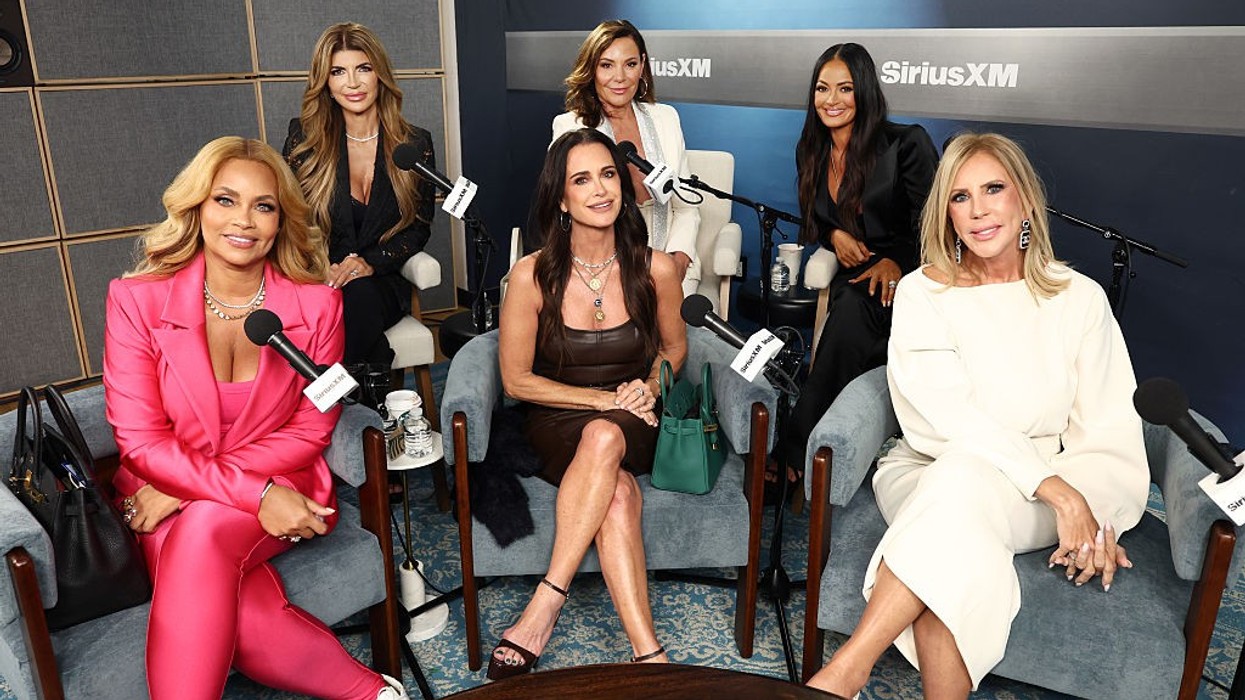

- The Real Housewives turned private domestic life into prime-time entertainment.
- Homes became visual shorthand for wealth, ambition, and social status.
- The franchise helped normalize surveillance inside marriages and families.
- “Housewife” evolved from a domestic role into a powerful personal brand.
- Reality TV’s meme culture helped push household drama far beyond the television screen.
Twenty years ago, a camera crew walked through the gates of Orange County, California, and pointed its lens at something television had traditionally kept behind closed doors: the American home.
What it found was instantly recognizable and strangely intimate: marble countertops, expensive wine, marital resentment, friendship drama and, sooner or later, someone crying into a glass of chardonnay.
That formula became The Real Housewives, one of the most influential reality-TV franchises of the modern era. But its cultural impact went far beyond arguments at dinner parties or sprawling suburban mansions.
“The show took on and ultimately upended a core piece of American culture, the housewife as the moral center of her family and changed how the country pictures domestic life ever since.”
For decades, the American home had been sold as a sanctuary. It was where families escaped the pressures of work, money and public life. The Real Housewives flipped that idea on its head.
The house became the workplace. The kitchen became a battlefield. The dining room became a negotiation table. The living room became a courtroom.
And the people living there became performers.
Suddenly, domestic life wasn't simply something Americans watched in sitcoms. It was something they could watch unfold — messily, expensively and often painfully, in real time.
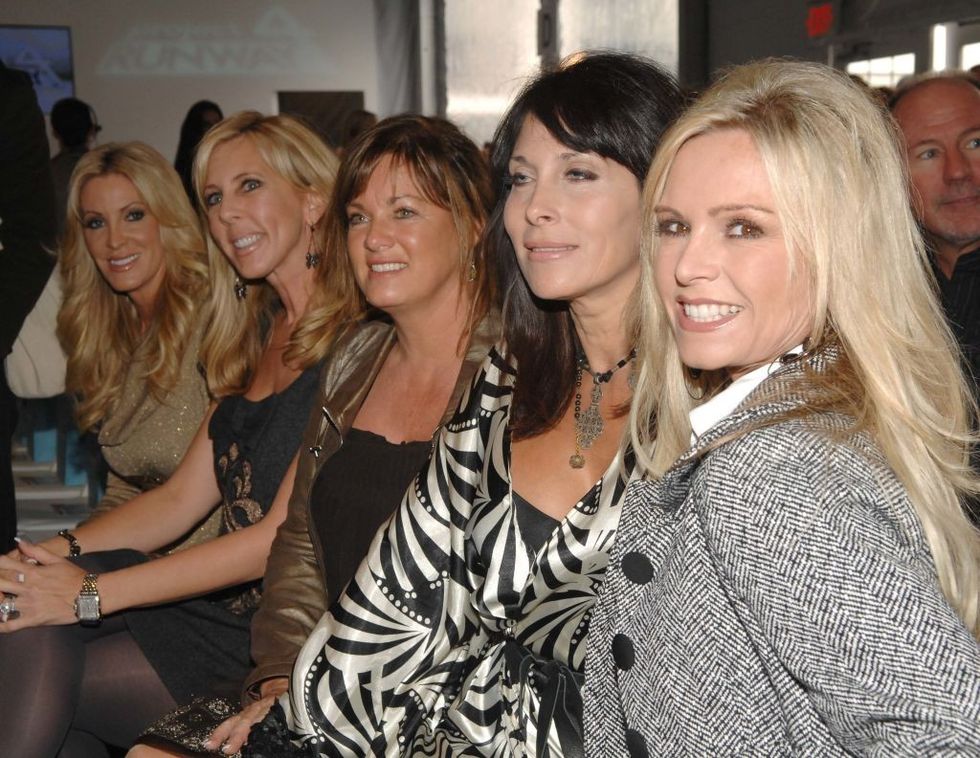 (L-R) Cast member of the "Real Housewives of Orange County" Lauri Waring, Vicki Gunvalson,Jeana Keough, Tammy Knickerbocker, and Tamara Barney attend the kick off of 'Project Runway' Season Four at Lincoln Center Plaza on November 6, 2007 in New York City.Getty Images
The mansion, the marriage and the money
The franchise also changed the way Americans look at wealth inside the home.
Every city in the Real Housewives universe follows essentially the same premise: “chronicle the glamorous lives of upper-class women, invite viewers past the gates, and show that even the most polished lives have cracks in them.”
That invitation mattered.
The home was no longer just a place to live. It was evidence.
The size of the kitchen, the view from the backyard, the designer furniture, the cars in the driveway and the parties held behind closed gates all became pieces of a financial résumé. A house could tell viewers who you were — or who you wanted them to believe you were before you said a word.
But the fantasy came with a catch.
“Critics have long argued the franchise promotes bourgeois values that leave ordinary viewers feeling inadequate next to a lifestyle the show frames as both effortless and attainable, when in reality many of the cast members' own lives have been destabilized by the money and fame the show demands of them.”
That contradiction became one of the show's most compelling features.
The women were selling viewers a fantasy of extraordinary wealth while simultaneously showing them the mortgages, divorces, business failures, custody battles and personal crises that could sit behind the gates.
The message was complicated: This is the life you want. Look closely enough, and you might also decide you don't want it.
Then there was the camera itself.
“The franchise helped collapse the line between private life and public performance, rewarding conspicuous consumption and normalizing surveillance as entertainment building a fandom capable of both fierce loyalty and real cruelty toward the women whose worst moments get replayed indefinitely, stripped of context, for strangers who feel entitled to judge.”
That may be the franchise's most important legacy.
Long before family vloggers, relationship influencers and TikTok confessionals turned private life into social-media content, Housewives had already made the camera inside the home feel normal.
The audience didn't need to be invited over anymore.
The audience was already there.
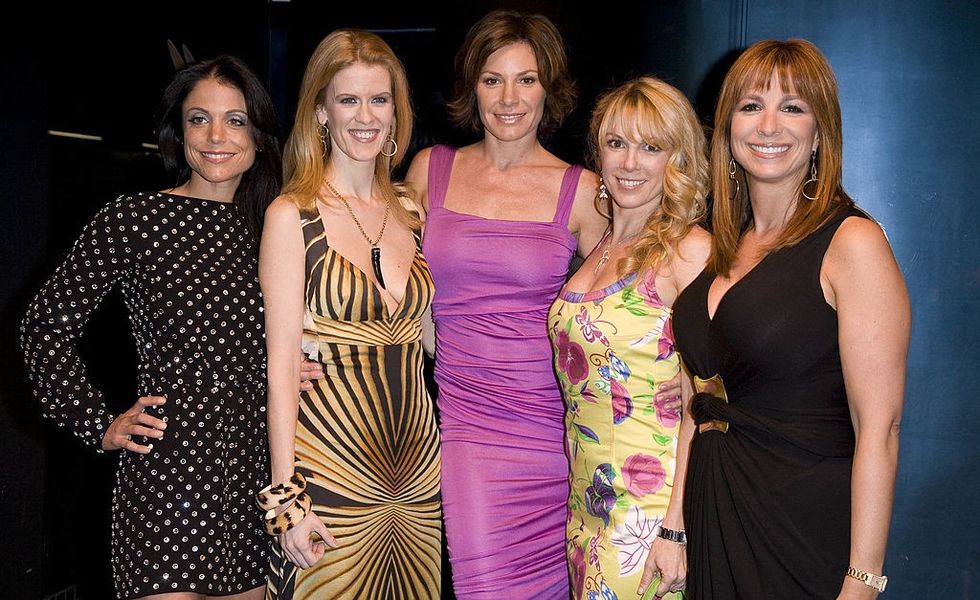 From "The Real Housewives of New York City," Bethenny Frankel, Alex McCord, Countess LuAnn de Lesseps, Ramona Singer and Jill Zarin attend the screening party for Bravo's "The Real Housewives of New York City," at Touch March 3, 2008 in New York City.Getty Images
From “Housewife” to celebrity brand
Perhaps the show's most revealing trick was hiding in its title.
“Despite the name, most of the women on these shows aren't housewives in any traditional sense — the majority have careers outside the home, and a significant number are unmarried or divorced, which raises real questions about why the label stuck to them at all.”
The contradiction is precisely what made the franchise so powerful.
The Housewife became less about a woman who stayed home and more about a woman who could manage an entire ecosystem: family, money, business, friendships, reputation and, increasingly, her own celebrity.
The modern reality-TV housewife could be an entrepreneur, executive, mother, divorcee, restaurateur, designer or social-media personality. Sometimes she was all of those things at once.
The household itself changed with her.
Blended families became part of the storyline. Divorce became something to discuss rather than hide. Multiple income streams became normal. Businesses operated from home — and sometimes became as important to the story as the family living there.
The old television model centered the male breadwinner. Housewives increasingly centered the woman holding the entire operation together.
And then came the memes.
“The franchise effectively invented reality television's meme economy, turning catchphrases and facial expressions into currency across Twitter, Instagram, and TikTok, while cast members like NeNe Leakes, Lisa Vanderpump, and Bethenny Frankel became proof that reality stars could rival traditional celebrities in cultural reach.”
The fights became GIFs. The one-liners became captions. The facial expressions became reaction images.
But beneath the viral moments, the franchise was also “tackling infidelity, bankruptcy, parenting struggles, and racial dynamics inside the frame of upper-class domestic life.”
The meme simply traveled faster than the message.
That is perhaps the show's most lasting contribution to American culture. It helped turn the private home into a public-content machine.
The dinner table now competes with the group chat. A family disagreement can become a text thread, a TikTok, a podcast episode or a viral clip before everyone has even left the room.
Bravo didn't invent the desire to perform private life in public.
But The Real Housewives perfected the format.
Twenty years later, the American home looks less like the neatly packaged sitcom living room of the 1990s and more like a Housewives episode: aspirational, financially exposed, emotionally complicated and constantly aware of an audience.
The biggest change may be the simplest one.
The camera got inside.
And the American home never completely closed the door again.