
INDIA'S Supreme Court ordered the State Bank of India (SBI) on Monday (18) to submit all the details of electoral bonds issued under an opaque political funding system, just a month before general elections.
SBI was the sole bank authorised to sell and redeem electoral bonds that was introduced in 2017 but subsequently scrapped.
The further details of the controversial funding mechanism are expected to make public information linking donors to political parties over the last five years, and the size of their donations.
Corporate funding of political parties is a sensitive matter in India, where the February scrapping of electoral bonds, along with the publicising of the names of donors and recipients, has become a hot topic ahead of elections due to begin from April 19.
The Supreme Court gave the state-run lender until Thursday to provide the Election Commission of India with the unique identification numbers of the bonds, so as to allow donors to be matched with recipients.
“You have to disclose all details … we must have finality to it,” Chief Justice D.Y. Chandrachud said.
The election commission, in its turn, was directed to make the information public “forthwith”.
Last week, the commission made public some data on donations made since April 2019 under the funding mechanism that allowed anonymous unlimited donations by companies and individuals using the electoral bonds.
Some of India’s biggest companies, such as Vedanta Ltd, Bharti Airtel, RPSG Group and Essel Mining were among the top political funders over the last five years, the data showed.
However, it is some of the lesser-known entities that have topped the list among corporate buyers. They include Future Gaming and Hotel Services (Rs 13.5 billion), Megha Engineering (Rs 9.6 billion), and Qwik Supply Chain Pvt Ltd (Rs 4.1 billion).
But last week’s data did not link donors to recipients, though it showed that nearly half of all donations were received by the Bharatiya Janata Party (BJP) of prime minister Narendra Modi, who will seek a rare third term at the polls.
The BJP received Rs 69.86 billion, followed by West Bengal’s ruling party Trinamool Congress (Rs 13.97 billion), Congress (Rs 13.34 billion) and Bharat Rashtra Samithi (Rs 13.22 billion), according to the latest data shared by the Election Commission.
Critics say such bonds helped companies hide their donations to avoid any accusations of winning favours from the ruling party.
On Sunday, the leader of the main opposition Congress party, Rahul Gandhi, accused Modi’s government of using electoral bonds to extort money from companies, an accusation the government has strongly denied.
Industry bodies Assocham, the Confederation of Indian Industry and the Federation of Indian Chambers of Commerce and Industry sought to stop the court from making public information about who donated to which party.
“Protection of anonymity is critical for preserving donors’ privacy and guarding against any adversity by any opposing political factions to whom the investment is not made by a corporate,” Assocham said. The court did not hear their plea.
(Agencies)






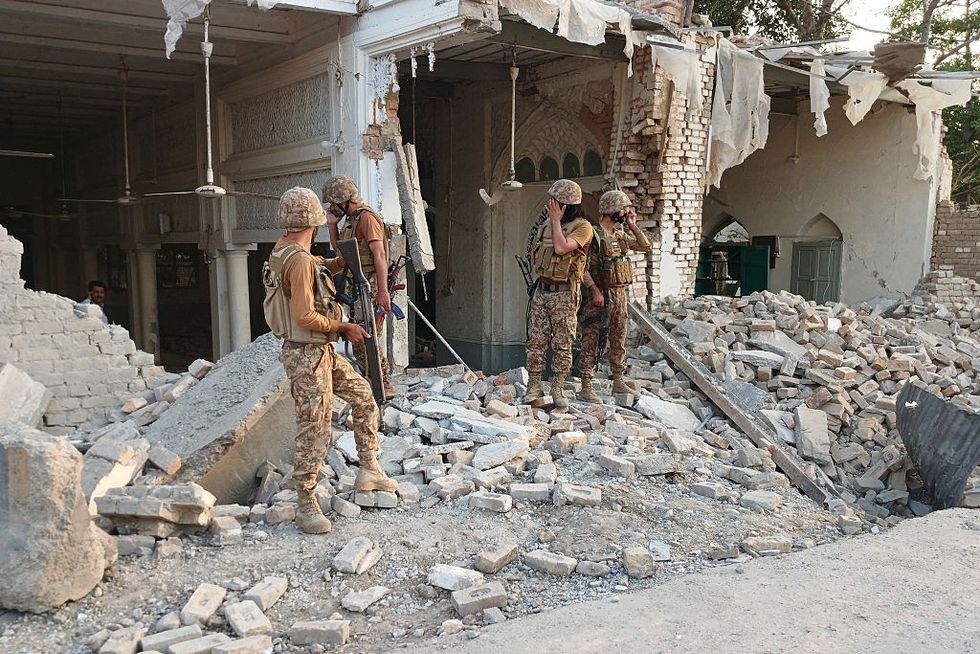 Army personnel stand amid the rubble following an explosion inside the police headquarters at Kohat in Pakistan's Khyber Pakhtunkhwa province on September 18, 2026. An explosion at a historic police headquarters in northern Pakistan on September 18 killed at least eight people and wounded 35 more, officials said, with the country's president swiftly blaming a militant group. Getty Images
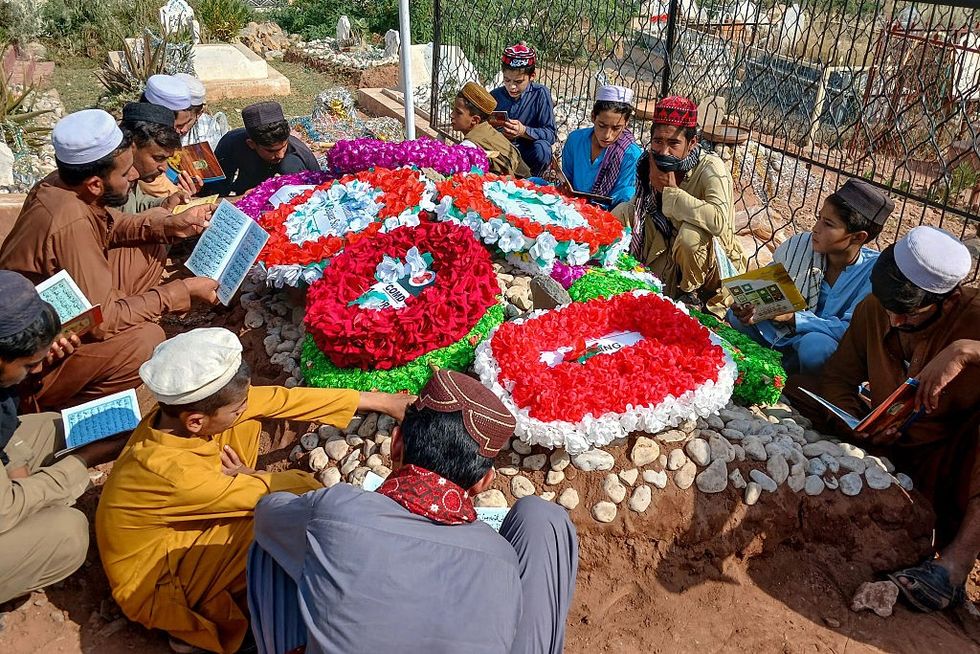 Mourners read the holy Quran while sitting around the grave of a paramilitary personnel of the Frontier Corps (FC) who was killed during the Afghanistan-Pakistan border clashes, in Kohat on October 17, 2025. A ceasefire along the frontier between Afghanistan and Pakistan was holding on October 16, officials on both sides said, after dozens of troops and civilians were killed in cross-border clashes.Getty Images