
- Gates says governments are 'way behind' as AI develops rapidly.
- He is urging the US and China to cooperate on managing AI risks.
- His foundation plans to spend at least $1 billion to expand AI access in developing areas.
Artificial intelligence is becoming one of the biggest areas of competition between the US and China. Bill Gates thinks the risks it creates may be big enough to make the two rivals work together.
The Microsoft co-founder has urged Washington and Beijing to cooperate on AI safety, warning that governments around the world are struggling to keep pace with the technology’s rapid development.
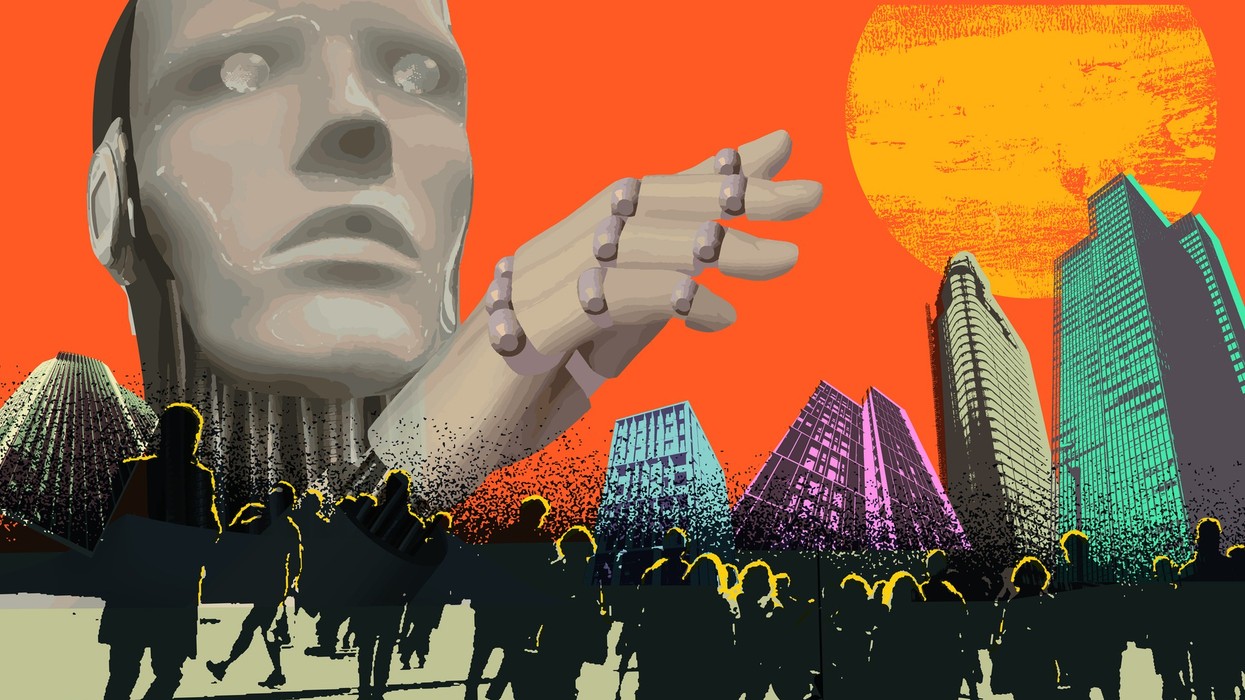
Gates compared AI to an “alien intelligence” that has already arrived, arguing that governments need to prepare for changes that could reach far beyond the technology sector.
“AI is kind of like this alien intelligence. It’s here, and we better do like it shows in those movies,” he told Reuters.
Gates said he has been discussing his concerns with world leaders, including US President Donald Trump and his team. He also said he was looking forward to meeting Chinese President Xi Jinping later this year.
The appeal comes as AI has become a major area of US-China competition, with both countries seeking an advantage in increasingly capable systems. Gates, however, is focused on a problem that competition alone may not solve.
“I don't think any government is nearly as deep on this as they have to be,” he said, adding that “governments are way behind on this one.”
The risks go beyond jobs
Gates’ concerns extend beyond who wins the AI race.
He pointed to potential job losses, security threats and the possibility of people becoming increasingly dependent on AI companions. He also raised concerns about attacks involving AI as the technology becomes more capable.
That leaves governments facing a difficult task. AI is advancing across multiple areas at once, while policymakers are still trying to understand how its impact could affect workplaces, security and everyday life.
Yet Gates does not see AI only as a threat.
He believes the technology could help narrow the gap between rich and poor countries if access is expanded and managed properly. Healthcare, in particular, could see significant benefits.
“For health it’s hard to overstate what the potential is,” Gates said.
His foundation is planning to spend at least $1 billion over the next two years to expand access to AI, with funding expected to support projects in education, healthcare and agriculture.
The foundation also wants to help build the data systems needed to make AI useful across different languages, potentially helping more countries use the technology rather than simply watching the AI race from the sidelines.
Can rivals cooperate on the risks?
The idea of the US and China working together on AI safety may be easier to suggest than to achieve.
The two countries are competing for technological leadership, while AI is increasingly tied to economic and national security interests. Agreeing on common safeguards or sharing information could therefore be difficult when both sides are also trying to stay ahead of the other.
Gates’ argument is that some AI risks may eventually become too important to leave to individual countries.
His call for cooperation reflects a wider concern: the technology could be developing faster than the systems designed to understand and manage it.
That makes AI different from an ordinary technology race. Countries can compete over who builds the most advanced systems while still needing some common ground over how those systems should be developed and used.
For now, Gates is trying to push that idea into conversations with leaders in both Washington and Beijing.
Whether the risks of AI will be enough to make two fierce competitors cooperate remains an open question.











 Amazon
 Amazon
 Amazon
 Amazon
 Amazon
 Amazon
 Amazon
 Amazon
 Amazon
 Amazon