
Highlights:
Climate change is often measured through rising temperatures, stronger heat waves, health emergencies and damage from extreme weather. But there is another cost that can be harder to see: people becoming less productive because it is simply too hot to work safely and effectively.
A new study published in Nature Climate Change estimates that heat-related reductions in labor productivity amounted to a significant component of the economic damage associated with carbon dioxide emissions in 2025.
Globally, the researchers estimated that each additional ton of CO2 emitted in 2025 was associated with about $41 in lost labor productivity because of heat stress.
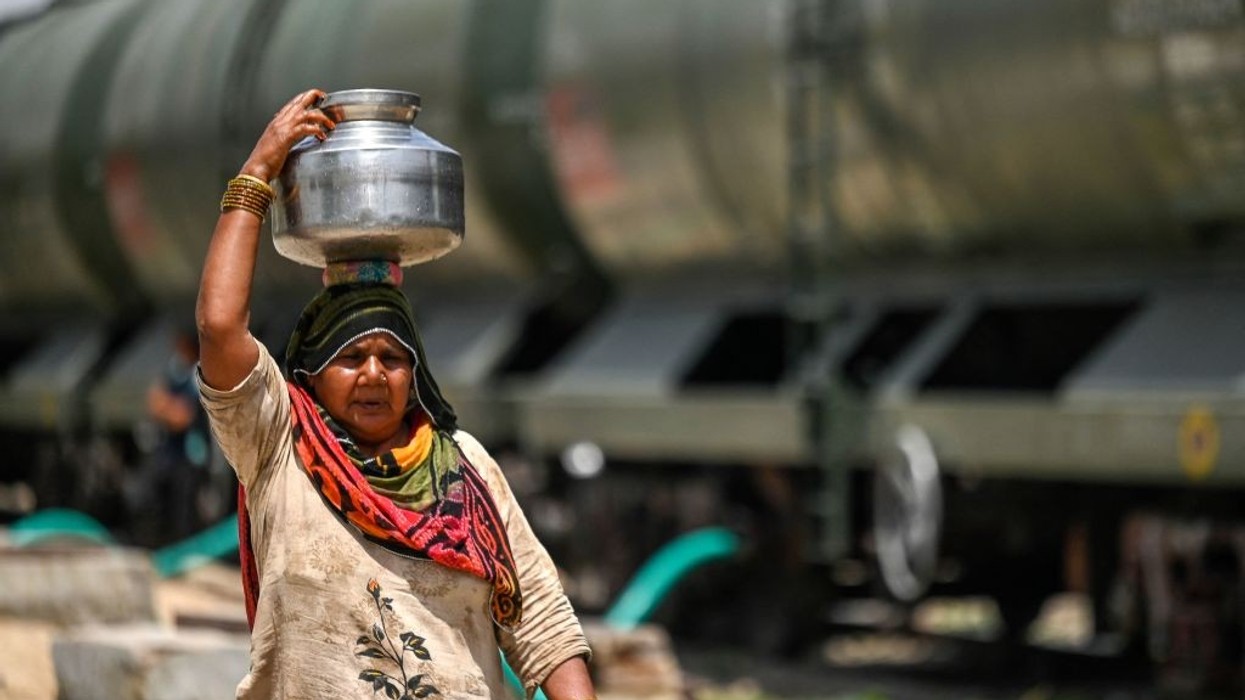
The impact was especially pronounced in countries that combine large populations with already-high exposure to heat and humidity. India was estimated to experience $9 in labor-productivity losses per ton of CO2 emitted, followed by Nigeria at $6, China at $4 and Pakistan at $3.
But what does a figure such as "$41 per ton" actually mean? Why are workers affected differently depending on their jobs and location? And what does the research tell us about the economic consequences of a warming world?
Here is a closer look.
What did the researchers actually measure?
The study examined labor productivity losses caused by heat stress and linked those losses to the amount of carbon dioxide emitted.
The researchers were interested in a straightforward economic question: As temperatures rise because of climate change, how much work capacity is lost when people are exposed to excessive heat?
Heat affects the human body in several ways. When temperatures and humidity rise, the body has a harder time releasing heat through sweating and other cooling mechanisms. Physical work becomes more difficult, and prolonged exposure can create serious health risks.
For workers whose jobs require physical exertion, the effects can be especially significant.
The researchers combined projections from a heat-stress measure known as wet-bulb globe temperature, or WBGT, with information about different occupations and regions. Their analysis also considered factors such as work intensity, outdoor exposure and access to cooling.
WBGT is useful because ordinary air temperature does not tell the whole story. Humidity, wind and other environmental conditions influence how effectively the human body can cool itself.
In other words, a 90-degree day with relatively low humidity can feel very different from a 90-degree day with high humidity.
The study attempted to account for those differences when estimating the effect of heat on workers.
Why does heat reduce productivity?
Think about a construction worker, farm laborer or factory employee working through a hot afternoon.
As the body heats up, maintaining a safe internal temperature requires increasing physiological effort. Workers may need to slow down, take more frequent breaks, drink water or stop working altogether during the hottest periods.
Even when work continues, output can fall.
This is particularly important for jobs that involve heavy physical activity or prolonged exposure to outdoor conditions.
Agricultural and construction workers were among those identified as having substantially greater exposure to heat stress than office and service workers.
That does not mean people working indoors are automatically protected.
Workers in buildings without adequate air conditioning can also face significant heat exposure, particularly during prolonged heat events. The researchers noted that access to cooling varies dramatically around the world.
A dataset covering residential air-conditioning adoption in 33 countries, for example, found penetration rates ranging from zero in South Sudan to about 90% in Japan.
Air conditioning is only one form of protection, of course. Shade, drinking water, rest periods and changing work schedules can also reduce exposure.
Why are India and other populous countries especially important?
The study found that some of the largest total labor-productivity damages occurred in populous countries that already experience substantial heat and humidity.
India was estimated to have a labor-productivity loss equivalent to $9 per ton of CO2 emitted in 2025.
Nigeria was estimated at $6, China at $4 and Pakistan at $3.
These figures should not be interpreted as saying that a ton of emissions physically costs India exactly $9 in a direct transaction. Rather, they are estimates within the study's economic framework linking emissions to heat-related productivity losses.
Population also matters.
A country with a large workforce can experience substantial aggregate economic consequences when heat affects workers across agriculture, construction, manufacturing and other sectors.
The researchers also found a different geographic pattern when looking at damages per person. On that measure, impacts were concentrated in parts of the Middle East, including Qatar, the United Arab Emirates and Iraq, as well as countries in sub-Saharan Africa such as Niger, Somalia and Nigeria.
That distinction is important: total national damage and per-person damage are not the same thing.
What is the “social cost of carbon”?
The study places its labor-productivity estimates within the broader concept known as the social cost of carbon, or SC-CO2.
Put simply, the social cost of carbon attempts to estimate the economic damages associated with emitting one additional ton of carbon dioxide.
Those damages can include effects on human health, agriculture, ecosystems, property and economic activity.
The researchers argue that labor productivity deserves significant attention in these calculations.
Lead author Frances Moore, a professor in the Department of Environmental Science and Policy at the University of California, Davis, said the research adds to evidence about the "real costs of climate change."
According to the researchers, labor was estimated to be the second-largest contributor to the total social cost of carbon, behind heat-related deaths.
That finding highlights an important point about climate economics: The consequences of emissions are not limited to repairing damage after a hurricane or paying for infrastructure following a flood. They can also appear gradually through millions of small reductions in people's ability to work.
Why does the type of job matter?
Heat does not affect every worker equally.
Consider two people experiencing the same outdoor temperature.
One works at a desk inside an air-conditioned office. The other spends eight hours outdoors carrying heavy materials or working in direct sunlight.
Their exposure to heat stress can be dramatically different.
The study therefore incorporated job-specific work intensity and outdoor exposure into its calculations.
Agriculture presents a particularly important example. Farming frequently requires outdoor physical labor, and workers may have limited ability to avoid the hottest part of the day during critical planting or harvesting periods.
Construction presents similar challenges.
Workers may be able to use shade, water and scheduled breaks, but the nature of the work can make complete avoidance of heat difficult.
For office and indoor workers, air conditioning can provide substantial protection, although unreliable or unavailable cooling can still create risks.
What can employers and policymakers do?
The researchers emphasize that heat-related productivity losses are not inevitable.
Some measures are relatively straightforward.
Changing work hours can reduce exposure by moving strenuous tasks away from the hottest part of the afternoon.
Providing water and rest breaks allows workers to cool down and recover.
Increasing access to shade can reduce direct exposure to solar heat.
Improving ventilation and cooling can protect indoor workers.
Employers and policymakers can also establish heat-safety protocols that specify when work should be modified or paused during dangerous conditions.
For outdoor workers, scheduling is particularly important. A job that is manageable early in the morning can become considerably more hazardous several hours later as temperatures and heat stress rise.
The researchers argue that employers and policymakers should treat extreme heat as a serious workplace health hazard and consider measures to reduce exposure.
What does this mean for the US?
Although the study highlights countries such as India, Nigeria, China and Pakistan, its underlying issue is relevant to the United States as well.
The U.S. has a large workforce in sectors such as agriculture, construction, transportation, logistics and manufacturing where heat exposure can affect working conditions.
The economic question is therefore broader than simply asking how hot a particular city will become.
It also involves asking how societies organize work as heat extremes become more frequent and intense.
That could mean changes in working hours, workplace design, cooling systems, occupational safety rules and infrastructure.
The challenge is especially relevant as employers balance productivity with worker safety. Pushing workers to maintain normal output during dangerous heat can carry health consequences, while reducing working hours or slowing operations can create economic costs.
The study essentially puts a number around one part of that equation.
The bigger takeaway
The estimated $41 in global labor-productivity losses for every ton of CO2 emitted in 2025 is not a prediction of a bill that someone will receive. It is an economic estimate of a climate-related cost, based on modeling heat exposure, occupational characteristics and regional conditions.
Its significance lies in showing how climate change can affect the economy in ways that are easy to overlook.
Heat can mean fewer hours of safe work, slower physical performance, additional breaks, changes in schedules and greater pressure on employers to provide cooling and other protections.
And as the planet warms, those effects can become more important.
The researchers' central message is therefore straightforward: extreme heat is not only an environmental or medical issue. It is also a workplace and economic issue.
For policymakers and employers, the question increasingly may not be whether heat affects productivity, but how effectively workplaces can adapt while protecting the people who keep economies running.