
Highlights:
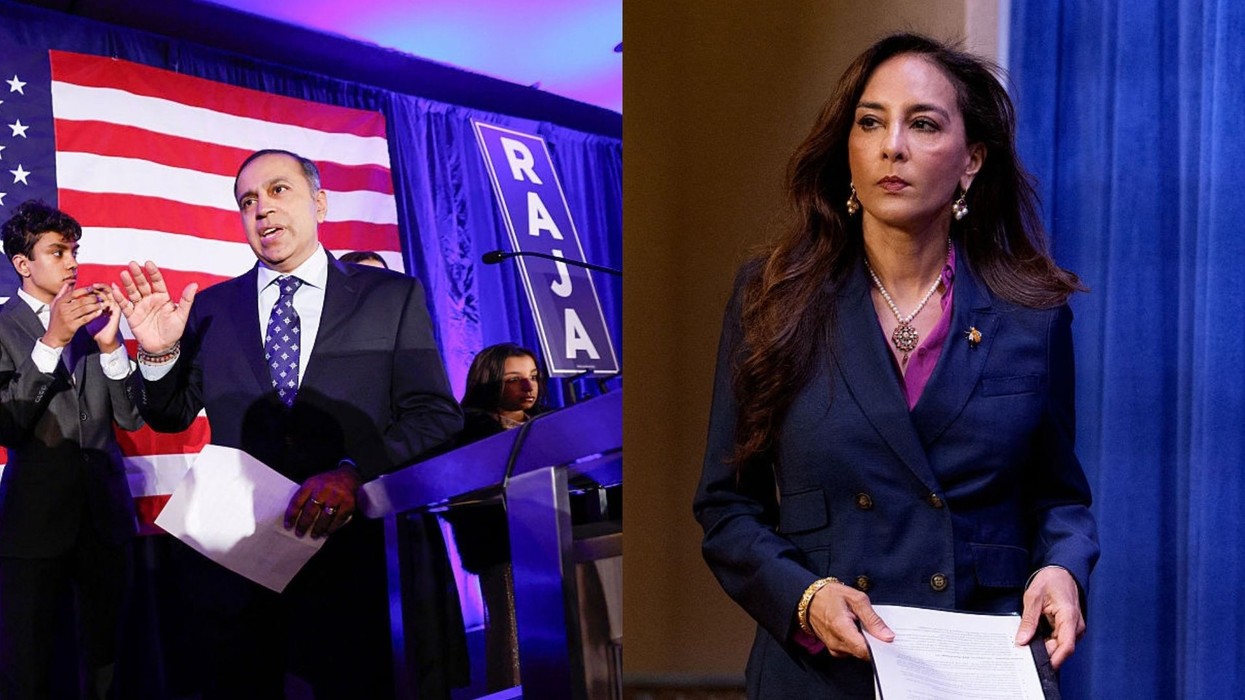
Raja Krishnamoorthi is a Democratic congressman from Illinois. He recently faced a direct attack on his identity when Florida City Councilman Chandler Langevin told him to “take your curry and go home.” Krishnamoorthi’s response was equally direct: “I’m staying. So is the curry. America is my home.”
Harmeet Dhillon, a senior Trump administration official and assistant attorney general for civil rights, has faced a similar line of attack from a very different part of the political spectrum. Dhillon, who was born in Chandigarh, has said she receives racist comments daily, including being called a “paperwork American.”
And it does not stop with them.
Nikki Haley, a former South Carolina governor and presidential candidate, has been told to “go back to your own country.” Vivek Ramaswamy, who ran for president, has faced attacks questioning his American identity. Usha Vance, the wife of Vice President JD Vance, has also been targeted over her Indian ancestry and interracial marriage.
These are people who have occupied some of the most visible positions in American public life. One is a sitting member of Congress. Another is a senior Trump administration official. One ran for president. Another previously served as a governor and presidential candidate. Yet their Indian heritage has repeatedly been pulled into political attacks questioning whether they truly belong.
That raises a more uncomfortable question: If reaching Congress, serving in the administration, running for president or serving as governor is not enough to silence questions about belonging, what exactly is being demanded of Indian Americans to prove that they are American?
They occupy very different places in American politics and do not share the same political ideology. But their experiences point to the same recurring fault line: political identity can change, but for some Indian Americans, ancestry can still be brought into the argument over who belongs.
“America is my home”
The latest example came in September, when Palm Bay, Florida, City Councilman Chandler Langevin told Democratic Congressman Raja Krishnamoorthi to “take your curry and go home.”
Krishnamoorthi did not respond by debating immigration, party politics or India-U.S. relations. He responded to the question of belonging itself.
“I’m staying. So is the curry. America is my home. No bigot gets to decide who is American, who belongs here, or what they have for dinner. That’s the America I’ll always fight for,” Krishnamoorthi said.
The remark was not an isolated exchange. According to Krishnamoorthi's office, Langevin had previously made comments targeting Indians and Indian Americans, including calling Krishnamoorthi a “foreign occupier.” The Palm Bay City Council later censured Langevin and asked Florida Governor Ron DeSantis to suspend him, according to the congressman's office.
For an Indian American community that has spent decades becoming more visible in American public life, the episode raises an uncomfortable question: How American do you have to become before someone stops telling you to go back to India?
The Trump official facing the same question
The answer becomes even more complicated when the person facing the attack is on the political right.
Harmeet K. Dhillon, the Trump administration's assistant attorney general for civil rights, recently said she faces racist comments daily. Among the insults directed at her was the term “paperwork American,” questioning the authenticity of her American identity because of her Indian heritage.
Dhillon is not an opponent of the Trump movement. She is part of the administration.
Yet her experience shows that political alignment does not necessarily prevent ancestry from becoming a target.
That creates a striking contrast with Krishnamoorthi.
One is a Democrat in Congress. The other is a senior Republican administration official.
Both have still found themselves having to defend their place in American life.
It is not just Republicans
That distinction matters because the story can easily become a narrative about Indian Americans on the political right.
But Democrats have faced similar attacks.
Krishnamoorthi is one example. Democratic Congresswoman Pramila Jayapal has also faced “go back to India” rhetoric and threats, while the source material documents attacks directed at Indian Americans across political affiliations.
The point is not that Republicans and Democrats experience identical political environments. They do not.
The documented incidents do, however, show that Indian ancestry can become a target even when the person involved belongs firmly to American political life.
The numbers make the story bigger
These are not only stories about politicians.
A 2026 Indian American Attitudes Survey by the Carnegie Endowment for International Peace found that one in two Indian Americans reported experiencing discrimination in the previous year. Skin color was the most commonly reported basis, followed by country of origin and religion. The nationally representative survey covered 1,000 Indian American adults and was conducted with YouGov between November 25, 2025, and January 6, 2026.
The survey also found that roughly one-quarter of respondents believed Indian Americans face a high level of discrimination in the United States.
The numbers complicate the familiar image of Indian Americans as a community that has simply “made it.”
Economic and political success is real. So is discrimination.
Both can exist at the same time.
The strange part is how much has changed
Indian Americans are no longer politically invisible.
There are more than 5.2 million people of Indian origin living in the United States, according to Carnegie. Indian Americans are present in Congress, the federal government, business, technology, medicine, entertainment and academia.
The political community itself is changing too. Carnegie's 2026 survey found that Indian Americans remain disproportionately Democratic, but the partisan gap has softened. Democratic identification fell from 52 percent in 2020 to 46 percent in 2026, while Republican identification rose from 15 percent to 19 percent. Independents increased to 29 percent.
In other words, Indian Americans are not one political bloc.
They are becoming more politically diverse while remaining vulnerable to identity-based assumptions from outside the community.
The question is no longer whether Indian Americans belong
Perhaps that is the part worth paying attention to.
When a congressman can be told to take his “curry” and go home, while a Trump administration official can be dismissed as a “paperwork American,” the issue is no longer simply immigration or partisan politics.
It is the old question of who gets to decide who counts as American.
For Indian Americans, that question is increasingly being asked in places where it should be hardest to ask it: Congress, federal government and the highest levels of American political life.
And perhaps the most striking response has already come from Krishnamoorthi:
“America is my home.”