
Highlights:
Indian-origin politician Nithya Raman has defeated incumbent Mayor Karen Bass in the Los Angeles mayoral race, delivering a significant electoral upset in the United States' second-most populous city. Her victory reflects growing voter demand for change at City Hall, with homelessness, public safety and affordable housing emerging as central issues in the campaign.
Raman, who was first elected to the Los Angeles City Council in 2020, entered the mayoral contest in February after challenging Bass, whom she had publicly endorsed just weeks earlier. What followed was a political battle between an established Democratic figure and a younger challenger promising a different approach to the city's problems.
But Raman's victory was not simply about opposing an incumbent. Her campaign strategy, choice of supporters and ability to connect with voters beyond traditional political circles helped distinguish her from Bass.
Why did Nithya Raman win?
One of the biggest factors was growing dissatisfaction with Bass's administration, particularly over homelessness and the response to the devastating 2025 Palisades fire.
Bass, a former member of Congress and California state legislator, received only 34% of the vote in the June 2 primary, a weak showing for a sitting mayor. Her approval ratings had remained low following criticism over the Palisades fire, which broke out while she was outside the country on a diplomatic mission.
Although Bass highlighted her administration's record on reducing violent crime, expanding affordable housing and tackling homelessness, Raman questioned whether those efforts were delivering sufficient results.
Bass's administration said unsheltered homelessness had declined by 11%. Raman, however, described the city's approach as expensive and ineffective, arguing that residents needed more visible and lasting improvements.
Her promise to halve street homelessness by the summer of 2028 and eliminate it entirely by the end of her first four-year term gave voters a specific target against which to measure her proposed leadership.
The campaign also benefited from the importance voters attached to these issues. A Berkeley IGS and Los Angeles Times poll conducted between October 19 and 25 found that around 40 per cent of likely voters considered reducing homeless encampments a top priority. About 30 per cent identified public safety and affordable housing as major concerns.
Raman's campaign focused directly on these priorities, positioning her as a candidate offering a change in direction.
How her campaign strategy differed from Bass's
The candidates also adopted contrasting approaches to reaching voters.
Bass relied heavily on the support of established political institutions, including the Los Angeles County Federation of Labor and the county's Democratic Party. Her campaign focused on older voters, with visits to senior centers in West Adams and Northridge, where she even danced with elderly residents.
Raman took a different route. She campaigned at bars, nightclubs and college campuses, taking her message of change to younger voters and communities outside the traditional political establishment.
Her support also reflected an alternative political coalition. She secured backing from the Democratic Socialists of America and Streets For All, a transportation advocacy group that has become increasingly influential at City Hall.
This strategy helped Raman build an identity distinct from the established Democratic leadership. Rather than relying primarily on endorsements from prominent political institutions, she appealed to voters and organizations seeking a different approach to city governance.
Both candidates received substantial financial support from outside political groups after the June primary, making the final contest increasingly competitive.
Who is Nithya Raman?
Born in Kerala in 1981, Raman moved to the United States at the age of six and became a US citizen when she was 22.
She graduated from Harvard University and earned a master's degree in urban planning from the Massachusetts Institute of Technology (MIT).
Before entering electoral politics, she founded Transparent Chennai, an urban research organization focused on improving sanitation and civic amenities. After moving to Los Angeles in 2013, she worked with the city's municipal administrative officer, helped establish the SELAH Neighborhood Homeless Coalition and served as executive director of Time's Up Entertainment.
Her background in urban planning and homelessness advocacy became important parts of her political identity.
What happens next?
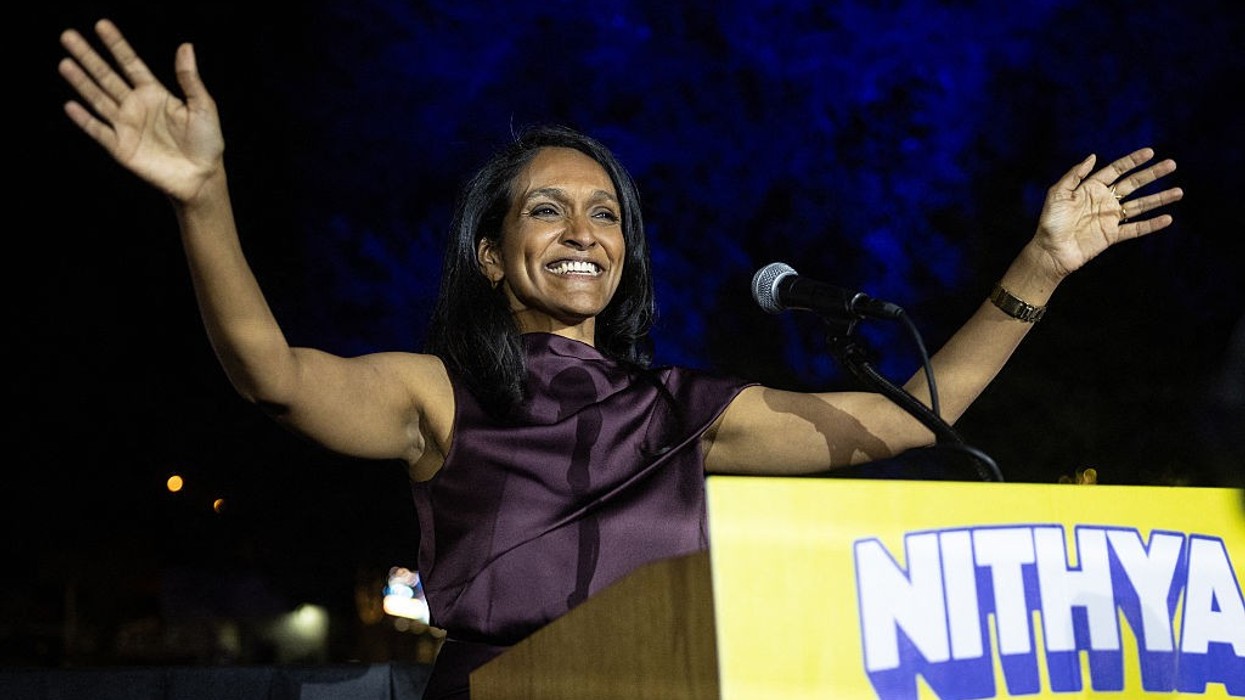
At her election night gathering at the Greek Theatre plaza on Tuesday, Raman urged supporters not to celebrate prematurely.
"I'm hopeful. I'm very hopeful," Raman told the cheering supporters. "I'm also really superstitious. So we're all just going to be cool, OK? Very cool."
Her projected lead over Bass marks a major political development for Los Angeles. However, the final outcome remains dependent on the completion of vote counting.
If confirmed, Raman will face the challenge of turning her campaign promises into measurable results, particularly on homelessness, housing affordability and public safety. Her victory may have been powered by a promise of change, but delivering that change will be the real test of her leadership.