

- Hemant Pandya traces a 40-year career from Gujarati theater to Cannes 2026.
- He worked with Paresh Rawal, Sanjay Leela Bhansali, and Nitin Desai.
- Cannes accreditation marked a major milestone in his filmmaking journey.
- His next feature explores a racist attack on an Indian American store owner.
- He says Hollywood still underrepresents Indian Americans despite their growing population.
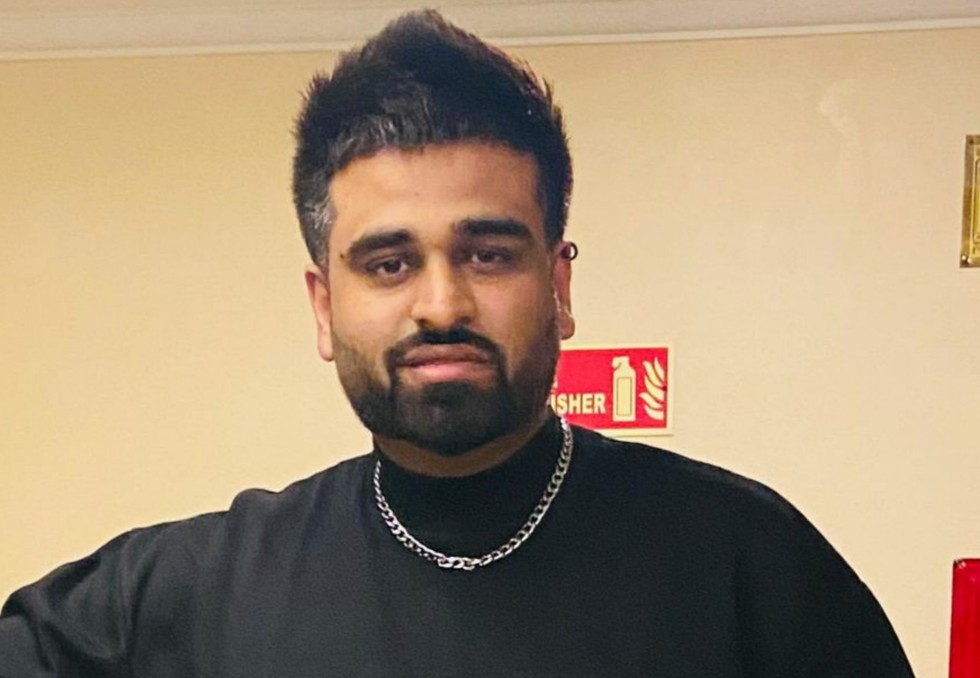
For filmmaker Hemant Pandya, the journey to the Cannes Film Festival in 2026 was not simply another international trip. It represented the culmination of four decades spent learning every corner of the entertainment industry, from backstage in Gujarati theater to Bollywood film sets, television productions, independent filmmaking, and now the growing world of Indian American cinema.
In an exclusive interview with India Weekly, Pandya spoke about his remarkable career, his Cannes experience, and his mission to tell stories that reflect the lives of Indian Americans, stories he believes have long been overlooked by mainstream Hollywood.
A journey that began with Paresh Rawal
Pandya's career began in 1987 while he was still a college student in Mumbai. Curious about theater, he walked into a rehearsal being led by veteran actor Paresh Rawal.
"I told him that in Gujarati only, yes, if you can do it, I can also do it. That's how he started. He said, OK, come from tomorrow."
That simple invitation changed his life.
Over the following years, Pandya worked in acclaimed Gujarati plays including Maharathi, Mulraj Mansion, and Chiranjeev. The experience became the foundation for everything that followed.
His career soon expanded into television with Chanakya, directed by Dr. Chandraprakash Dwivedi. He later worked alongside legendary production designer Nitin Desai and collaborated extensively with filmmaker Sanjay Leela Bhansali on films including Hum Dil De Chuke Sanam, Devdas, and Bhansali's debut feature Khamoshi.
His final television project in India was Taarak Mehta Ka Ooltah Chashmah before he relocated to the United States.
Reinventing himself in US
Moving to America meant starting over.
"So coming here in USA was so difficult that I cannot do a job. My mentality is not that."
Instead of leaving the creative industry behind, Pandya transformed his passion for photography into a profession, launching Friday Films. After establishing himself as a respected photographer in the Indian American community, he returned to filmmaking through independent cinema.
His award-winning short films, Words of Rage and Two Steps, tackle social issues including anger management and bullying.
Now he is preparing two feature films. One is a Gujarati-language production scheduled to begin filming in early 2027. The second is an Indian American psychological thriller.
Cannes 2026: More than a red carpet
Pandya says attending the Cannes Film Festival was a dream nearly forty years in the making.
Unlike many attendees who purchase market accreditation, Pandya received official accreditation as an industry professional after years of work as a filmmaker and founder of the New Jersey Indian International Film Festival.
"So I was lucky enough... I received their accreditation as an industry professional."
For him, Cannes was never about celebrity sightings.
"Attending Cannes is not just the red carpet, but that entire atmosphere is so beautiful that I would recommend that every single filmmaker should go."
He described meeting filmmakers from around the world, exchanging ideas, studying emerging storytelling techniques, and observing how even low-budget independent films can attract global buyers.
"You see how the world is moving forward with different kind of storytelling, different kind of formats."
Those conversations, he says, are just as valuable as screenings themselves.
Giving Indian Americans a stronger voice
Pandya believes his next chapter as a filmmaker is about much more than entertainment.
He wants to tell stories rooted in the experiences of Indian Americans.
One upcoming feature, tentatively titled Love, Loathe and Life, is based on a true incident involving an Indian American gas station owner who becomes the victim of a racist attack.
"It is based on a person who is owning a kind of gas station and a store together which are attached here in USA. And he has the racist attack on him, and he gets killed."
Pandya says the story is deeply personal because he has witnessed similar incidents himself.
"I have seen such an incident in front of me. Also, people are abusing the store owner and just telling them to get away from, go back to your country."
He hopes the film will shine a light on the prejudice that some immigrants continue to face while also appealing to broad audiences.
"You have to balance both the things. The film has to attract people also, as well as you portray the right issues."
A call for better representation
Pandya also believes Hollywood has yet to fully recognize the contributions of Indian Americans.
He points out that although diversity has improved in many areas, Indian American actors and filmmakers remain underrepresented.
"For them, minority is only African American people... if you see a Hollywood movie, you will see a lot of African American actors playing the lead roles or playing the lead supporting roles."
He noted that representation has also increased for some other communities.
"Nowadays, the same thing is happening with some Chinese people."
But he believes Indian Americans continue to receive relatively few opportunities behind or in front of the camera despite being one of the country's fastest-growing and most successful immigrant communities.
"You can count number one or two, not even 3 also. Indian American voices or Indians as a filmmaker or as an actor in Hollywood industry."
Rather than criticizing the industry, Pandya sees enormous opportunity.
"This market is so, so open... If you have good content, well, you can do better. People want content."
After nearly forty years in entertainment, Hemant Pandya is no longer chasing recognition. Instead, he is focused on ensuring that the next generation of Indian American stories is finally seen, heard, and remembered—not as stereotypes, but as authentic human experiences worthy of the global stage.



 Outlook




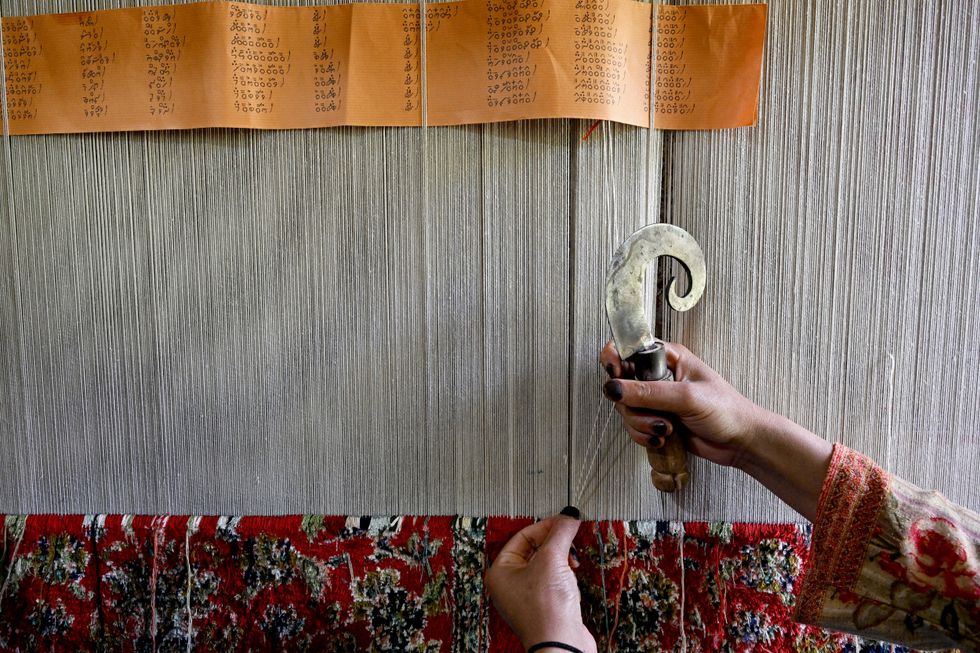 A Kashmiri craftswoman weaves a silk carpet at a factory in SrinagarTauseef Mustafa/AFP via Getty Images
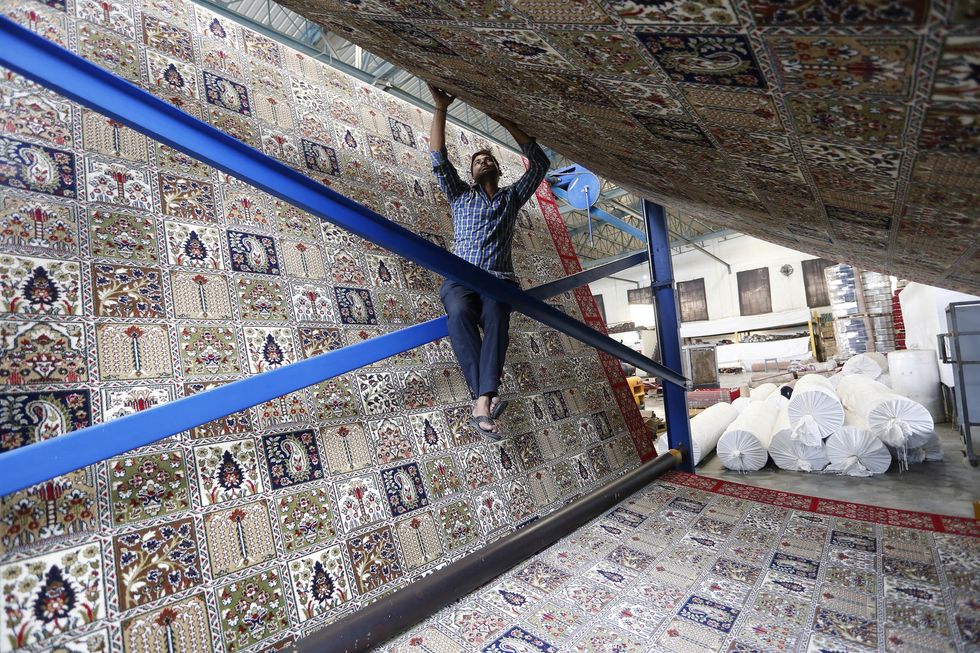 A worker weaves a carpet at a factory on the outskirts of JammuAlok pathania/AFP via Getty Images
 A worker checks thread reels at a carpet factory in JammuAlok pathania/AFP via Getty Images
 Getty Images