
Highlights:
The US midterm elections have delivered a major political setback for president Donald Trump, with the Democratic Party making significant gains in Congress and winning key gubernatorial races. While the results have been described as a referendum on Trump's presidency, international affairs experts say their longer-term significance may depend on how the president responds during the final two years of his term.
For India, the results raise questions about the future direction of bilateral relations. For Indian Americans, they bring renewed attention to political representation, community participation and the role of people of Indian heritage in shaping American public life.
Several experts believe the results send a message that voters want a change in Trump's approach. However, they caution that it is too early to predict whether the outcome will lead to a major shift in US foreign policy or its relationship with India.
Why are the midterm results being called a referendum on Trump?
Midterm elections take place halfway through a US president's four-year term. They determine the composition of Congress and can significantly influence how much political support a president has to implement policies.
Historically, the party occupying the White House often loses seats during midterm elections. This time, however, the scale of Republican losses has drawn particular attention.
Trump's Republican Party faced defeats in several states, including Texas, Georgia and Iowa, where Democrats won gubernatorial races. Republicans also suffered setbacks in Senate contests across multiple states.
Former Indian diplomat K P Fabian described the outcome as a referendum on Trump, arguing that the results reflected dissatisfaction with his presidency.
"By and large, it (midterm election) is a referendum on the incumbent president. In the case of Trump, it has been a referendum on him more than has been the case usually," Fabian told PTI.
He added that American voters were sending a message that they wanted a change in the president's behavior.
The election has been shaped by several contentious issues, including the conflict with Iran, tariffs, immigration and rising living costs. Higher fuel prices and inflation have also added to domestic pressure on the administration.
The conflict involving the US and Iran, which began following joint US-Israeli strikes on February 28, has had wider economic and geopolitical consequences.
Trump acknowledged the Republican losses in an interview with CBS News and said he was prepared to work with the Democrats.
"My message is, congratulations to the Democrats, and I look forward to working with you for the good of our country," he said.
What happens to Trump during the final two years?
The immediate question is whether the Democratic gains will restrict Trump's ability to pursue his political agenda.
With the opposition gaining control of Congress, the president could face greater scrutiny of his policies and decisions. Congressional oversight may become more prominent, while disagreements over legislation, spending and foreign policy could make it harder for the administration to move quickly.
Fabian believes Trump could adopt a more pragmatic approach to protect his political legacy during the remaining two years of his term.
Former Indian ambassador to the Netherlands Venu Rajamony also described the election outcome as positive for the US and the wider world.
However, he cautioned that Trump's next moves, particularly in the Gulf region, remain difficult to predict.
"Let's hope sense and sobriety prevail, and he will be held back by others in his own administration and party," Rajamony said.
He also expressed hope that diplomatic efforts would help resolve tensions and reopen the Strait of Hormuz, an important route for global energy supplies.
The results could therefore create greater pressure on the administration to reconsider some of its decisions. But a change in political balance does not automatically mean a change in presidential policy.
What could the results mean for India-US relations?
For India, the outcome matters because the relationship with Washington extends beyond trade and diplomacy. It also involves strategic cooperation, regional security and India's position in the wider global order.
Fabian argued that Trump's approach toward India had been a major mistake, saying Washington needed to recognize India's growing economic and geopolitical importance.
He described India as a rising power and a civilizational state, highlighting its role as a leader of the Global South.
The election results could create an opportunity for a more measured approach to India-US relations, particularly if the administration faces greater pressure at home. However, there is no immediate indication that the Democratic gains will directly translate into a major change in Washington's India policy.
Rajamony's comments also reflected the uncertainty surrounding the administration's foreign policy priorities. While he welcomed the results, he said Trump's next steps in the Gulf remained unpredictable.
For India, developments involving Iran and the Strait of Hormuz are particularly important because of their implications for energy supplies and international trade.
The broader question is whether domestic political pressure will encourage greater diplomatic restraint or whether Trump's existing foreign policy approach will continue despite the election setback.
What will the results mean for Indian Americans?
The midterm elections have also highlighted the growing participation of Indian Americans in US politics, both as candidates and as voters.
Several candidates of Indian heritage were in the spotlight during the elections, although their political fortunes varied.
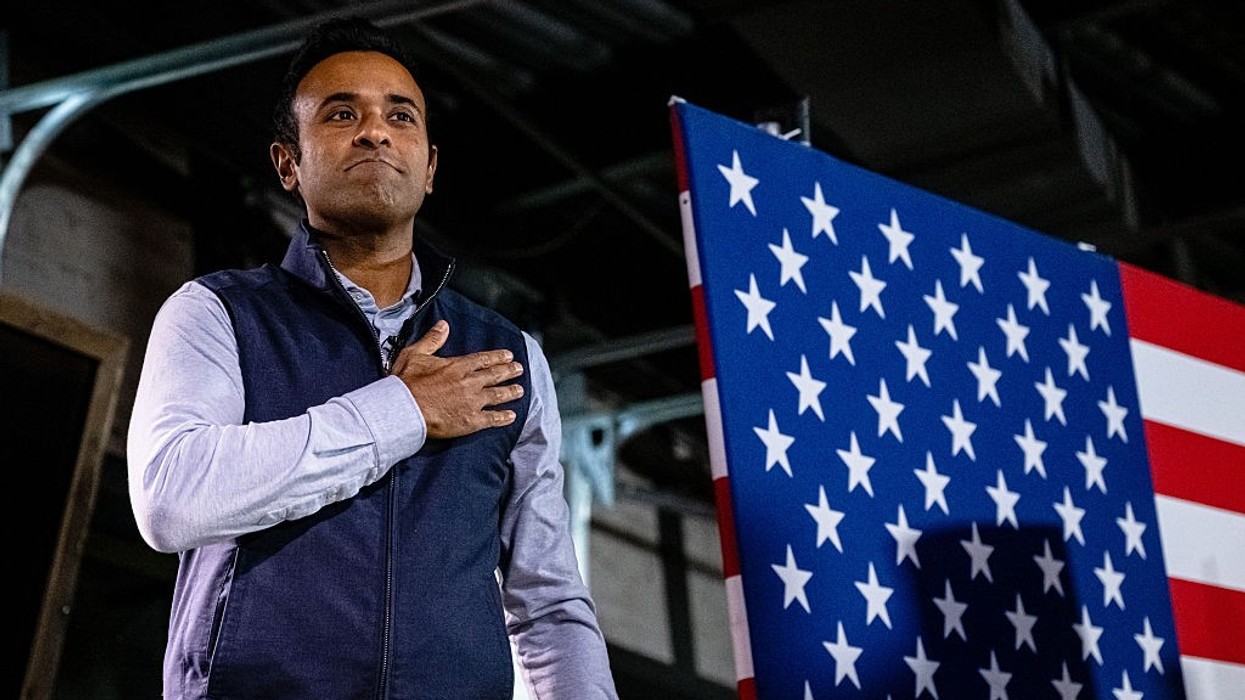
One of the most prominent defeats was that of Vivek Ramaswamy, Trump's preferred Indian American candidate, who lost the Ohio gubernatorial race to Democrat Amy Acton following a bitter campaign that also exposed divisions within the Republican Party.
On the Democratic side, Ami Bera won reelection to the US House of Representatives from California's 3rd Congressional District. Born in Los Angeles to Gujarati immigrant parents, Bera has been a prominent Indian American voice in Congress.
Pramila Jayapal, who was born in Chennai, also won reelection from Washington's 7th Congressional District, which includes most of Seattle and surrounding areas.
Democrat Pia Dandiya won election to the House of Representatives from Florida's 22nd Congressional District, defeating Republican Casey Askar.
These victories and defeats illustrate that Indian American political participation is not confined to one party or political ideology. Candidates of Indian heritage are increasingly competing across different states and electoral constituencies.
For the community, the significance of the results goes beyond the number of Indian American politicians elected. Their representation can also influence how issues affecting immigrant communities, economic opportunities, foreign policy and the India-US relationship are discussed in American political institutions.
Indian American community leader and former Federation of Indian Associations president Avinash Gupta told PTI that the election reflected the community's growing involvement in American politics.
"I am in this country since 1996, and I have seen four decades of social and political scenes. We are witnessing a historic midterm election, which usually always goes against the incumbents," Gupta said.
He added that it was too early to determine whether the results would affect bilateral relations or the Indian American community.
"I don't think there will be any major change, but what happens two years from now in the next presidential election, that will be interesting to watch. We have a proud Indian heritage, but for our adopted country, we share a responsibility for its success."
Gupta also pointed to the mixed electoral fortunes of Indian American candidates, describing their growing participation as a positive development for the community and India-US friendship.
Meanwhile, an Indian American citizen in Georgia, identified as Siva by PTI, said political divisions in the country had become increasingly pronounced.
"That is something which is very significant for this election... We are looking for a more moderate stand on everything," he said.
Why the 2028 presidential election is already attracting attention
Although the midterms have changed the political landscape, the next presidential election in 2028 could prove even more consequential.
Gupta believes the next two years will be important in determining how American voters assess Trump's presidency and what direction the country takes afterward.
The results have demonstrated that even a president with a strong political base can face significant electoral resistance when voters become dissatisfied with his administration.
For Indian Americans, the coming years could also be an important period for strengthening political participation and representation, regardless of which party holds power.
For India, the immediate priority will be to maintain a stable relationship with Washington amid uncertainty over trade, regional security and foreign policy.
The midterm results may have sent a message to Trump, but whether that message leads to a change in his policies remains to be seen. As experts have suggested, the more consequential political story may unfold over the next two years — and ultimately in the 2028 presidential election.