
- The FAA lifted its nationwide ground stop at 8:15 pm Eastern Time on Friday after more than four hours
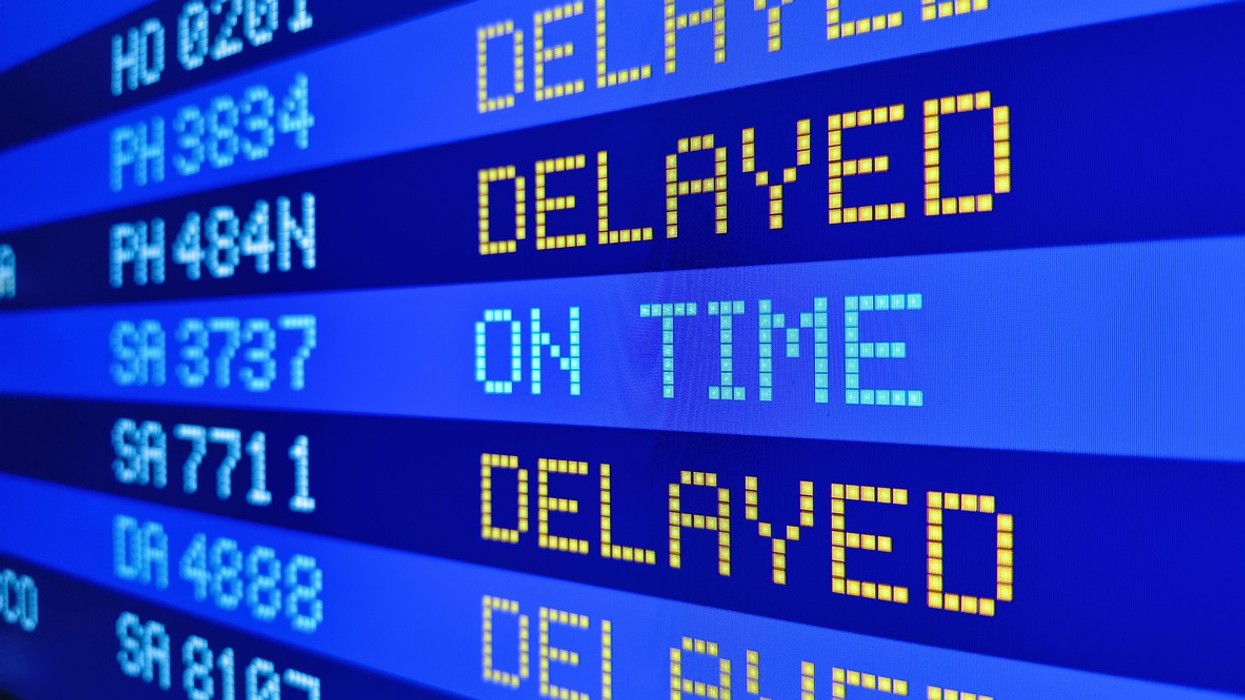
- More than 15,000 flights were delayed or canceled, with thousands of additional disruptions reported on Saturday
- Officials blamed problems involving aging air traffic control equipment and called for billions of dollars to modernize the system
Commercial air travel across the United States has resumed after a rare nationwide shutdown grounded departing flights for more than four hours, but airlines are still struggling to restore their schedules as cancellations and delays continue.
The Federal Aviation Administration (FAA) lifted the ground stop at 8:15 pm Eastern Time on Friday, November 13, after testing its air traffic control systems and confirming that operations could resume safely.
The disruption began at 3:54 pm ET after communications problems affected air traffic control centers across the country. The FAA halted departures nationwide, citing extraordinary circumstances and safety concerns.
According to FlightRadar24 data cited by Reuters, more than 6,600 flights were canceled and 8,600 delayed on Friday. More than 2,500 additional flights were canceled on Saturday, November 14, as airlines worked to recover from the disruption.
The shutdown was the longest nationwide grounding of US flights since the September 11, 2001, attacks. Although the order was lifted on Friday night, Transportation Secretary Sean Duffy warned that restoring normal operations would take time.
The disruption affected major airports including New York's John F Kennedy International Airport, Newark Liberty International Airport, Chicago O'Hare, Atlanta and Los Angeles International Airport. Passengers faced missed connections, long waits and uncertainty over rebooking as airlines struggled to reposition aircraft and crews.
What caused the nationwide flight shutdown?
The disruption followed a telecommunications failure affecting the FAA's air route traffic control network, which supports communication between air traffic controllers and pilots.
Duffy said switches and routers in the agency's legacy infrastructure had become overloaded with data, producing inconsistent readings that affected communications and radar information.
"Our switches, our routers actually got overloaded with data, and they started to give us inconsistencies in the data from those routers," he said during a White House briefing.
He added that authorities decided to shut down departures because of the inconsistencies.
The failure did not mean that all radar and communication systems stopped working. More than 3,500 aircraft already in the air were allowed to continue to their destinations and land safely. However, at least 827 flights had been diverted by 7:05 pm ET, according to aviation analytics company Cirium. Some aircraft returned to their departure airports, while others were redirected to alternative destinations.
Homeland Security Secretary Markwayne Mullin said there was no evidence of a cyberattack or criminal activity behind the incident. He described the failure as appearing to be mechanically driven, although federal agencies were continuing to examine the circumstances.
Questions also emerged over whether the outage was connected to SMART, an artificial intelligence-powered air traffic management platform recently expanded across FAA control centers. Duffy said the new system was not connected to the legacy equipment involved in Friday's failure.
The incident has nevertheless raised concerns about the resilience of America's aviation infrastructure, particularly as the FAA continues to introduce modern technology alongside older equipment.
How long will flight disruptions continue?
Although the FAA cleared departures to resume on Friday night, airlines faced a difficult task in restoring their operations.
Aircraft and flight crews were left in the wrong locations after the nationwide halt. Pilots and cabin crew also face limits on how long they can work, meaning delays can affect subsequent flights even after the original technical problem has been resolved.
The Associated Press reported that more than 2,500 flights were canceled on Saturday, with hundreds more delayed. Airlines including United Airlines, Delta Air Lines, American Airlines and Southwest Airlines worked to reposition aircraft and adjust schedules.
The disruption also affected international passengers connecting through US airports, including travelers flying between the United States and destinations such as New Delhi, Mumbai, London and Toronto.
Airlines advised passengers to check their flight status directly with carriers before travelling to airports, as departure times and rebooking arrangements remained subject to change.
The scale of the disruption has also renewed scrutiny of the FAA's aging technology. Duffy warned that similar failures could happen again unless the country's air traffic control infrastructure underwent a comprehensive overhaul.
The administration had sought $30.1bn in additional funding for air traffic control modernization, following $12.5bn approved by Congress previously. Duffy said a complete overhaul of the system could cost around $50bn.
Mullin also called for a fundamental redesign rather than continuing to add modern equipment to an aging network.
The incident has placed fresh pressure on lawmakers to accelerate investment in the systems that support US aviation. The FAA has been working to replace outdated equipment, but the latest failure demonstrates the operational consequences when critical communications infrastructure becomes unstable.
For airlines, the immediate priority remains clearing the backlog and getting passengers to their destinations. For the government, the challenge is preventing another nationwide disruption by addressing weaknesses in the technology that keeps American air travel moving.