
- At least 132 people have been killed across western Colombia.
- More than 2,700 people have been reported missing.
- About 1,600 buildings have been damaged or destroyed.
- Rescue teams are searching collapsed buildings for survivors.
- The United States has pledged $15.5 million in emergency aid.
Rescue crews across western Colombia worked through the night and into Tuesday (11), searching collapsed buildings for survivors after the country's strongest earthquake in two decades.
The magnitude 7.4 earthquake struck Monday (10), with widespread destruction reported in cities including Cali and Pereira. The Choco region, west of Cali and Pereira, was also heavily affected, although authorities were still assessing the full scale of the damage.
At least 132 people have died, according to local authorities and media reports, but officials warned that the toll could rise as emergency teams reach more devastated areas.
Cali, a city of about 2.2 million people located roughly 280 kilometers (175 miles) southwest of Bogota, reported dozens of deaths. President Abelardo de la Espriella said Monday that 35 people had been killed in the city.
Authorities in the Risaralda region, where Pereira is located, reported at least 40 deaths. Nine people were confirmed dead in Choco, two in Caldas and one 73-year-old resident died in Antioquia.
At least 87 people were initially reported injured. De la Espriella later said 700 people had been injured in Valle del Cauca alone.
More than 2,700 people were reported missing on citizen-run websites by Monday night. Authorities cautioned that the figure does not necessarily represent people whose disappearances have been officially confirmed.
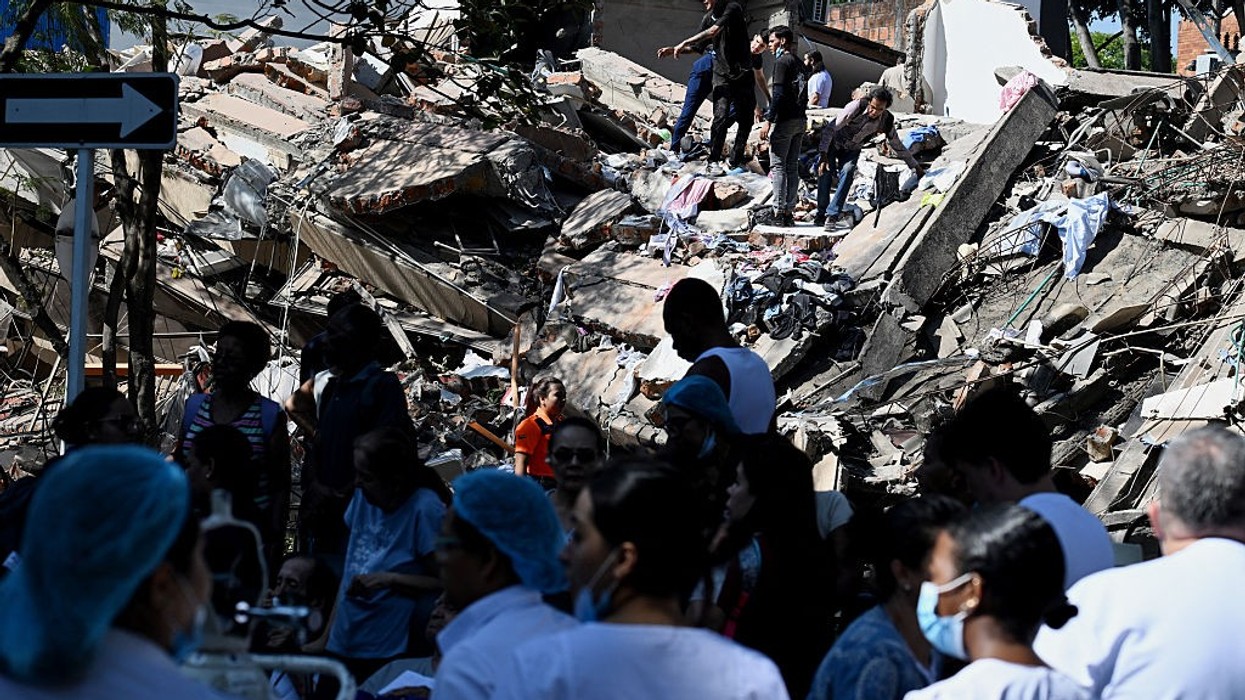
About 1,600 buildings were damaged or destroyed, including the towers of a historic cathedral in Manizales.
In Cali, several upper floors of a hospital, including areas used for pediatric care, collapsed. Hospital director Irne Torres Castro told Caracol television that some patients were trapped, while about 600 others had to receive treatment on a rubble-covered street.
Survivors pulled from the rubble
The government has made finding people trapped under debris its top priority. About 1,000 members of the security forces were expected to be deployed to Cali by dawn Tuesday (11) after reports of looting. Cali and Pereira also imposed nighttime curfews.
“Our intention is to cooperate in any way necessary. Here, there are no distinctions or ideological divisions when it comes to defending our people or showing solidarity,” the president told journalists.
Soldiers, firefighters, emergency workers, volunteers and relatives joined the search operations. In Cali, residents formed human chains and used their hands to remove concrete, bricks and other debris.
Rescuers repeatedly stopped their work to listen for sounds from people trapped beneath collapsed structures.
Firefighters said two women and two children were rescued from one collapsed building. In Pereira, rescue workers reported making contact with a boy trapped beneath a bakery while cranes were used to remove unstable sections of damaged buildings.
In Cali, volunteer Carmen Yasmin Garcia, 43, said her group had rescued seven people from a collapsed building but that four others and a dog remained trapped.
“A moment ago, there was scratching, but now we can’t hear anything. We still have faith that the dog is alive and we can get these people out,” Garcia said.
“We need people with sticks and spades. The more people lending a hand the better.”
The rescue effort is particularly difficult in Choco, a remote region where many communities can be reached only by boat or plane. The U.S. Geological Survey identified San Jose Del Palmar as the earthquake's epicenter. The community has about 4,800 residents and is roughly 400 kilometers (250 miles) west of Bogota.
Authorities sent engineers, rescue personnel and search dogs to the region to determine the extent of the destruction.
Colombia's Geological Service reported 21 aftershocks by late Monday and warned that additional tremors were possible.
Camila Gomez, deputy director of programs for Colombia and Venezuela at the International Rescue Committee, said the earthquake struck an area already facing a serious humanitarian crisis.
“This is the largest earthquake that Colombia has experienced in two decades,” she told Al Jazeera.
“From what we have seen already, there is a clear need, of course, for health services and education services because some of the education facilities, at least, I think, 50 of them, have been affected by this earthquake.”
Colombia declares emergency as aid arrives
Colombia declared a national state of emergency as authorities expanded rescue and relief operations. De la Espriella visited Quibdo, the capital of Choco, as well as Cali, and promised rental subsidies for residents whose homes were damaged.
Nighttime curfews were imposed in Cali, Armenia and Manizales. Cali also increased its police and military presence amid concerns over looting.
Hospitals in five cities were placed on red alert. Airport operations were suspended in Pereira, Manizales, Quibdo, Armenia, Cartago and Buenaventura while officials conducted structural inspections.
Residents have played a major role in the emergency response, delivering food and supplies and helping professional rescuers search for survivors.
Authorities also postponed Cali's Petronio Alvarez Music Festival, an annual celebration of Pacific music scheduled to begin Wednesday, along with professional soccer matches.
International assistance is also beginning to reach Colombia. The United States announced $15.5 million in emergency assistance for shelters, food and other earthquake relief. Secretary of State Marco Rubio said Washington was monitoring developments and was prepared to provide additional support.
The European Union said it had activated the Copernicus satellite service to help rescue teams assess damage and coordinate operations.
El Salvador and Mexico also offered assistance. Salvadoran President Nayib Bukele said his government was prepared to send rescue teams, medical personnel, paramedics and supplies.
“From El Salvador, we are in communication and ready to provide immediate support with our rescue teams, medical personnel, paramedics, supplies or any other assistance that our Colombian brothers and sisters deem necessary,” Bukele said.
As emergency crews continue working through damaged communities, authorities remain focused on locating survivors, assessing isolated areas and determining the full human and economic cost of the disaster.