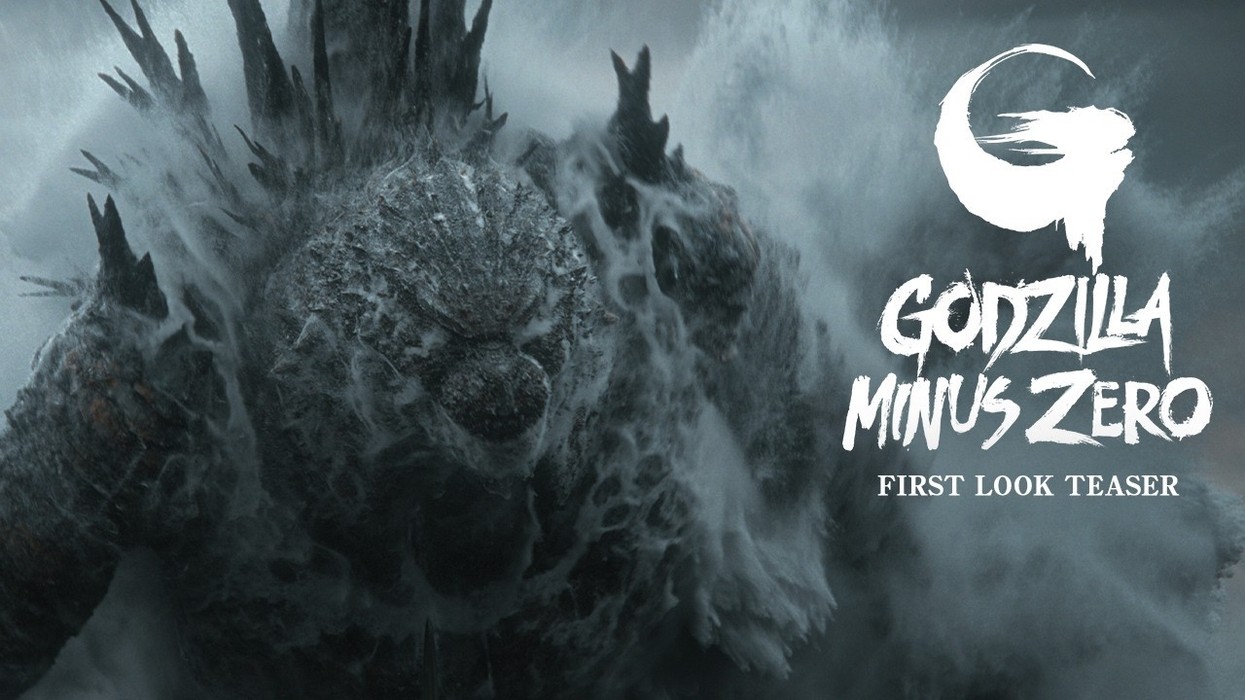

- Director Takashi Yamazaki teases unprecedented proximity to Godzilla
- Advanced sound and visuals aim to transform the theater experience
- Film follows the Shikishima family in postwar Japan
- Set for US release in November after CinemaCon preview
- Builds on the success of Oscar-winning Godzilla Minus One
The legendary monster Godzilla is set to return to the big screen in a way audiences have never experienced before. According to Japanese director Takashi Yamazaki, his upcoming film Godzilla Minus Zero will bring viewers closer to the iconic creature than ever, both visually and sonically.
“I don't think we've ever been able to get this close to Godzilla before,” Yamazaki said during an interview with AFP on the sidelines of CinemaCon in Las Vegas, where he presented an early preview of the film.
That sense of proximity, he explained, is not just about visuals but also about sound. Yamazaki emphasized that the monster’s presence will be felt through every roar and step. “Yamazaki said the legendary monster's roars, as well as the thunderous sound of his footsteps, will reverberate through theaters in an unprecedented way.”
These advancements, he noted, are made possible by significant improvements in cinematic sound design and visual effects technology. For Yamazaki, the movie theater remains the ideal setting for experiencing Godzilla, which he described as the creature’s natural habitat. The immersive qualities of modern theaters allow filmmakers to push boundaries and create experiences that cannot be replicated elsewhere.
The director, who previously helmed the 2023 hit Godzilla Minus One, is no stranger to success within the franchise. That film became a box-office sensation and earned an Academy Award for Best Visual Effects, setting a high bar for its follow-up.
Reflecting on his role as a filmmaker, Yamazaki stressed the responsibility of creating compelling reasons for audiences to return to theaters, especially in an era dominated by streaming platforms. “It falls partly on us, the filmmakers, to constantly create new experiences and provide reasons for people to want to go to the movies and spend their time there,” he said.
- YouTube youtu.be
Godzilla Minus Zero, which is scheduled for release in US theaters in November, stars Ryunosuke Kamiki and Minami Hamabe. The story is set in 1949, two years after the events depicted in Minus One, and centers on the Shikishima family.
According to Yamazaki, the film begins on a hopeful note. The family has managed to rebuild their lives and find a sense of stability after hardship. “At the beginning of the film, are truly happy,” he said. “They have finally found a balance in what it means to be a family.” However, that peace is short-lived. “And then, once again, they are confronted with utter despair and a horrific tragedy.”
The emotional core of the story is just as important as the spectacle. Yamazaki explained that audiences will connect with the characters’ struggle to endure and rebuild in the face of overwhelming adversity. “The director added that audiences will be able to identify with the sheer effort required to summon the strength to recover and find the will to go on living.”
At 61, Yamazaki faces a unique challenge with this sequel: surpassing the success of his previous film. “‘Godzilla Minus One’ was, fortunately, highly acclaimed and has become one of the most beloved Godzilla films of all time,” he said.
“‘That benchmark has become a new obstacle. Little did I know I was feeding my enemy,’ added the director.”
Despite the pressure, Yamazaki sees the sequel as an opportunity rather than a limitation. Returning to the world of Godzilla allows him to explore ideas and visuals he was unable to include in the earlier film. “I wasn't able to do everything with 'Godzilla Minus One,'” said Yamazaki. “So, one of my own new challenges is to put images and visuals on the screen that no one has ever seen before in a kaiju film.”
During his CinemaCon presentation, Yamazaki offered a glimpse of what audiences can expect. In one striking teaser moment, Godzilla is shown face-to-face with the Statue of Liberty in New York. The scene generated excitement and surprise among attendees, sparking speculation about the film’s scope.
However, Yamazaki urged caution in interpreting that moment as representative of the entire story. While visually impactful, he emphasized that the film remains deeply rooted in Japan. “The image caused a stir in the room, but Yamazaki cautioned that — beyond the expectations the clip generated, ‘the film will feature Japan much more than people imagine.’”
He added that the scene serves a specific narrative purpose rather than existing solely for spectacle. “That scene is very important for the character in the film, and it is a very impressive kind of scene,” he said. “But ‘the focus was on the story, and on finding what was best for the narrative.’”
As the film industry continues to adapt to changing viewing habits, Yamazaki remains a strong advocate for the theatrical experience. He believes that certain films, especially those featuring larger-than-life characters like Godzilla, are meant to be seen on the big screen.
“In the streaming era, Yamazaki also insisted on the importance of the big screen for Godzilla, and how the monster, having been born on it, could only truly be at home when he looms many feet tall on a giant projection.”
“I think [Godzilla] really needs to rely on certain experiences that we can only have inside movie theaters,” he said.
With “Godzilla Minus Zero,” Yamazaki aims to deliver not only a visually stunning spectacle but also an emotionally resonant story, ensuring that the King of Monsters continues to evolve while staying true to its cinematic roots.












 Sabyasachi Mukherjeex
 Christy Turlington opens the show in denim and jewelry from Sabyasachi’s collaboration with The Metropolitan Museum of ArtDia Dipasupil/Getty Images
  Models showcase looks from the Bengal Byzantine Broadway collectionx
 x
x x
x