
- Indian-Americans are being urged to celebrate Ganesh Chaturthi privately.
- Messages advise avoiding large public gatherings, especially in Dallas.
- Content creators are being asked not to post festival videos.
- The caution comes amid rising anti-Indian rhetoric in the US.
- A festival born as a symbol of unity now carries a painful sense of fear.
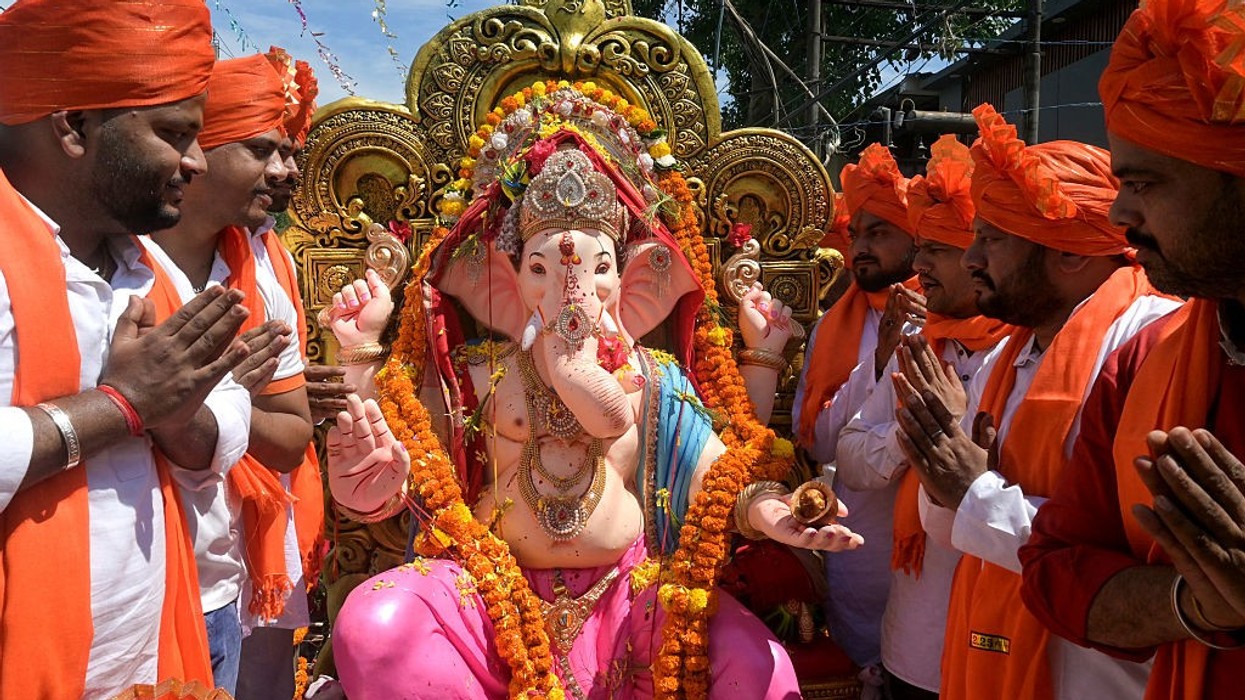
Ganesh Chaturthi is supposed to be a time when communities come together—with music, prayers, colorful decorations, shared food and the joyful arrival of Lord Ganesha.
But for some Indians living in the United States, this year's celebration is beginning with a heartbreaking calculation: Should we celebrate openly, or is it safer to celebrate behind closed doors?
With Ganesh Chaturthi approaching on September 14, messages circulating among Indian-Americans are urging families to keep celebrations private and avoid public festivities. Some are also asking content creators not to post videos or photographs that could reveal large gatherings.
The reason is deeply unsettling.
Amid a growing wave of anti-Indian rhetoric and racism in parts of the US, some members of the Indian-American community fear that perfectly ordinary images of Hindu celebrations could be taken out of context and used to fuel claims of an “Indian takeover” or “invasion.”
For a community that has spent decades building lives in America, the thought of hiding a religious celebration can feel painfully unfamiliar.
Celebrate only at home, reject invites to public events
The message circulating online is blunt: “celebrate only at home” and “avoid group celebrations.”
A graphic shared by Nris_Adda, an Instagram account focused on issues affecting the NRI community in the US, urged Indians to keep Ganesh Chaturthi celebrations within their homes.
“Please celebrate only at home with your family,” the post read, adding, “Avoid group celebrations in apartments, colonies, roads and public places, especially Dallas.”
It also asked Indian-Americans to turn down invitations to community festivities, saying: “If friends invite you, say we will celebrate at our home.”
For many Indian families, this is a painful suggestion.
Ganesh Chaturthi has traditionally been more than a private religious observance. It is a festival of togetherness. Families gather, neighbors participate and communities come together around the idol of Ganesha.
Now, some Indian-Americans are being asked to do almost the opposite—to close the door, keep the celebration small and avoid drawing attention.
A festival created to bring people together
The irony becomes even more painful when viewed through the history of the festival's public celebration.
In the late 19th century, Indian nationalist leader Lokmanya Bal Gangadhar Tilak helped transform Ganesh Chaturthi from primarily a household observance into a large-scale public celebration.
Tilak recognized the power of a shared religious festival to bring people together at a time when colonial authorities restricted political gatherings. Public Ganesh celebrations created spaces where people from different communities and social backgrounds could gather, participate and build a sense of collective identity.
The public festival therefore became associated not simply with devotion, but with community, solidarity and unity.
More than a century later, that history makes the current situation especially difficult to absorb.
A festival that became a public expression of togetherness is now prompting some Indian-Americans to retreat into private home, not because they have stopped wanting to celebrate, but because they fear how their celebration might be portrayed.
Avoid posting videos as fear follows the community
The message to content creators is equally stark.
“Do not post celebration videos, group videos, or roadside celebration content,” the graphic read.
It also advised people to avoid public mandaps, loud gatherings, road events and visarjan, or idol immersion in lakes.
“Celebrate peacefully. Follow local rules. Stay safe,” it concluded.
The advice comes against a backdrop of increasingly hostile online rhetoric targeting Indians and South Asians.
In Texas, particularly around communities with large Indian-American populations, social media personalities associated with the MAGA movement have portrayed Indian immigration, Hindu temples and community celebrations as evidence of an alleged “invasion.”
Images of Hindu festivals—which to Indian families represent faith, tradition, childhood memories and community—can consequently become something very different in the hands of those seeking to portray Indian-Americans as outsiders.
That is what makes the calls for private celebrations so sad.
People are not being asked to stay home because Ganesh Chaturthi has become less meaningful.
They are being asked to stay home because some fear that being visibly Indian has become a vulnerability.
And perhaps that is the most painful part of this year's festival.
For generations, immigrants have brought their traditions with them while building new lives in America. They have opened businesses, raised families, built temples and community centers, and introduced neighbors to their food, music and festivals.
Yet some now feel compelled to dim that visibility.
The messages circulating among Indian-Americans do not necessarily represent every member of the community, nor do they establish that public celebrations are inherently unsafe. But they reveal something important about the emotional climate confronting some Indian-Americans: the fear that a joyful expression of identity could be turned into evidence against them.
Ganesh Chaturthi was made into a public celebration to bring people together.
Today, some Indian-Americans are wondering whether they can safely come together at all.
And so, this year, behind closed doors and away from cameras, families may light their lamps, place Ganesha in their homes, offer prayers and celebrate quietly.
Not because they have forgotten the spirit of community.
But because, for some, privacy now feels safer than being seen.







 HH Pramukh Swami Maharaj blessing Dr. Bhadreshdas SwamiBAPS
 BAPS charities walk-run draws thousandsbaps.app.box.com
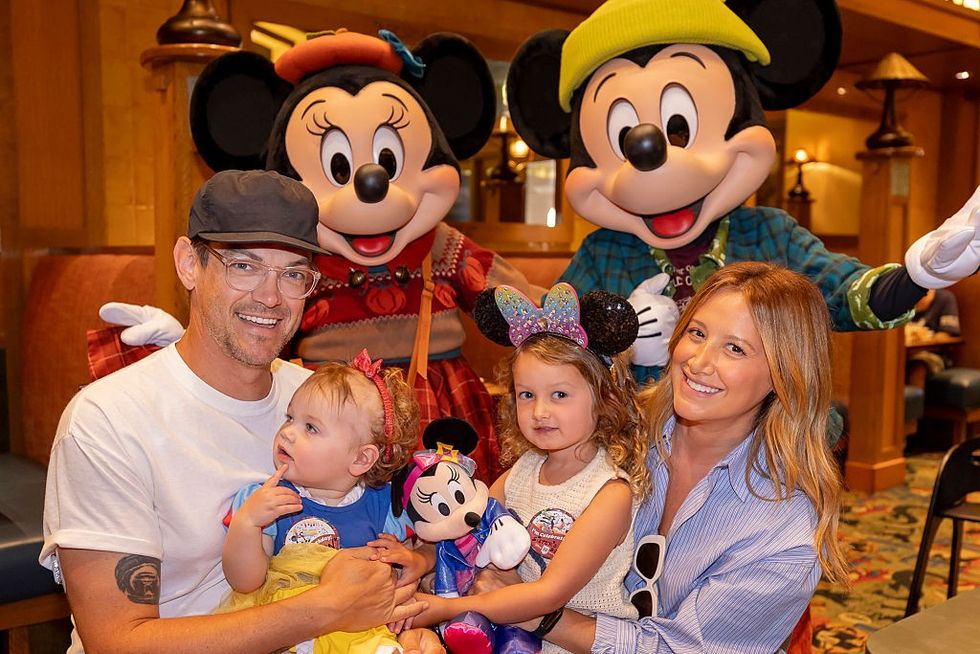 In this handout image provided by Disneyland Resort, actress Ashley Tisdale (R) and family pose with Mickey Mouse and Minnie Mouse while dining at Storytellers Cafe on September 3, 2025 in Anaheim, California. Ashley spent the day celebrating daughter Emerson's first birthday at Disneyland Resort during Halloween Time, which runs now through Oct. 31, 2025. Getty Images