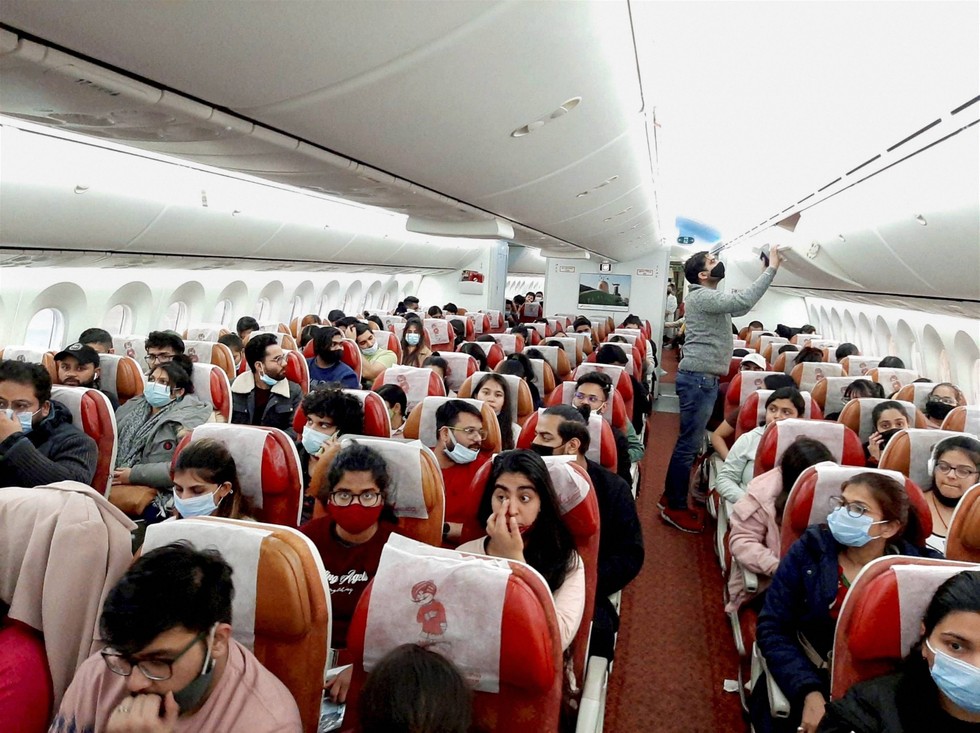
WITH the security situation in Jammu and Kashmir worsening every day, the local police have decided to move vulnerable Indian migrant workers in the union territory to army and police camps for protection after several of them were killed by militants.
Vijay Kumar, the inspector general of police, Kashmir, told Reuters that he has instructed his officers to move the workers after three labourers from the eastern Indian state of Bihar were shot in their rented accommodation on Sunday (17), two of whom succumbed to their injuries.
ALSO READ: Kashmir sees deadly rise in violence
“I have directed officers to shift the vulnerable urgently,” he told the news outlet.
It was not immediately clear however as to how many of the several thousand Indians from various corners of India working in Kashmir would be affected or whether they would be confined in the camps or whether the directive was compulsory.
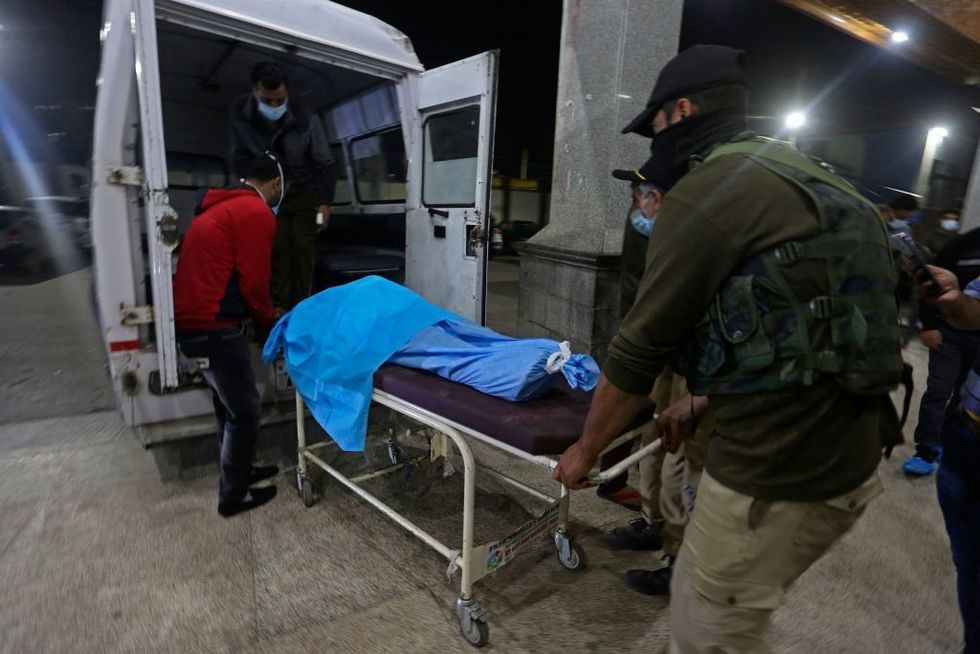 Indian police personnel carry the body of a street vendor who was shot dead by unidentified gunmen, at a hospital in Srinagar in Jammu and Kashmir on October 16, 2021. (Photo by -/AFP via Getty Images)
No outfit has yet claimed responsibility for Sunday’s killings or for another incident on Saturday (16) when two other migrant workers were killed. The killings happened in the wake of murder of a number of civilians in Kashmir belonging to the minority communities.
Insurrection has intensified in Kashmir, India’s only Muslim-majority province, in the recent weeks and New Delhi has accused the neighbouring Pakistan of backing the militants, something it has denied saying it only extends diplomatic and moral support to the people of Kashmir.
The Indian establishment has also expressed apprehension that the return of the Taliban to power in Afghanistan would facilitate the anti-India terror groups based in Pakistan to promote activities against New Delhi’s interests in the volatile zone.
Indian home minister Amit Shah is likely to visit Kashmir between October 23 and 25 to review the security situation there, among other things. The Valley has seen tense days particularly after the Narendra Modi government in New Delhi scrapped Kashmir’s special status as was provided under the Indian Constitution.