

SOTHEBY's auction in Geneva took to a new high this year with million-dollar auctions of some rare jewels. The main highlights of this year’s event were a historically significant Savoy royal tiara, which everyone could try on via Instagram, and the largest Kashmir sapphire ever auctioned.
Made of 11 natural pearls and diamonds, the tiara was passed down through generations of Italy's royal family. It sold for $1.66 million on Tuesday (11) at the auction. It is said to be of historical significance as it was a wedding gift to Maria Vittoria dal Pozzo upon her marriage in 1867 to Amadeo I of Savoy, later king of Spain.
The tiara was kept in the Italian House of Savoy royal dynasty for more than 150 years. It is now bought by an Asian collector. Sotheby's said it was one of the highest prices paid for a tiara in recent years.
To create a buzz online and attract the younger generation, Sotheby's had introduced a filter on Instagram that allowed people to create a picture of themselves wearing the Savoy tiara in a sumptuous Italian palace.
Another piece of jewellery to make a mark on this year’s Geneva auction is the rare 55.19 carat Kashmir sapphire which was formerly in the collection of Maureen Constance Guinness, a marchioness of the aristocratic Anglo-Irish brewing family. This, alongside another cushion-shaped one of 25.97 carats, stood out in the collection as Kashmir sapphires of over 30 carats are considered extremely rare.
Since the mining of Kashmir sapphires only lasted from 1882 and 1887, these gems are considered one of the most coveted pieces of jewellery. These were brought by the British jeweller Graff.
Another standout piece was a pendant set with a 104.40-carat pear emerald which was sold for $2 million.
The auctioneers said that they have witnessed unprecedented global demand for royal jewellery, particularly from younger clients in Asia.













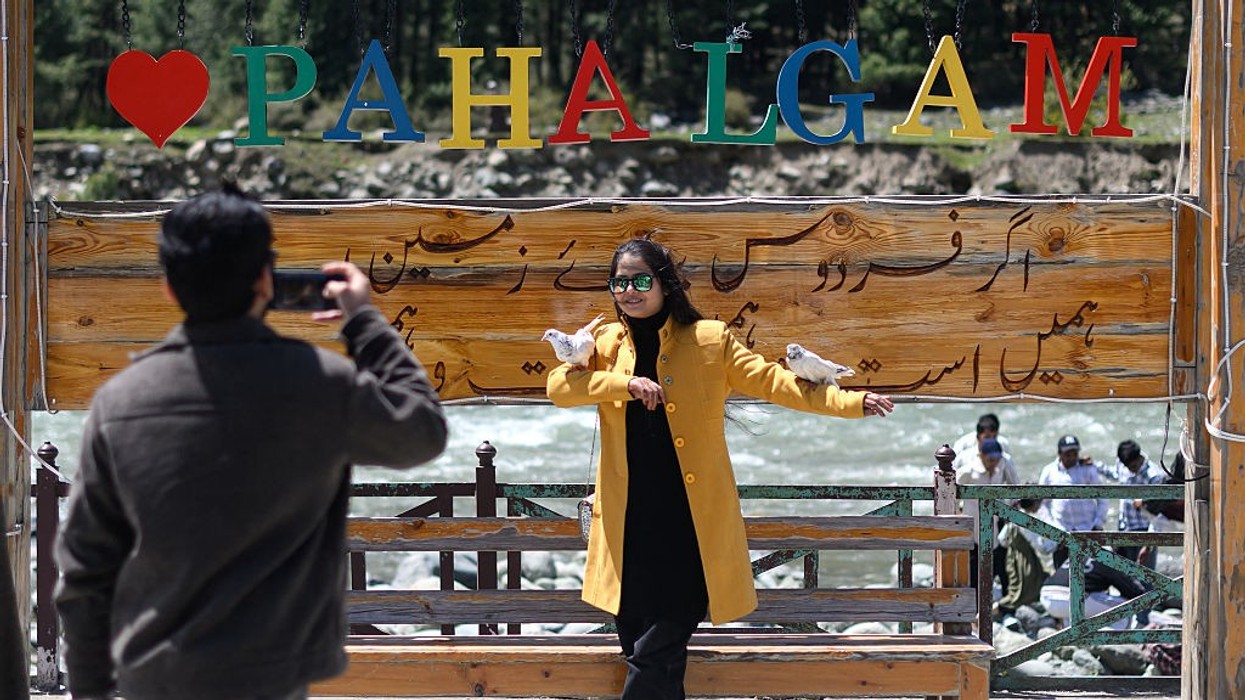
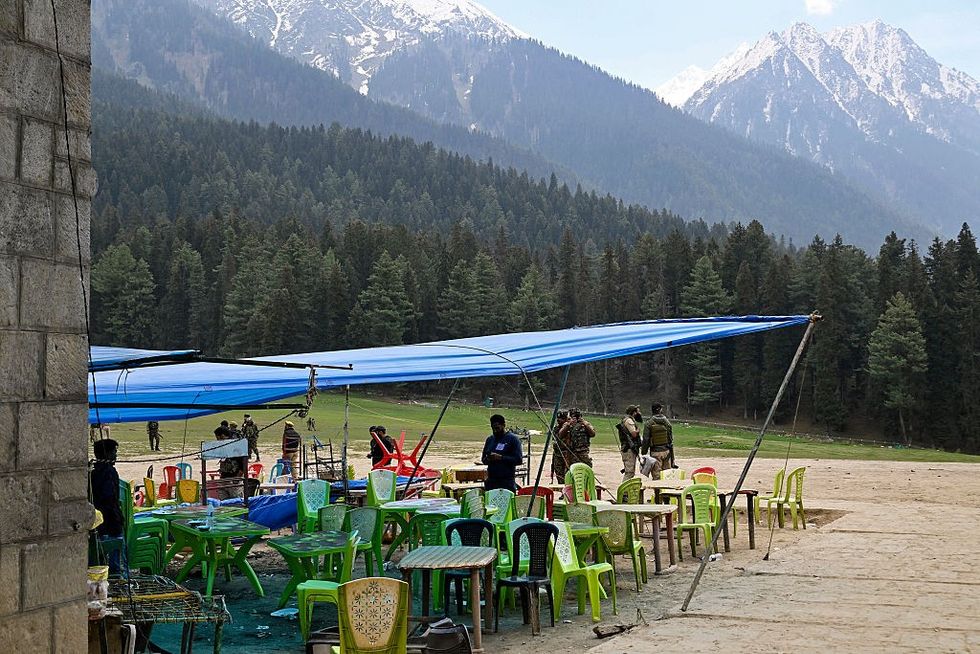 Security personnel inspect the site in the aftermath of an attack as food stall chairs lie empty in Pahalgam, about 90 kilometres (55 miles) from Srinagar on April 23, 2025. Indian security forces in Kashmir carried out a major manhunt on April 23, a day after gunmen opened fire on tourists killing 26 people in the region's deadliest attack on civilians since 2000. Getty Images
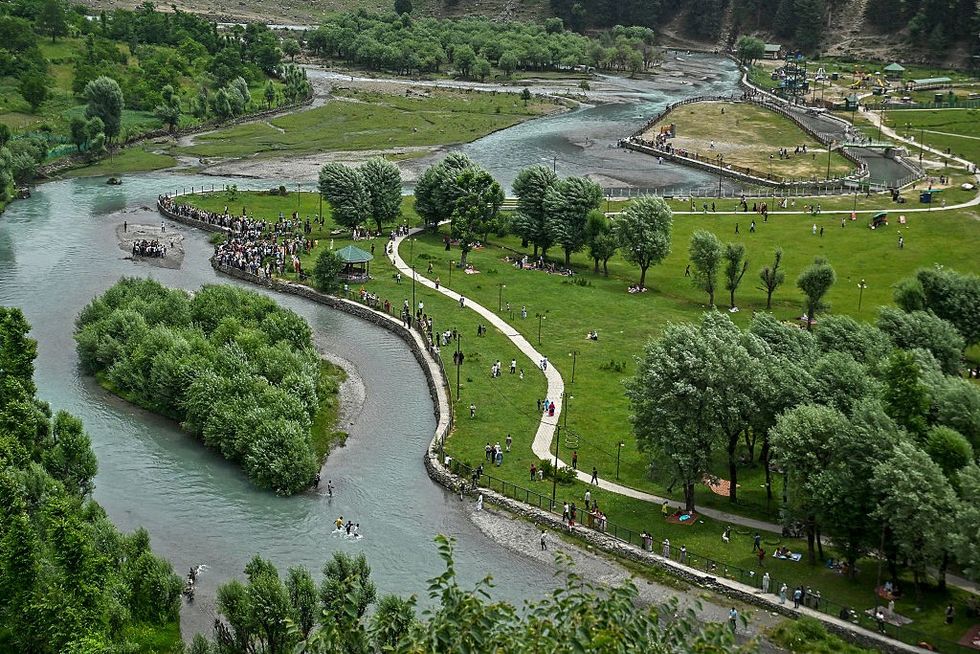 Tourists visit Betaab Valley in Pahalgam, about 112 km south of Srinagar on June 26, 2025.Getty Images
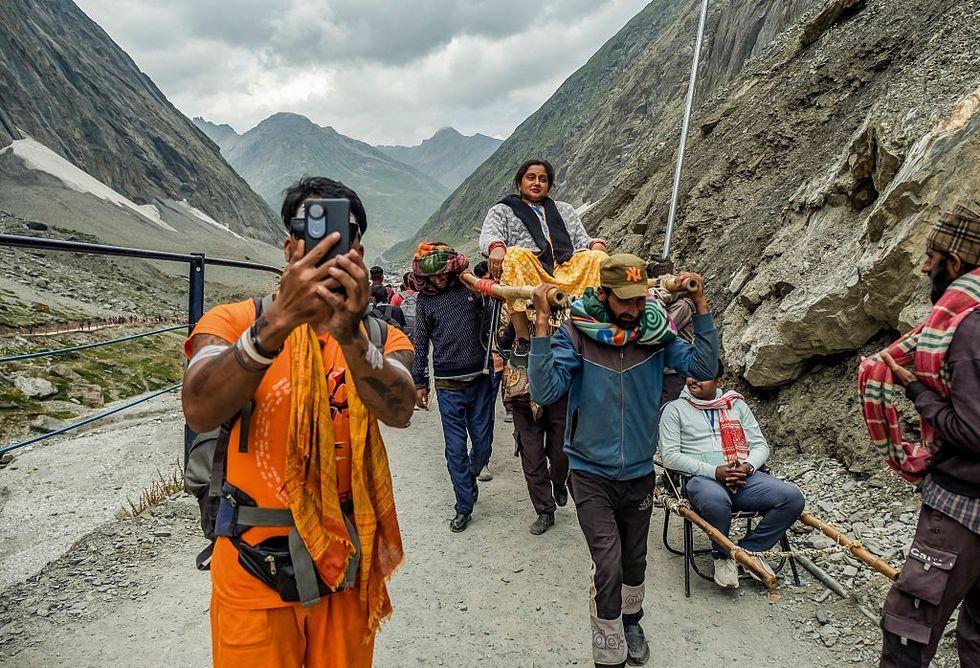 Pilgrims gather at the Baltal Base Camp near Domel, en route to the sacred Amarnath cave in Srinagar, Jammu and Kashmir, India, on July 29, 2025. The annual Amarnath Yatra, which began on July 3, proceeds under heightened security following a deadly terror attack in Pahalgam that claimed the lives of 25 tourists and a local pony handler. Security forces have been deployed in large numbers across the pilgrimage route, with checkpoints, surveillance, and restrictions in place to safeguard the thousands of devotees undertaking the arduous journey. The Amarnath Yatra is one of the most important Hindu pilgrimages, drawing worshippers from across India to the high-altitude Himalayan shrine dedicated to Lord Shiva. Despite the threat of violence and challenging terrain, pilgrims continue their spiritual trek, determined to complete the sacred journey under the shadow of grief and resilience.Getty Images