
Highlights:
- Sharmila Mona Sinha inducted into the National Women’s Hall of Fame.
- She is only the second woman of Indian origin to receive the honor.
- Her mother’s generosity shaped her lifelong approach to giving.
- Sinha’s career spans Wall Street, business and philanthropy.
- “Power shared is power supercharged,” she said in her speech.
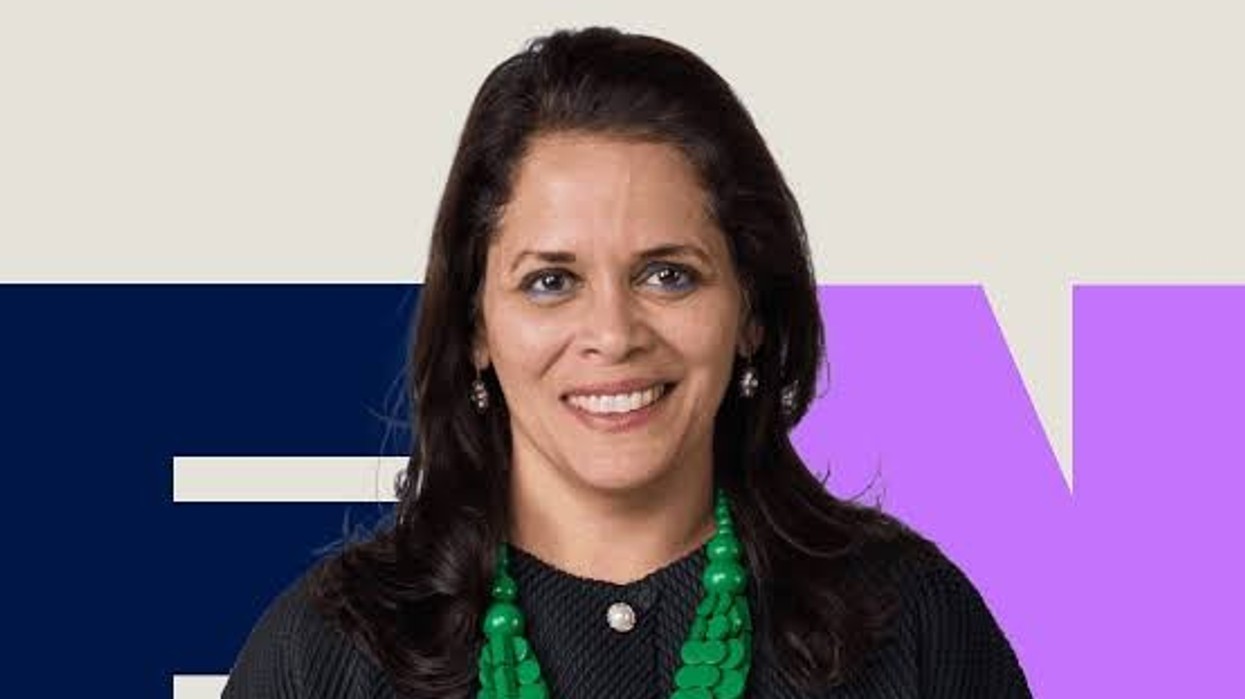
Equality Now CEO and Indian American philanthropist Sharmila Mona Sinha has been inducted into the National Women’s Hall of Fame, becoming only the second woman of Indian origin to receive the honor after former PepsiCo CEO Indra Nooyi.
But behind the prestigious recognition is a journey that began in Kolkata, where Sinha learned a simple lesson from her mother: always set something aside for someone in need.
That lesson, she says, has stayed with her through a career spanning Wall Street, corporate America, philanthropy and the global fight for women's equality.
In historic company
Sinha was inducted into the National Women’s Hall of Fame on September 24 in Seneca Falls, New York, a town widely recognized as a birthplace of the American women's rights movement.
She now joins a distinguished group of around 300 women whose achievements have shaped American history and society, including Madeleine Albright, Maya Angelou, Janet Yellen, Rosa Parks and Michelle Obama.
Her induction makes her only the second woman of Indian origin to receive the honor, following Nooyi's induction in 2021.
For Sinha, the recognition represents not only a personal milestone but also a significant moment for Indian American women whose influence has expanded across American business, philanthropy and public life.
A lesson from her mother's kitchen
The values behind Sinha's career were formed long before she entered the worlds of finance and philanthropy.
At her induction ceremony, she remembered watching her mother in Kolkata set aside a fistful of rice every morning for someone who might need it.
It was a small gesture, but Sinha carried its meaning with her when she left India at 18 to study in the United States.
The lesson was simple: what you have can also be something you share.
Decades later, that idea has become central to how Sinha thinks about philanthropy, leadership and power.
"Power shared is power supercharged"
Sinha's induction speech focused on the idea of power and what happens when people choose to share it.
"I have spent much of my life thinking about power. I've seen it on Wall Street, in business, in philanthropy, and in the fight for women's equality, where power ultimately comes down to who has a voice, who has a choice, and who gets to shape our lives," she said.
She challenged the belief that giving power to others means having less of it yourself.
"We are taught that power is finite: that if I give you some of mine, I will have less. My life has taught me the opposite... At the core, power shared is power supercharged. I am standing here because so many people shared theirs with me," Sinha said.
The message echoes the lesson she learned from her mother in Kolkata: giving does not diminish what you have. It can create something larger.
From Kolkata to Wall Street
Sinha's professional journey has taken her through some of America's most prominent institutions.
After leaving India, she attended Smith College in Massachusetts, where she earned degrees in economics and art history. She later earned an MBA from Columbia Business School.
She began her career as an investment banker at Morgan Stanley before moving into corporate leadership roles with companies including Procter & Gamble, Unilever and Elizabeth Arden.
Her career eventually shifted toward philanthropy and social impact.
Sinha became a leader of Women Moving Millions, a network of women philanthropists whose members have collectively committed around $1 billion to organizations supporting women and girls.
She also co-founded Raising Change, which helps social-impact organizations strengthen their fundraising and organizational capacity.
A career centered on women's equality
Today, Sinha leads Equality Now, an international organization focused on advancing the rights of women and girls.
Her work extends beyond her role as CEO. She serves on several nonprofit boards focused on governance, strategy and sustainability.
She is also vice chair of the Executive Council of the Smithsonian American Women's History Museum, which is planned for the National Mall in Washington, D.C.
In addition, she serves on the advisory board of Columbia University's Tamer Institute for Social Enterprise and on the Tamer Venture Fund board.
A milestone for Indian American women
Sinha's induction also carries significance beyond her own career.
She is now only the second woman of Indian origin to be inducted into the National Women's Hall of Fame, following Nooyi.
Her recognition adds to the growing visibility of Indian American women who have reached influential positions in American business, philanthropy and advocacy.
But Sinha's own speech made clear that she sees achievement less as an individual accomplishment and more as something built through shared opportunity.
The lesson that followed her from Kolkata
Sinha's journey from Kolkata to one of America's most prestigious halls honoring women spans continents, industries and decades.
Yet the principle behind it remains remarkably simple.
A young girl in Kolkata watched her mother set aside a handful of rice for someone who needed it. Years later, that same girl stood in Seneca Falls receiving one of the highest honors available to American women.
For Sinha, the connection is clear.
What you share does not make you smaller. It gives someone else the chance to grow.
And as she put it at the ceremony: "Power shared is power supercharged."