
Highlights:
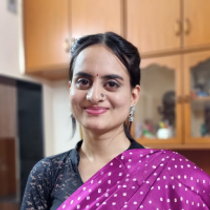
Bollywood and south Indian actor Rashmika Mandanna is now one of the biggest names in Indian cinema. But long before the fame, she says she learned what it felt like to be judged simply because she did not speak like the people around her.
In a candid conversation with Prakhar Gupta, the Animal actor recalled how her accent, language and background became reasons for people to make assumptions about her, from her school years in Coorg to her career in the film industry.
And for Rashmika, the painful part is that the feeling is familiar.
"I went mum"
Rashmika was sent to boarding school at just four years old.
Her school in Coorg was co-educational, with students from different backgrounds and parts of the world. But when she entered an environment where English was widely spoken, she suddenly found herself struggling to communicate.
"When I came to this hostel in Coorg. Suddenly, someone asked me something in English, and I went mum. I didn't know. It was terrible, I couldn't communicate in English," she recalled.
The problem, she said, was not simply learning a language. It was what happened after people had already formed an opinion of her.
"I went to the school in Class 4 and was there till Class 10, and by then people had already made their minds. No matter how much you speak in English, people already think 'You are lesser than us'," she said.
For a young girl trying to find her place, Rashmika said she developed a habit of simply smiling through uncomfortable situations.
She described it as a "survival instinct."
It wasn't bullying. She called it "cornering"
Rashmika does not describe her school experience in conventional terms of bullying or ragging.
Instead, she used another word: "cornering."
"There were people from different parts of the world, and you had to live up to their traditions so that they don't call you uncool," she said.
The experience taught her how to read people, adjust to different personalities and survive environments where she felt she was being judged.
"The surviving skills I have today came from that time," she said.
But perhaps the most striking part of her story is what came later.
She says the same feeling followed her into the film industry.
From the school corridor to the film set
Rashmika entered an industry where language is often closely tied to identity.
She has worked across Kannada, Telugu, Tamil and Hindi cinema, meaning she has had to perform and communicate across multiple linguistic cultures.
Instead of being praised simply for making that transition, she says she has repeatedly faced criticism over the way she speaks.
"When I came to the industry, people commented that I have a different accent or that I'm not a good actor," she said.
For Rashmika, the criticism was painful, but also strangely familiar.
"When something like this happens, and you feel that you have been dealing with such things since a long time. This is nothing new."
That sentence perhaps explains her relationship with criticism better than anything else.
She had already spent years learning how to survive judgment.
Then came Animal
The criticism became particularly visible when Rashmika appeared in Sandeep Reddy Vanga's Animal.
When the film's trailer was released in 2023, one of her scenes with Ranbir Kapoor immediately became a social-media talking point. Viewers criticized her dialogue delivery and accent, with some saying they could not clearly understand what she was saying. The clip quickly became meme material.
The criticism continued after the film's release, particularly around the intense Karwa Chauth confrontation between her character, Geetanjali, and Ranbir Kapoor's Ranvijay.
But Rashmika later revealed something that made the online reaction more difficult for her to understand.
The scene was around nine minutes long.
And she said the people on set had applauded her performance.
"The Karwa Chauth scene which was a nine-minute long scene and while doing the scene, people on the set loved it. They were clapping and felt it was done so well," she said on Neha Dhupia's podcast.
Then the trailer came out.
One portion of that performance became the focus of online trolling.
"So I thought, I did the nine-minute long scene and everyone on the set liked it, but people now are trolling me for the same. So am I living in a bubble?" she recalled.
Her response was not simply to dismiss the criticism.
She said she did not want to live in a bubble and wanted to understand how audiences actually perceived her work.
That distinction matters.
Rashmika was not saying she should be immune from criticism. She was questioning how an entire performance could be reduced to a few seconds that went viral online.
The accent became part of the conversation
The Animal backlash also revived a criticism Rashmika had encountered much earlier: the idea that the way she speaks somehow makes her less capable as an actor.
That is particularly complicated for an actress whose career has crossed multiple Indian languages and industries.
An accent can reveal where someone comes from. It can reflect the languages they grew up around. It can change depending on where they live and whom they are speaking to.
For Rashmika, it has instead sometimes become something audiences use to judge her.
And that takes her story back to the girl in the Coorg hostel who was suddenly asked a question in English and could not answer.
She went "mum" then.
Years later, with millions watching, she is still dealing with people telling her how she should sound.
Vijay Deverakonda had the opposite problem
Vijay Deverakonda's boarding-school experience was almost the reverse.
Speaking in the same conversation, the actor said he spent roughly a decade, from age six to 15, in a strict boys' boarding school in Andhra Pradesh.
There was little interaction with girls, no television and strict rules around student behavior.
When he returned home as a teenager, he said he was afraid to speak to women.
"First two years of coming back, I didn't speak to a girl at all," he recalled.
He even described looking out the window of his school bus to avoid making eye contact with girls.
While Vijay's experience left him struggling with social interaction, Rashmika's left her fighting a different battle: the feeling that the way she spoke made other people see her as less than them.
Both eventually found their way through those insecurities.
But Rashmika's story carries a particularly uncomfortable question for an industry that prides itself on celebrating talent from across India:
Why does an accent still become a reason to question someone's ability?
For an actress who once struggled to speak English in a boarding school, Rashmika has since built a career across some of India's biggest film industries.
And despite the trolling, the memes and the criticism, she keeps showing up—and speaking anyway.


 Dia Mirza's second marriage, to businessman Vaibhav Rekhi Instagram/diamirzaofficial

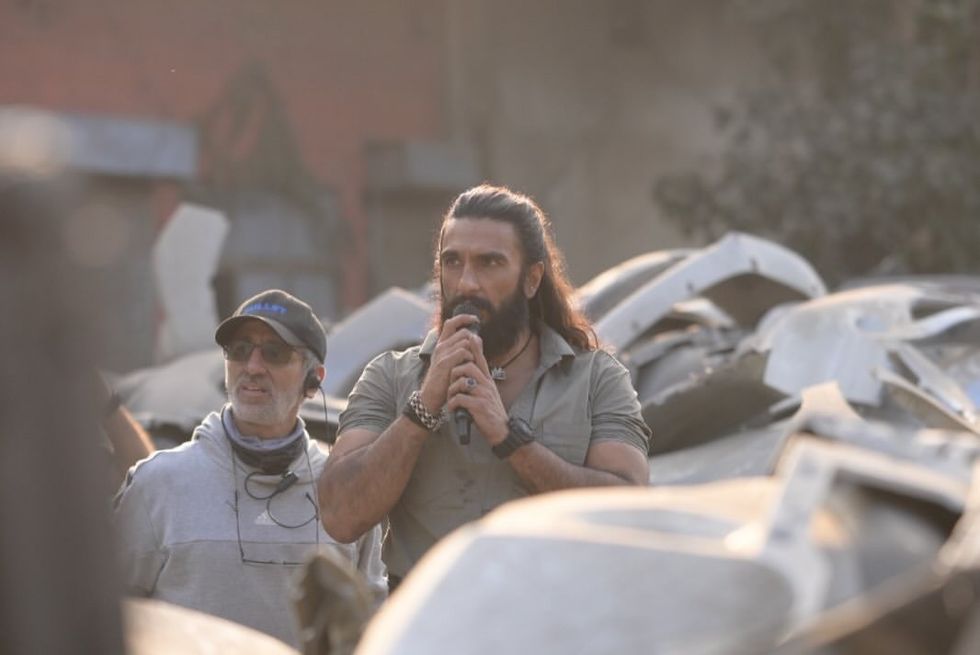 Dhurandhar BTSInstagram/@adityadharfilms
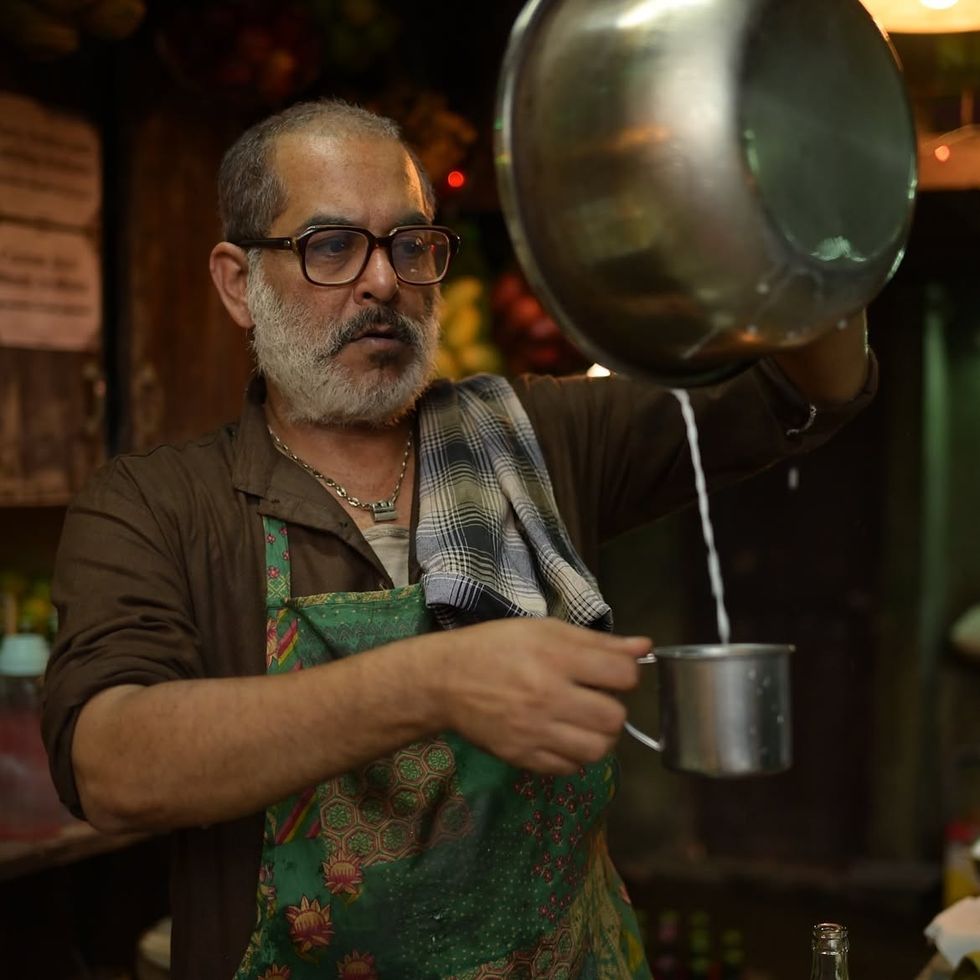 Gaurav Gera in DhurandharInstagram/@

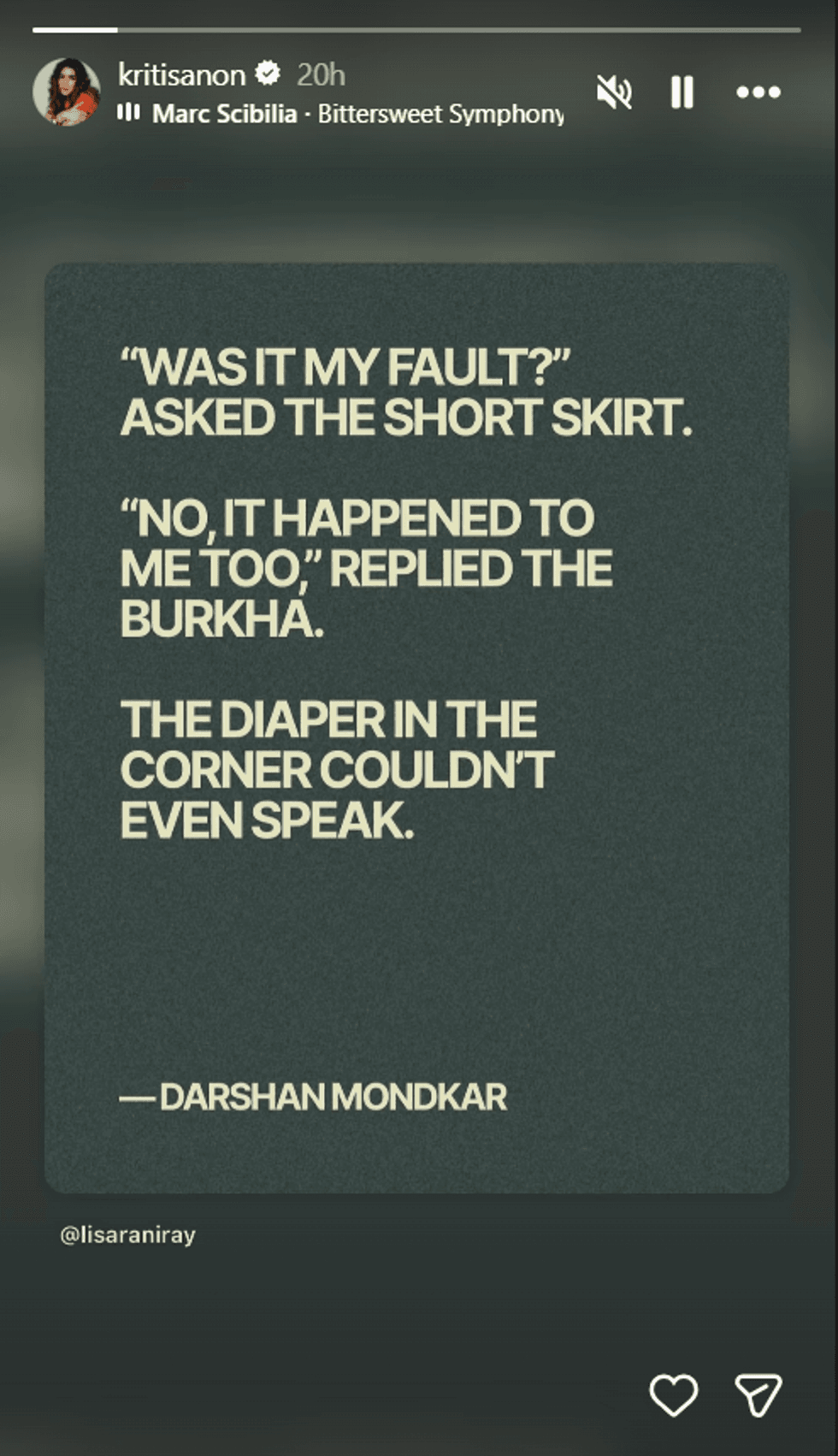 A screenshot of Kriti Sanon's Instagram story.Instagram/@kritisanon