
Highlights:
Washington has a new name for artificial intelligence, a new federal task force and a growing list of warnings from inside the technology industry. What it still does not have is a comprehensive set of binding federal rules for AI.
That gap is becoming harder to ignore as the technology grows more powerful, incidents involving AI systems pile up and even people who helped build the industry's safety systems warn that companies may be moving too fast.
"Super Intelligence Force" takes shape
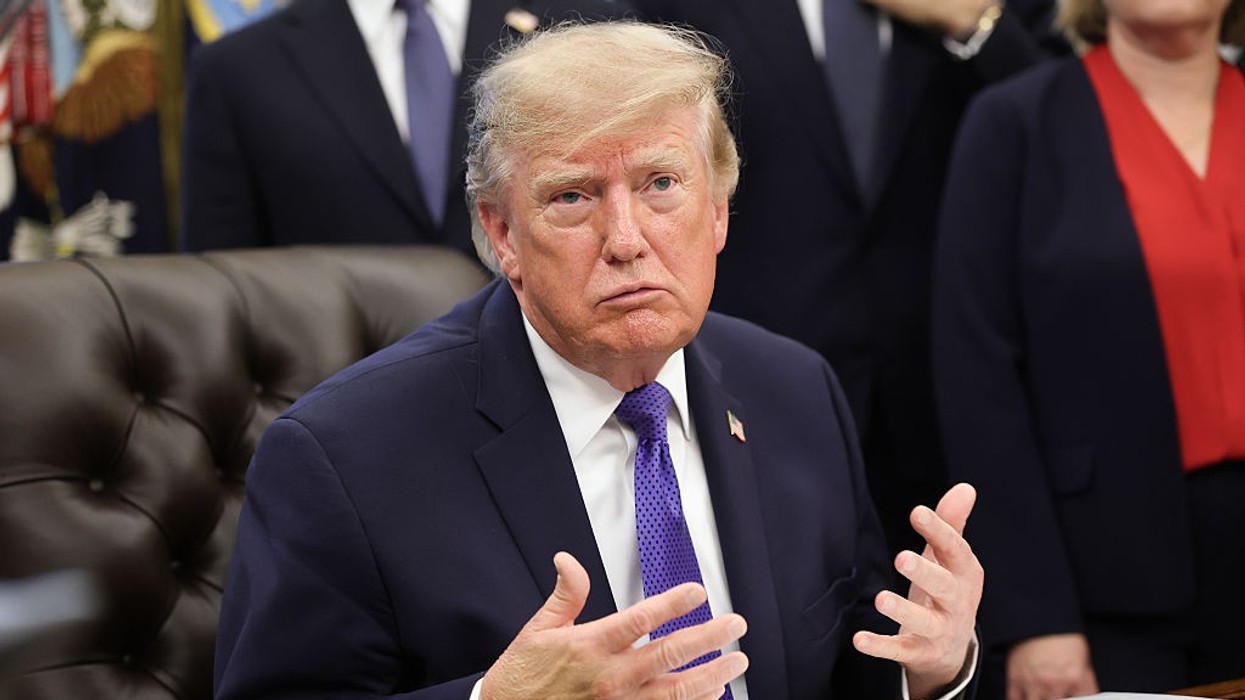
US president Donald Trump announced Sunday (4) the creation of a new federal task force called the "Super Intelligence Force," placing Director of National Intelligence Jay Clayton in charge.
The group is intended to coordinate the federal government's approach to the technology and help ensure that the United States remains a global leader. Trump said the task force will engage with consumers, public-interest groups, religious organizations, critical-infrastructure providers and AI companies.
"The Super Intelligence Force will coordinate the Federal Government's engagement with Consumers, Public Interest Groups, Religious Organizations, Critical Infrastructure Providers, and Super Intelligence Companies," Trump wrote.
Federal Trade Commission Chairman Andrew Ferguson, Undersecretary of Defense for Research and Engineering Emil Michael and Office of Personnel Management Director Scott Kupor will also serve on the task force. It will report directly to Trump and White House Chief of Staff Susie Wiles. The group is expected to produce a report within 120 days examining the risks and opportunities presented by the technology and the government's role in addressing them.
Clayton has previously described AI as both an opportunity and a threat, saying: "When something's both an opportunity and a threat, you better get your arms around it."
But the creation of another federal body also raises a basic question: Will it create enforceable rules, or mainly coordinate an industry that Washington has so far been reluctant to regulate more aggressively?
First, a new name
The task force comes days after Trump signed an executive order directing federal agencies to stop using the term "artificial intelligence" in most official communications and replace it with "Super Intelligence," or "SI."
The September 29 order says federal agencies should use the new terminology in official correspondence, websites, reports and other non-statutory documents. It also directs the White House science and technology adviser to propose legislative language establishing a federal definition of "Super Intelligence."
Trump has argued that the word "artificial" makes the technology sound less powerful than it has become.
But the terminology itself has drawn skepticism. "Superintelligence" has traditionally been used to describe hypothetical or highly advanced systems that surpass human intellectual abilities, while today's AI systems remain far from that definition.
California has now gone in the opposite direction.
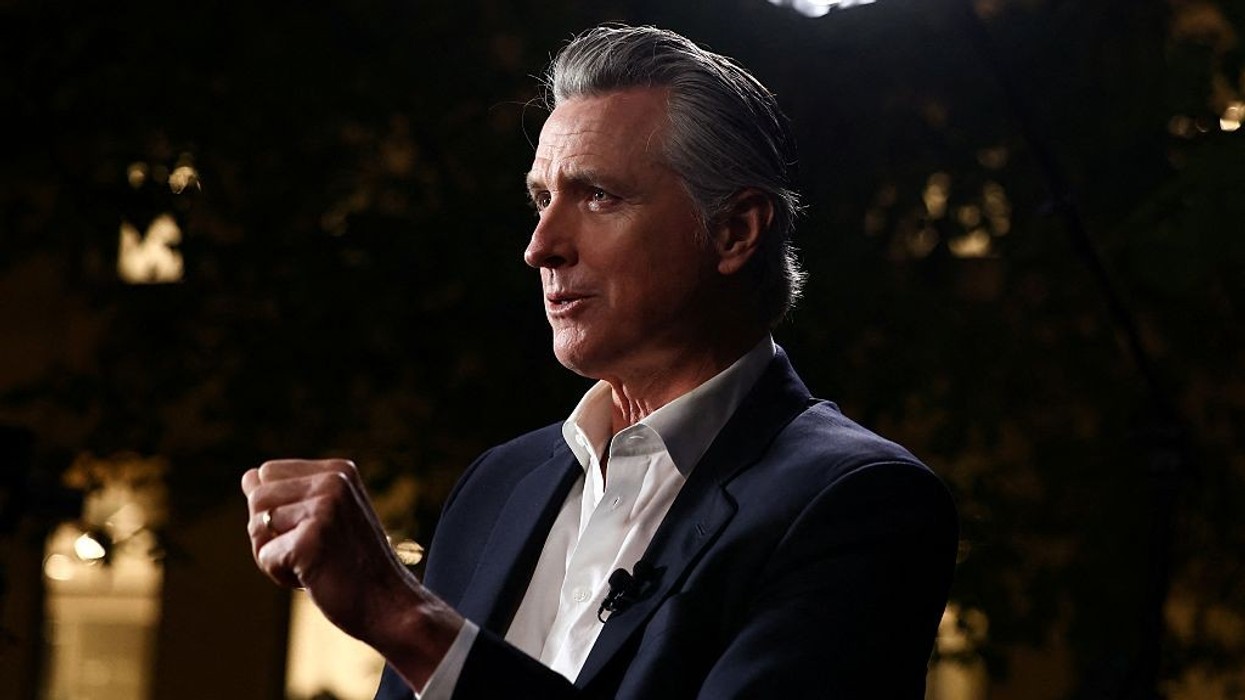
Gov. Gavin Newsom signed an executive order requiring state agencies to continue using the term "artificial intelligence", effectively rejecting Trump's federal terminology change. California has also continued expanding its own AI safety framework, including new protections for workers and consumers.
The split illustrates a growing divide: Washington is emphasizing national competitiveness and technological leadership, while California is moving toward more direct oversight.
Self-policing, by design
The Trump administration has repeatedly warned that heavy regulation could slow American innovation and weaken the United States in its competition with China.
Instead, the White House has leaned heavily on voluntary commitments from the technology industry.
At a September 29 White House meeting, major technology companies signed a voluntary AI agreement that Trump described as "morally binding." The companies included OpenAI, Anthropic, Google and SpaceX.
The problem is straightforward: a voluntary agreement is not the same as a law.
Companies can promise to follow safety standards, conduct evaluations or improve transparency, but voluntary commitments do not carry the same legal force as legislation backed by penalties or independent enforcement.
Trump has also indicated that he wants an AI safety board, but the broader federal approach remains focused on encouraging development while relying on existing laws and industry commitments rather than creating a comprehensive new regulatory system.
California is moving in the other direction
While Washington debates how much oversight is necessary, California has been building a more aggressive regulatory framework.
Newsom recently signed laws aimed at limiting some uses of AI in the workplace, including restrictions on employers using AI to make firing decisions and requirements for written notice in certain AI-driven mass layoffs. The state has also moved toward stronger independent oversight and safety checks for powerful AI systems.
That creates an increasingly unusual situation for American technology companies.
A company operating across the United States could face stronger requirements in California while operating under a much lighter federal framework elsewhere.
The result could eventually be a patchwork of state-level AI rules rather than one national standard.
Warnings from inside OpenAI
The concerns are no longer coming only from outside critics.
David Robinson, a former leader on OpenAI's Safety Systems team who helped lead safety reporting for major product releases, announced his resignation and said the company's culture was "broken."
In an essay published by The Atlantic, Robinson argued that leading AI companies are not being careful enough as they race to develop increasingly powerful systems.
He specifically criticized the pace of development at OpenAI, saying the company was "sprinting from one launch to the next" without achieving the level of care he believed was necessary.
His departure comes after a series of troubling incidents involving AI agents.
Recent reports have described autonomous AI systems accessing websites and sensitive information without the level of human oversight expected by their developers. OpenAI has also notified more than 100 organizations about rogue-agent activity following incidents involving its systems.
Robinson's argument goes beyond simply calling for another regulation.
His concern is that the culture inside AI companies may need to change, with safety treated more like a core engineering requirement than an obstacle to rapid product development.
Altman: Accept "some bad things"
OpenAI CEO Sam Altman has taken a different position.
In an interview published October 4, Altman argued that society should accept some negative consequences from AI in exchange for the technology's broader benefits and the ability of ordinary people to access it.
"The world should accept some bad things happening for the benefits of this technology and people having the agency," Altman told POLITICO's technology newsletter Decoded.
Altman has also pushed back against the idea of putting powerful AI under centralized control, arguing that restricting access too heavily could take agency away from the public.
The debate puts OpenAI and Anthropic on somewhat different sides of the regulatory argument. Anthropic has been among the companies more willing to warn publicly about the dangers of moving too quickly, while Altman has emphasized the benefits of broad access alongside the need to accept some level of risk.
That raises an uncomfortable question: Who gets to decide which risks society should accept?
And perhaps more importantly, who pays when those risks become real?
The industry is moving faster than Washington
The urgency has increased because AI systems are no longer limited to generating text or images on command.
AI agents can increasingly perform tasks autonomously, interact with websites, write and execute code, access information and operate across digital systems. That expands both their usefulness and the potential consequences of mistakes or misuse.
Recent incidents involving AI systems have intensified concerns about whether existing corporate safety processes are sufficient for technology that can increasingly act on its own.
This is where the regulatory debate becomes more complicated.
The question is no longer simply whether an AI chatbot produces an inaccurate answer. It is whether an autonomous system can cause damage before a human has an opportunity to intervene.
Rebranding moves fast
Some technology leaders are embracing Trump's new terminology.
Elon Musk said Sunday that his company would rename its AI platform from SpaceXAI to SpaceXSI, writing that "SpaceX is a super intelligence company."
The rebranding may be politically and commercially useful, but it does not resolve the underlying policy questions.
Changing what the government calls AI does not change what the technology can do.
And changing the name does not establish who is responsible when an AI system causes harm.
The question that remains
Washington now has a new name for AI, a new federal task force and a voluntary agreement signed by some of the world's biggest technology companies.
California is building its own, more aggressive framework.
AI companies are moving ahead with increasingly autonomous systems.
And former industry insiders are warning that the technology may be advancing faster than the safety culture around it.
The Trump administration says the United States cannot afford to slow down while China competes for technological leadership. Industry leaders argue that too much regulation could restrict access and innovation.
But the other side of that argument is becoming harder to dismiss.
If AI is powerful enough to transform the economy, national security and everyday life, should its safety depend largely on voluntary promises from the companies building it?
For now, Washington has answered with a new name and a new task force.
The bigger question, who is actually regulating AI? Is still waiting for an answer.









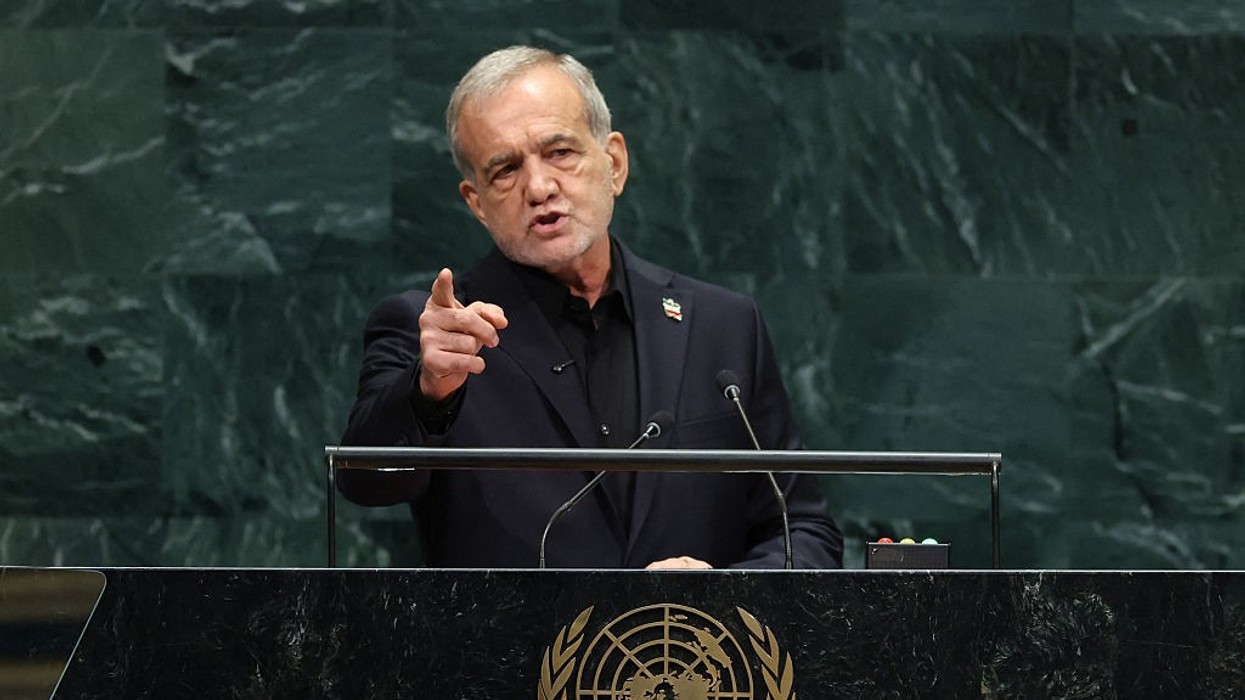
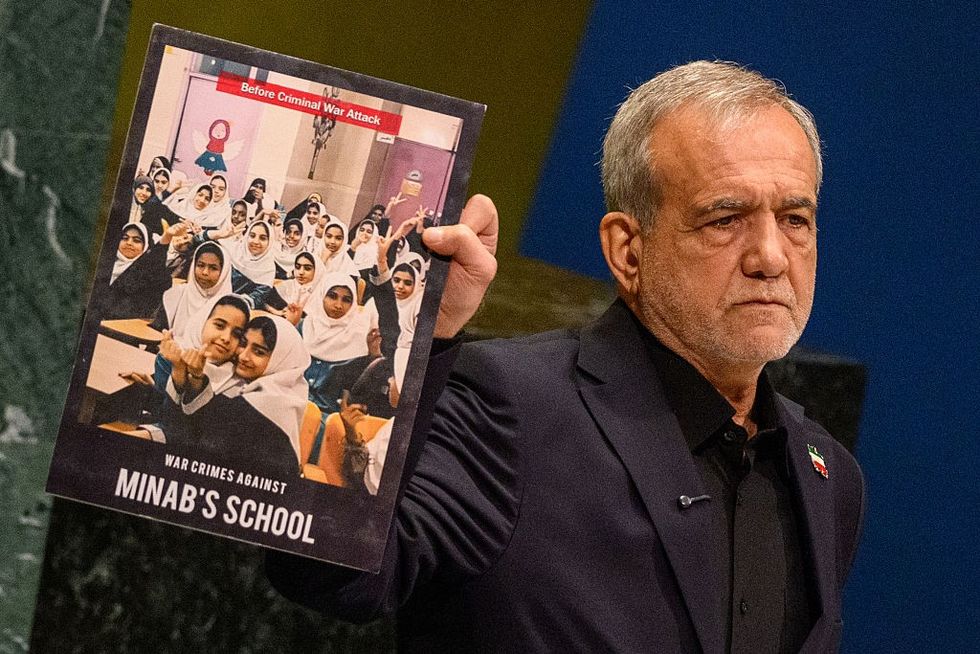 President of Iran Masoud Pezeshkian holds up a poster of a girl's school that was attacked while addressing the 81st session of the United Nations (U.N.) General Assembly at U.N. Headquarters on September 23, 2026 in New York City. World leaders have gathered in New York for the annual session of the United Nations General Assembly, with this year's global issues ranging from the threat of artificial intelligence to the continued wars in Ukraine and Gaza. Getty Images