
Highlights:
THE US Supreme Court agreed on Monday (19) to consider reviving a lawsuit against a Maryland county’s lottery-based admissions policy for four selective public middle schools that some parents claim unlawfully discriminates against Asian American applicants.
Delving again into the contentious issue of race in student admissions, the justices took up an appeal by a coalition of parents challenging a lower court’s decision to reject their claim that Montgomery County’s policy violates the 14th Amendment’s guarantee of equal protection under the law.
The Supreme Court is expected to hear the case and issue a ruling by the end of June 2027.
The parents challenged the admissions policies for the county’s academically rigorous “magnet” schools, which offer enrichment programs in math and science or the humanities for high-achieving students in grades six through eight. They include Takoma Park Middle School in Silver Spring and Martin Luther King Jr. Middle School in Germantown.
The case is the latest legal challenge to admissions policies at highly selective public schools that critics say continue to pursue “racial balancing” to increase diversity.
In a landmark 2023 ruling, the Supreme Court rejected race-conscious college and university admissions policies that had long been used to increase enrollment of black, Hispanic and other minority students.
Plaintiffs in the latest challenges argue that admissions policies at these prestigious programs, although ostensibly race-neutral, use factors such as socioeconomic status as proxies for race to achieve the same allegedly unlawful outcome in pursuit of diversity.
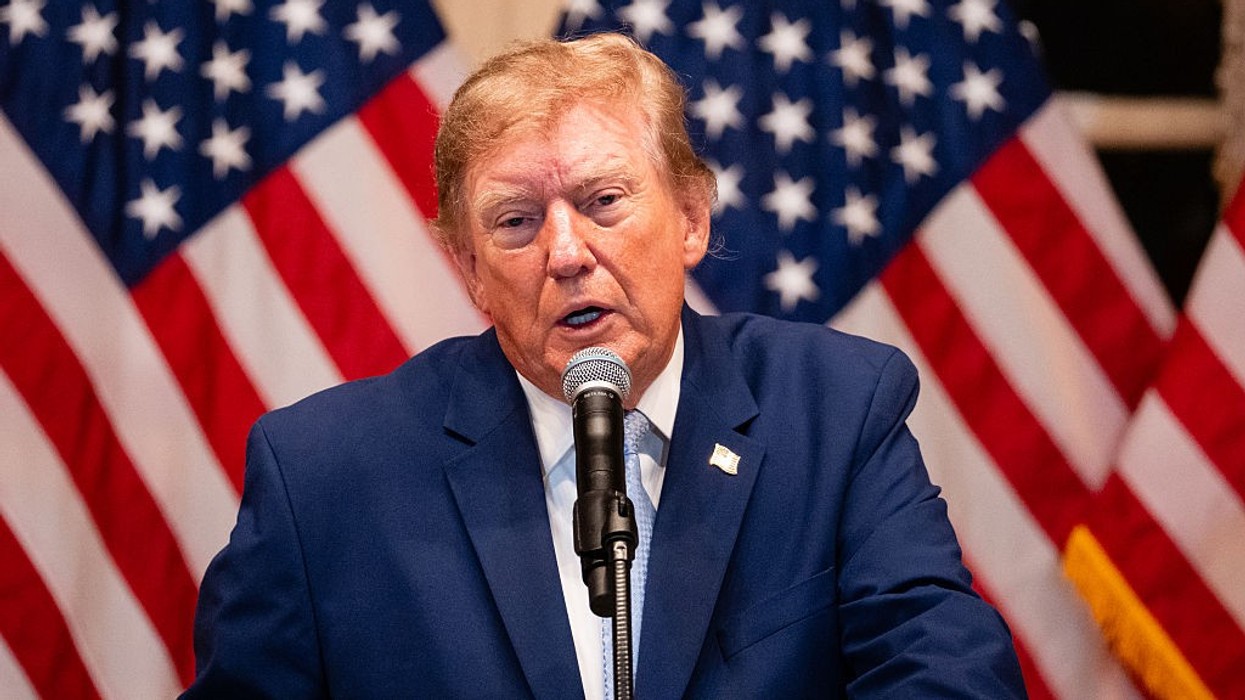
The legal challenges coincide with president Donald Trump’s efforts, since returning to office last year, to dismantle diversity, equity and inclusion (DEI) programs in education, the federal government, the military and private companies. At issue in the Maryland case is whether lower courts may dismiss claims of intentional racial discrimination when a policy has not disproportionately harmed the racial group concerned, in this case Asian American students.
Montgomery County is an affluent suburb of Washington, DC.
The parent coalition, the Association for Education Fairness, is represented by the Pacific Legal Foundation, a libertarian legal group that has pursued similar challenges in Virginia and Massachusetts. The Supreme Court rejected those cases in 2024.
“The Constitution protects students as individuals, not as members of a racial group,” said Chris Kieser, an attorney for the coalition.
“A school district should not be able to defeat a discrimination claim by showing that its policy did not harm enough Asian American children. Every family deserves admissions rules that judge their child on their own merit,” Kieser said.
A spokesperson for Montgomery County Public Schools said the district “remains committed to providing equitable access to rigorous opportunities for all students. This commitment will continue uninterrupted as the judicial process proceeds.”
The Montgomery County school district’s selection process was introduced in the 2021-2022 school year, during the Covid-19 pandemic. It screens all students for academic potential, and then implements a lottery to randomly assign students from that pool to receive enriched instruction at either a magnet school or a local school.
The lawsuit alleged that the lottery system resulted in fewer Asian American students securing places at the magnet schools.
It also claimed that the screening process made it harder for Asian American students, who the challengers said were concentrated in “high-performing, low-poverty elementary schools,” to qualify for the lottery. The process includes comparing students’ test scores with those of peers from families at similar income levels.
US district judge Paula Xinis dismissed the case in 2022, finding that the policy did not disproportionately disadvantage Asian American students. She noted that Asian American students accounted for a greater proportion of those admitted than of all applicants to the magnet schools. Xinis also found no evidence that the lottery policy had been introduced with discriminatory intent. The Richmond, Virginia-based 4th US Circuit Court of Appeals upheld the dismissal, agreeing that the lawsuit “does not plausibly allege that the challenged policy disparately impacts Asian American students.”
The Supreme Court’s 2023 affirmative action ruling overturned decades of precedent, striking down admissions programs at Harvard University and the University of North Carolina that considered race among several factors when evaluating applicants.