
Highlights:
India has rejected a report by a United Nations human rights expert that said young people in the country had reported retaliation or stigmatization for discussing mental health and gender justice, describing the allegations as “hearsay” and urging the expert to verify claims before drawing conclusions.
Anuj Swarup, First Secretary at India’s Permanent Mission to the UN, delivered the country’s statement during an interactive dialogue with Gina Romero, the UN Special Rapporteur on the rights to freedom of peaceful assembly and of association, at the 81st session of the UN General Assembly’s Third Committee on Saturday (17).
Swarup objected to Romero’s report, particularly its reference to young Indians facing retaliation or stigma for raising issues related to mental health and gender justice. He said the report cited unnamed submissions in a footnote but did not provide sufficient evidence to support its broader assertions.
“A sweeping charge against the world's largest youth population, resting on anonymous and unverified claims, is not evidence. It is hearsay dressed up as a UN report, and my delegation rejects it outright,” Swarup said.
He argued that relying on anonymous inputs to make generalizations about a population of 1.4 billion people undermined the credibility of the report.
“A mandate holder who relies on anonymous inputs to generalise for 1.4 billion people does a disservice to the very mandate she holds. We urge this Special Rapporteur to verify before she vilifies and to bring the required rigour and fairness in her reports,” he said.
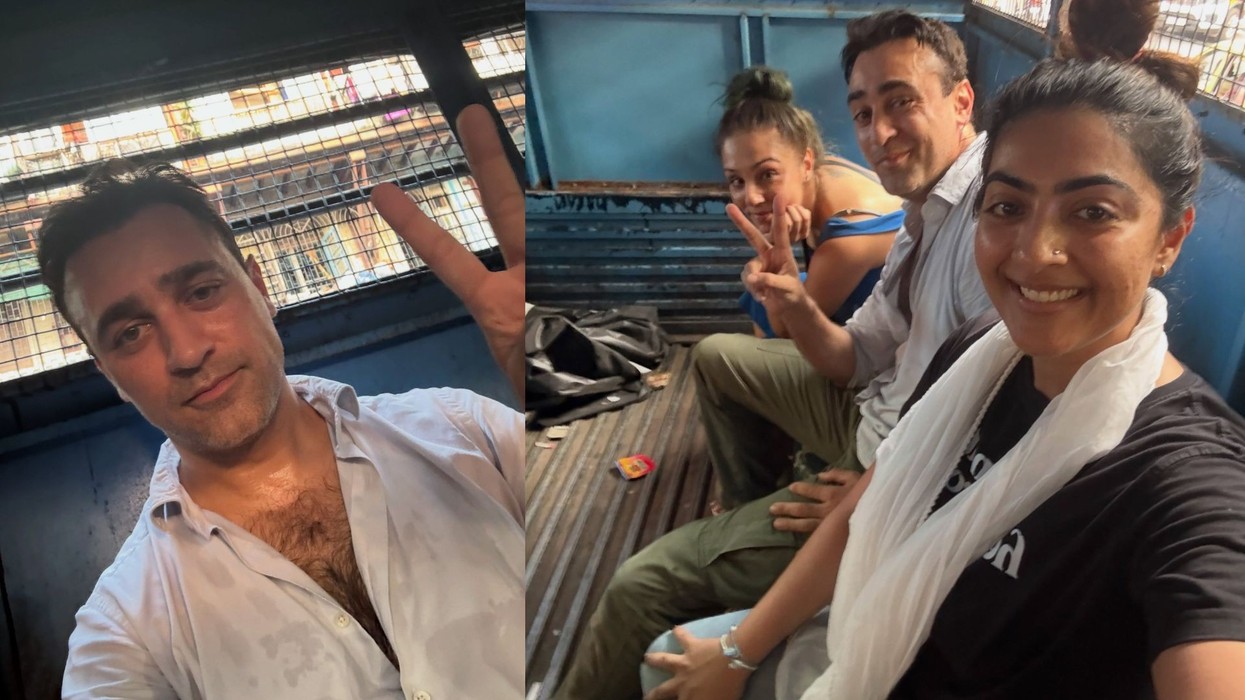
Romero’s report also referred to a “satirical political movement” created by young people in India, an apparent reference to the Cockroach Janata Party. Swarup questioned why such a movement would be possible in a country where young people were allegedly unable to express dissent freely.
“In which repressive State does a satirical youth party question the government, marches on the capital, and then sits across the table with senior national leaders,” he said.
Swarup also criticized what he described as arbitrary reporting, arguing that such practices had contributed to a loss of credibility for the United Nations and its institutions.
Defending India’s record, he said freedom of speech and expression, peaceful assembly and association were guaranteed under Article 19 of the Indian Constitution. He added that these freedoms were protected by an independent judiciary, a free press and an empowered National Human Rights Commission.
Swarup pointed to comments made by the UN High Commissioner for Human Rights at the Human Rights Council the previous month, saying the official had emphasized that dialogue with young leaders was more effective in the context of youth-led movements in India.
“Perhaps that update escaped the Special Rapporteur's attention,” he said.
He also cited student protests earlier this summer over irregularities in public examinations as an example of the government’s engagement with young people. According to Swarup, Parliament amended the Public Examinations Act within weeks, doubling penalties for paper leaks. He also said the government undertook a systemic examination overhaul and established fast-track courts in every state to prosecute those involved in examination fraud.
Swarup described these measures as evidence of democracy in action, adding that young people represented India’s strength and shared future.
He further said more than five million young people participated in the Viksit Bharat Young Leaders Dialogue this year, helping shape national priorities through direct engagement with Prime Minister Narendra Modi. Several ministers, including Modi, continued to interact with young people in person and through social media, he added.
India’s response centered on the need for evidence-based reporting by UN mandate holders, while rejecting the report’s characterization of the experiences of young people in the country.