

Highlights:
- Millions of tapentadol pills from India are reaching West Africa.
- Officials say the drug is being mixed into the “zombie drug” kush.
- Several African countries say the pills are illegal.
- Investigators linked seized tablets to Indian pharmaceutical firms.
- Health workers warn children and students are now using the drug.
Millions of tapentadol tablets from India are helping fuel a growing opioid crisis across West Africa, according to officials, researchers, and an AFP investigation. The pills, sold in blister packs of 10 like common painkillers, are widely available in roadside kiosks and small pharmacies in countries including Nigeria, Sierra Leone, and Ghana.
The synthetic opioid is extremely strong. Officials say some of the tablets being exported are so powerful that no regulatory authority in the world has approved them. Despite this, Indian pharmaceutical firms continue shipping large quantities to West Africa, even after New Delhi announced a crackdown on illegal drug exports. Some shipments were reportedly labeled “Harmless Medicines for Human Consumption.”
Researchers and health officials told AFP that tapentadol is now also being added to kush, a dangerous street drug commonly called the “zombie drug.” Kush has already become a major public health emergency in countries like Liberia and Sierra Leone because of its highly addictive effects and severe physical damage to users.
Shipment records reviewed by AFP showed millions of dollars’ worth of high-strength tapentadol tablets continuing to leave India for West African countries every month. In several of these countries, even low doses of the drug are not legally permitted.
Tapentadol and the spread of kush
Officials in Sierra Leone described the growing use of tapentadol in kush as deeply alarming. Ansu Konneh, director of mental health at Sierra Leone’s social welfare ministry, told AFP that bodies were being collected daily from “the streets, markets and slums.” More than 400 corpses were reportedly picked up in just three months in the capital, Freetown.
Public health researcher Ronald Abu Bangura said users now “grind and mix it with kush,” adding that tapentadol was “being misused all over the place.”
The country is struggling to manage rising addiction rates and deaths. AFP visited informal detox centers where addicts were reportedly chained for months while going through withdrawal. Konneh said around 90 percent of people admitted to the country’s few official rehabilitation centers had used kush mixed with tapentadol or other strong opioids such as nitazenes.
Kush has become infamous in the region because of how quickly it destroys users’ physical and mental health. Officials in Liberia and Sierra Leone have already declared national emergencies because of the drug.
India’s crackdown and continuing exports
India announced a “zero-tolerance” crackdown on illegal drug trading in February 2025. The government banned exports of tablets combining tapentadol with the muscle relaxant carisoprodol after a BBC investigation highlighted the harm they were causing in Ghana.
India’s drug regulator, the Central Drugs Standard Control Organisation (CDSCO), later stated that it was withdrawing export clearances for “combinations of tapentadol... which are not approved by an importing country.”
However, researchers told AFP that the main trade was always in pure tapentadol tablets, not just mixed drugs. Shipment records reviewed by AFP showed that large quantities of high-strength tablets continued to be exported from India even after the crackdown announcement.
Many of the tablets being exported are 225mg and 250mg doses. AFP reported that India itself does not normally permit the production of such high-strength pills without special authorization.
AFP linked tablets seized in at least four West African countries to Indian manufacturers by matching license numbers on the seized products with export records. The investigation used shipment databases, seizure reports, interviews, and documents obtained through India’s Right to Information law.
Indian companies linked to seized pills
Tapentadol tablets seized in Sierra Leone in December carried the label “Made in India” and had a manufacturing license number linked to Gujarat Pharmaceuticals, a company based in Gujarat. AFP also connected tablets seized in Guinea to the same company.
Another license number found during the Guinea seizure matched Merit Organics, another Gujarat-based pharmaceutical company.
In Senegal, authorities seized high-strength 250mg tapentadol tablets in November. The license number on the packaging was linked to McW Healthcare, a company based in Madhya Pradesh.
AFP also identified shipments connected to PRG Pharma. The company reportedly continued shipments even after India’s crackdown and labeled some consignments as “harmless medicines.” AFP noted that PRG Pharma director Manish Goyal is a shareholder in Maiden Pharmaceuticals, the company whose cough syrup Gambian authorities blamed for the deaths of 69 children in 2023.
According to shipment records reviewed by AFP, McW Healthcare shipped dozens of consignments worth more than $1 million to Sierra Leone and Nigeria after February 2025. AFP visited the listed address of one Nigerian importer in Lagos and reportedly found a camera repair shop there. Nigerian health officials later said the importer did not have pharmaceutical authorization and described the imports as “illegal.”
Kuwait Customs also intercepted tapentadol tablets in January that were being carried by a traveler from Benin. The packaging displayed the license number of Syncom Formulations. AFP’s investigation identified Syncom as the largest exporter of tapentadol to West Africa by value after the crackdown, with shipments worth nearly $15 million. Many of the consignments were labeled “Harmless Medicines for Human Consumption.”
The Indian Drug Manufacturers’ Association defended the trade. The organization stated that “a legitimate manufacturer who has followed the procedures cannot be held responsible for what happens later in the supply chain.”
At the same time, government agencies in Nigeria, Sierra Leone, and Ghana told AFP that tapentadol products found in their countries were unauthorized or illegal. Ghana’s Food and Drugs Authority said it had “never issued any permit for the manufacture or importation of tapentadol of any strength.” Nigeria’s NAFDAC agency stated that “Any tapentadol product found within Nigeria is unauthorised and illegal.”
Why workers and criminal groups use the drug
Experts told AFP that many people in West Africa initially take tapentadol not to get high, but to endure physically demanding jobs. Motorbike taxi rider Abubakar Sesay explained that the drug “energises my body to ride day and night,” adding, “Without it, I can't survive.”
Researchers said laborers, market porters, and gold miners across the region use the pills to continue working long hours despite exhaustion and pain. Medical anthropologist Axel Klein said, “It's used as a performance enhancer to enable people to do long hours of hard work.”
At the same time, authorities warned that criminal groups are also heavily using opioids. Nigeria’s anti-drug agency official Femi Babafemi said the country seized two billion high-strength opioid pills in 2023 and 2024. He added, “Kidnappers, terrorists and bandits use these drugs so they can carry out their nefarious activities.” Police have also linked usage to jihadist groups such as Boko Haram.
Babafemi further said that pills are now even used as ransom payments during kidnappings.
Aid workers say the low cost of the pills has made the situation worse. In poor areas around Abuja, one tablet reportedly costs less than a meal. Boluwatife Owoyemi of YouthRISE Nigeria said users often take the drug because it gives them energy and suppresses hunger until they can afford food.
Experts also warned that the packaging contributes to the problem. Brands like TramaKing, Super Royal 200, and Tamol-X are presented like ordinary medicines, making consumers less aware of the risks. Klein said consumers in West Africa are “much more naive than in other parts of the world,” while weak regulation and enforcement create opportunities for illegal sales.
Brookings Institution senior fellow Vanda Felbab-Brown said, “This creates opportunities for unscrupulous Indian companies to sell products that are problematic, dangerous, harmful or outright illegal to African countries.” She added, “It's a prime situation for trafficking networks from India to try to get people hooked.”
A shift From tramadol to tapentadol
For years, tramadol dominated the illegal opioid trade in West and Central Africa. According to the Global Initiative Against Transnational Organized Crime, 90 percent of tramadol seizures worldwide over the last decade took place in the region. India classified tramadol as a controlled narcotic in 2018.
However, experts now say tapentadol is replacing tramadol in several countries. Laboratory tests in Sierra Leone reportedly showed that pills sold as tramadol were actually tapentadol.
Researchers explained that tapentadol is two to three times stronger than tramadol and potentially even more dangerous. Felbab-Brown said Indian pharmaceutical firms had earlier exported large amounts of high-strength tramadol to Africa, even though such strengths could not legally be sold in India.
Now, she warned, the same pattern is being repeated with tapentadol because of “poor law enforcement and regulatory controls” and a “sense of impunity.”
Professor Andrew Somogyi of the University of Adelaide told AFP he did not know of any country that had approved 225mg tapentadol tablets. He questioned “why a country would want that strength except to bypass regulatory and commercial restrictions.”
India’s CDSCO told AFP it had “no record” of issuing export clearances for 225mg and 250mg consignments.
Jaydip Patel of Gujarat Pharmaceuticals defended his company’s exports, saying they had received authorization from importers and then obtained Indian approval. He also said Indian manufacturers had moved from tramadol to tapentadol exports because “tapentadol is easier to export because it is not classified as a narcotic.”
When AFP visited Gujarat Pharmaceuticals’ premises in January, the building reportedly appeared deserted, with charred tablets and ashes scattered around the site. Other companies contacted by AFP did not respond to questions.
Children and students drawn into the crisis
Officials in Sierra Leone warned that the crisis is now affecting children and students. Police there reported an “unprecedented increase” in tapentadol use among schoolchildren and university students.
Mental health director Ansu Konneh said one of the most worrying developments was that “young children in primary schools are now taking the pills.” According to him, children split the tablets into smaller pieces and mix them with energy drinks “to increase potency.”
Health workers also said many users fail to understand the danger because the drug is sold in tablet form and resembles legitimate medicine. Konneh explained that even people seeking treatment often believe the pills are safe. “They tell us, ‘I've stopped taking kush, I'm just taking tapentadol tablets.’ They don't see that to be a problem to their health.”
Traditional healer Hassan Kamara, who runs an informal detox center outside Freetown, described the suffering among addicts as overwhelming. Some users experiencing psychosis are reportedly chained to floors or beds for months during treatment.
One addict, 31-year-old Manso Koroma, told AFP he began taking kush after losing his leg in a traffic accident. “When I came here I was really violent,” he said from the detox center. “I've recovered. I'm just waiting for my sister to come and I can leave here.”











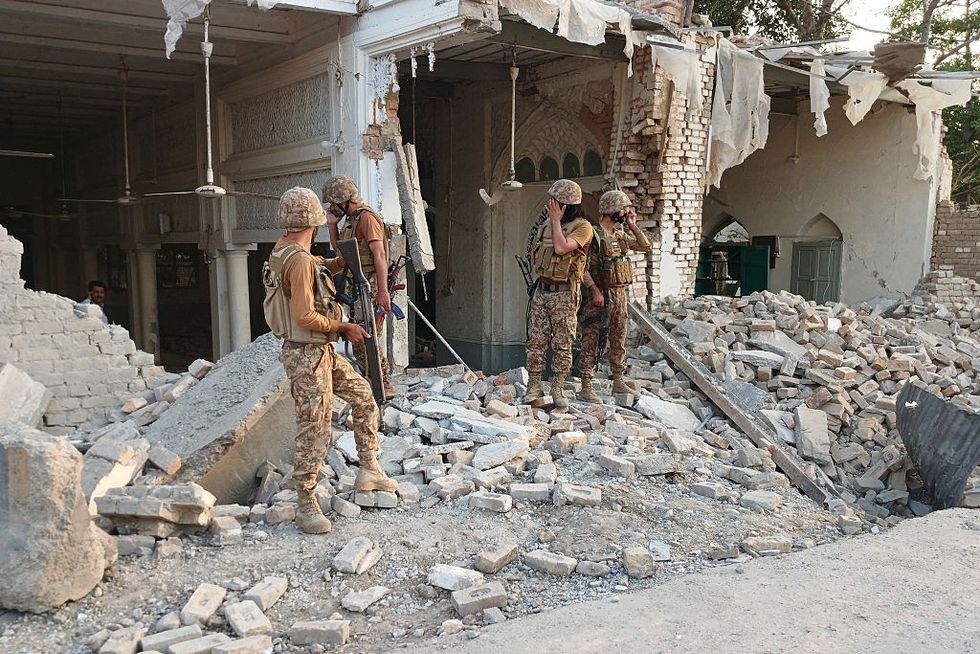 Army personnel stand amid the rubble following an explosion inside the police headquarters at Kohat in Pakistan's Khyber Pakhtunkhwa province on September 18, 2026. An explosion at a historic police headquarters in northern Pakistan on September 18 killed at least eight people and wounded 35 more, officials said, with the country's president swiftly blaming a militant group. Getty Images
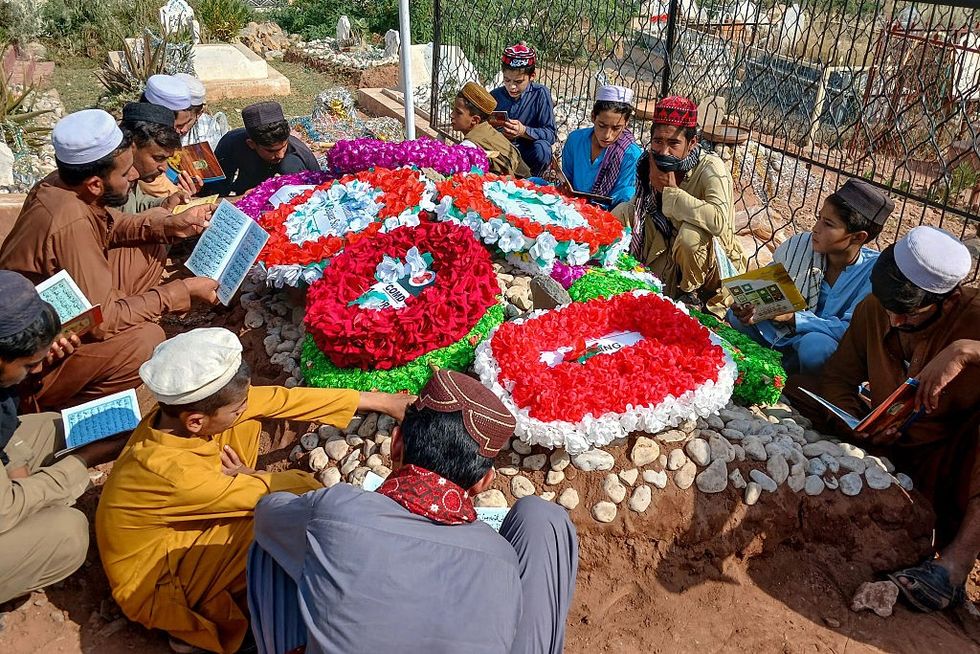 Mourners read the holy Quran while sitting around the grave of a paramilitary personnel of the Frontier Corps (FC) who was killed during the Afghanistan-Pakistan border clashes, in Kohat on October 17, 2025. A ceasefire along the frontier between Afghanistan and Pakistan was holding on October 16, officials on both sides said, after dozens of troops and civilians were killed in cross-border clashes.Getty Images