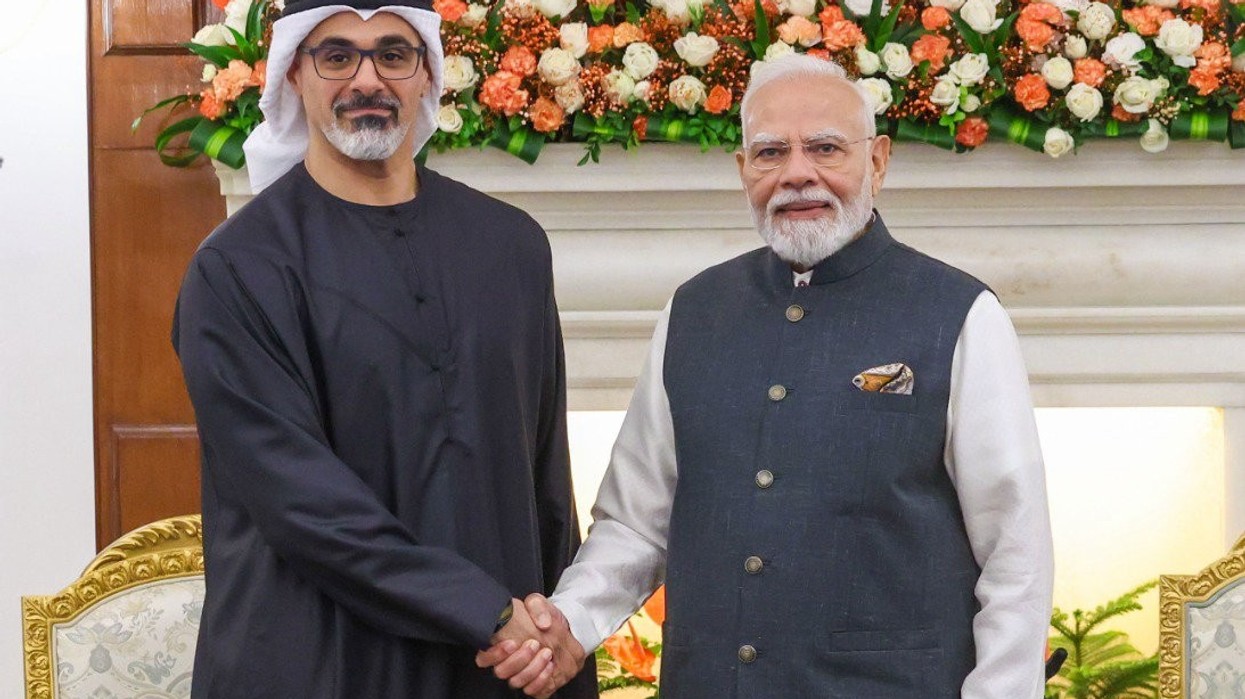
Indian prime minister Narendra Modi on Saturday (22) said the government is working towards softening the blow of the economic problems faced by several countries across the world in the aftermath of the Covid-19 pandemic.
Addressing a 'Rozgar Mela' (job fair) after distributing 75,000 appointment letters among government job aspirants, Modi said the government is also working on multiple fronts to create maximum job opportunities for youngsters.
"It is a fact that the global situation is not very good. Several large economies are struggling. In several countries, problems such as high inflation and unemployment are at their peak," he said.
The prime minister added the side-effects of the once-in-a-century pandemic will not go away in 100 days. "But despite this crisis faced the world over, the impact of which is being felt everywhere, India is taking new initiatives and some risks to save our country from being affected by these problems.
"We are working to soften this impact on our country. It is a challenging job, but with your blessings, we have been protected till now," Modi said.
Earlier, the prime minister sent appointment letters to 75,000 job aspirants electronically. The new recruits, selected from across the country, will join 38 ministries or departments of the Government of India.
They will join the government at various levels in Group A and B (gazetted), Group B (non-gazetted) and Group C.
The posts on which appointments are being made include those of the central armed forces personnel, sub-inspectors, constables, stenographers, personal assistants, income tax inspectors, etc., according to a statement issued by the government.
These recruitments are being done by the ministries and departments either by themselves or through recruiting agencies such as the UPSC, the SSC and the Railway Recruitment Board.
For expeditious recruitment, the selection processes have been simplified and made tech-enabled, the government had said.
The prime minister had asked various government departments and ministries in June to recruit 10 lakh (1 million) people on a "mission mode" in the next year and a half.