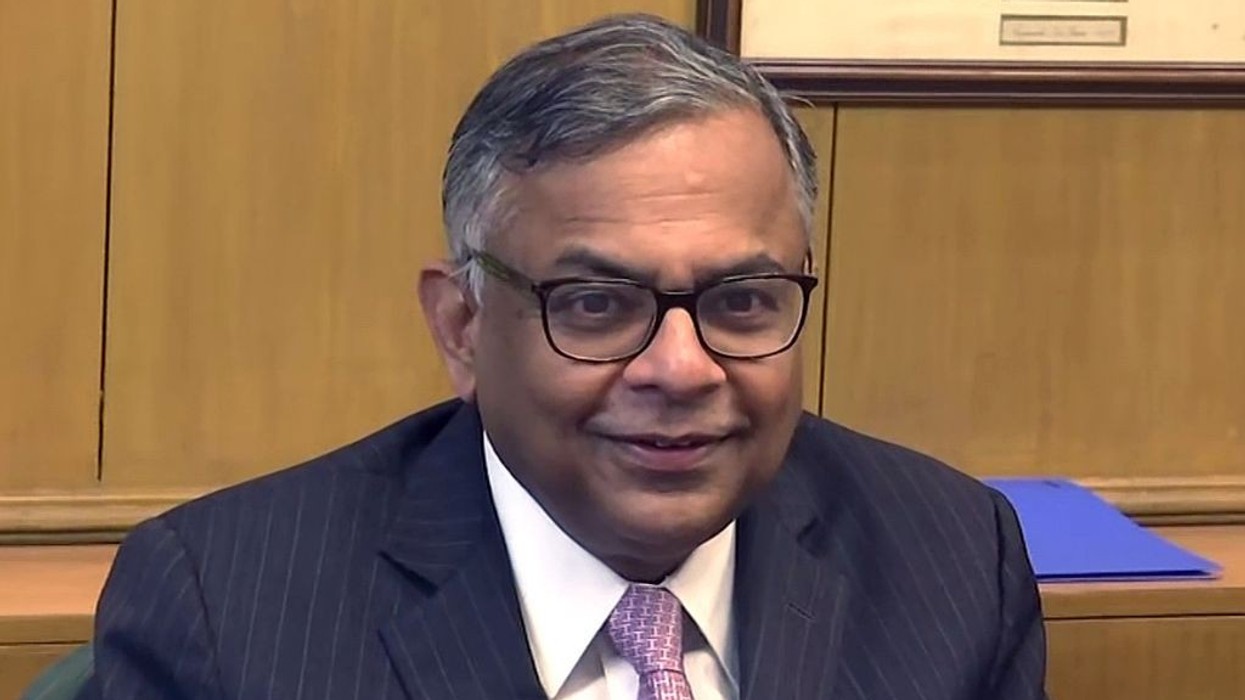
WHILE it was required to acknowledge China will influence India's neighbours, but New Delhi must not be scared of such "competitive politics", the country's external affairs minister Subrahmanyam Jaishankar said on Tuesday (30) as he also emphasised on the Indian Navy's proactive role in the Red Sea region given its maritime capability and capacity to help those in distress.
Interacting with students at the prestigious Indian Institute of Management (IIM), Mumbai, Jaishankar replied to questions on a range of issues -- from China to India's strained ties with the Maldives, deployment of naval warships in the Red Sea region and the ongoing Israel-Hamas war.
Referring to piracy and drone attacks on merchant vessels in the key Red Sea region and New Delhi's response, he said India will not be considered a responsible country if bad things are happening around its neighbourhood and "we say I have got nothing to do with this".
Read: Indian Navy rescues 19 Pakistani sailors in yet another anti-piracy operation
There are problems in every neighbourhood, but ultimately "neighbours need each other", he said when asked about India's strained ties with the Maldives, whose new president Mohamed Muizzu is seen as pro-China.
Read: Can’t guarantee every country will support India: Foreign minister Jaishankar amid Maldives row
There is competition with regard to the growing Chinese influence in the region, but it would be wrong to term it a failure of Indian diplomacy, asserted Jaishankar, who served as ambassador in Beijing during his decades-long career in the Indian Foreign Service.
"We must recognise, China is also a neighbouring country and in many ways will, as part of competitive politics, influence these countries. I don't think we should be scared of China. I think we should say 'okay, global politics is a competitive game. You do your best, I will do my best'," the diplomat-turned-politician remarked.
Being the world's second-largest economy, the Communist giant will deploy resources and try to shape things in its way, he said, adding, "Why should we expect otherwise, but the answer to that is not to complain that China is doing it."
"I would say today...we should not be scared of competition. We should welcome competition and say I have the ability to compete," Jaishankar added.
Talking about India's track record of helping its neighbours, he cited the example of Sri Lanka which was provided with multi-million dollar assistance by New Delhi when the island nation was hit by a grave economic crisis.
To a question about the 'India Out' campaign in the Maldives, Jaishankar urged the audience to "trust" Indian diplomacy.
"Every country has problems in its neighbourhood. It is never as good as they say it is. It is never as bad as they say it is. There will be problems. Our job is to anticipate, assess, respond. At the end of the day neighbours have relationships with each other," the external affairs minister said. "At the end of the day, neighbours need each other. History and geography are very powerful forces. There is no escape from that," he added.
(With PTI inputs)