
Highlights:
THE Kolkata-born couturier returned to the New York runway after 18 years, bringing Bengal’s textiles, Byzantine ornament and a very Indian understanding of luxury to a city that has always loved a little spectacle.
There was something rather fitting about Christy Turlington opening Sabyasachi Mukherjee’s New York Fashion Week show.
She walked out in denim. Not a heavily embroidered lehenga or a sweeping couture gown, not the kind of look one may immediately associate with Sabyasachi. Instead, it was denim, layered and effortless, worn with jewelry that carried centuries of history.
And then, slowly, the Sabyasachi world began to unfold.
On Tuesday (15), the Kolkata-born designer returned to New York Fashion Week after 18 years with “Bengal Byzantine Broadway,” a 72-look collection that brought together Bengal, Byzantium and New York in a way that sounds almost improbable on paper but felt deliberate on the runway.
Vogue described the clothes as “all Western clothing, but through a slightly Indian lens,” a phrase that perhaps explains the collection better than its elaborate title does.
For Sabyasachi, New York was never simply about coming back. It was about coming back differently.
The last time he showed in New York, his global luxury house was still taking shape. This time, he arrived with a West Village flagship, an established jewelry business and collaborations that have taken the Sabyasachi name well beyond Indian bridal and couture collections.
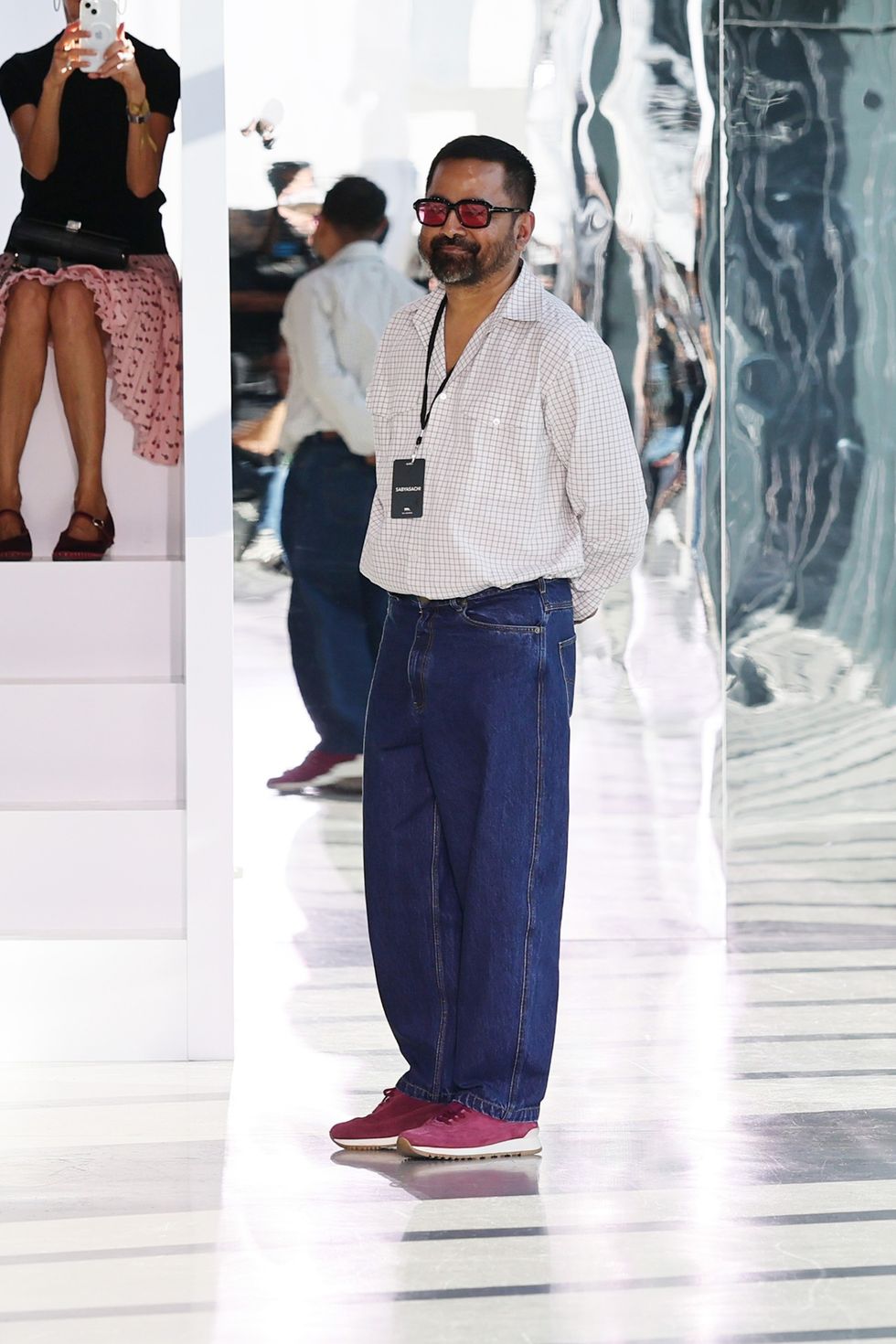 Sabyasachi Mukherjeex
But even with all that growth, the designer was clear that he did not want this show to become another exercise in fashion-week spectacle.
Months before the show, Sabyasachi wrote on Instagram about his return to New York.
“There’s been a lot of conversation about my return to New York Fashion Week. The truth is, I never really left. I simply chose to build quietly.”
The designer went on to say he valued “substance over noise” and that fashion had increasingly become driven by engagement and velocity, sometimes allowing the clothes themselves to become secondary to the spectacle.
The statement was reported by The Times of India and Robb Report India after it appeared on his official Instagram account. He also wrote that the New York presentation would be “restrained” and that he wanted “the focus to be on the clothes.”
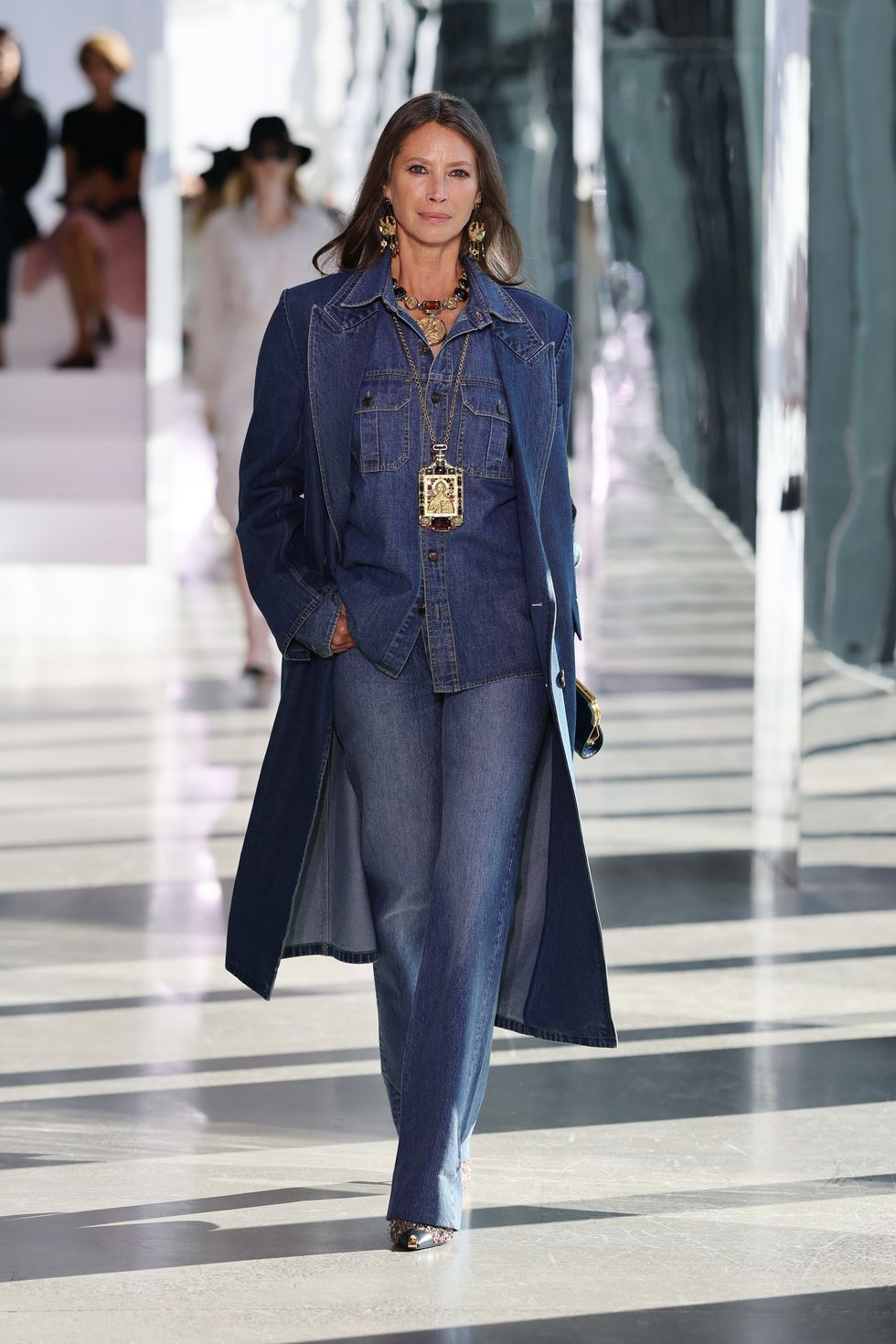 Christy Turlington opens the show in denim and jewelry from Sabyasachi’s collaboration with The Metropolitan Museum of ArtDia Dipasupil/Getty Images
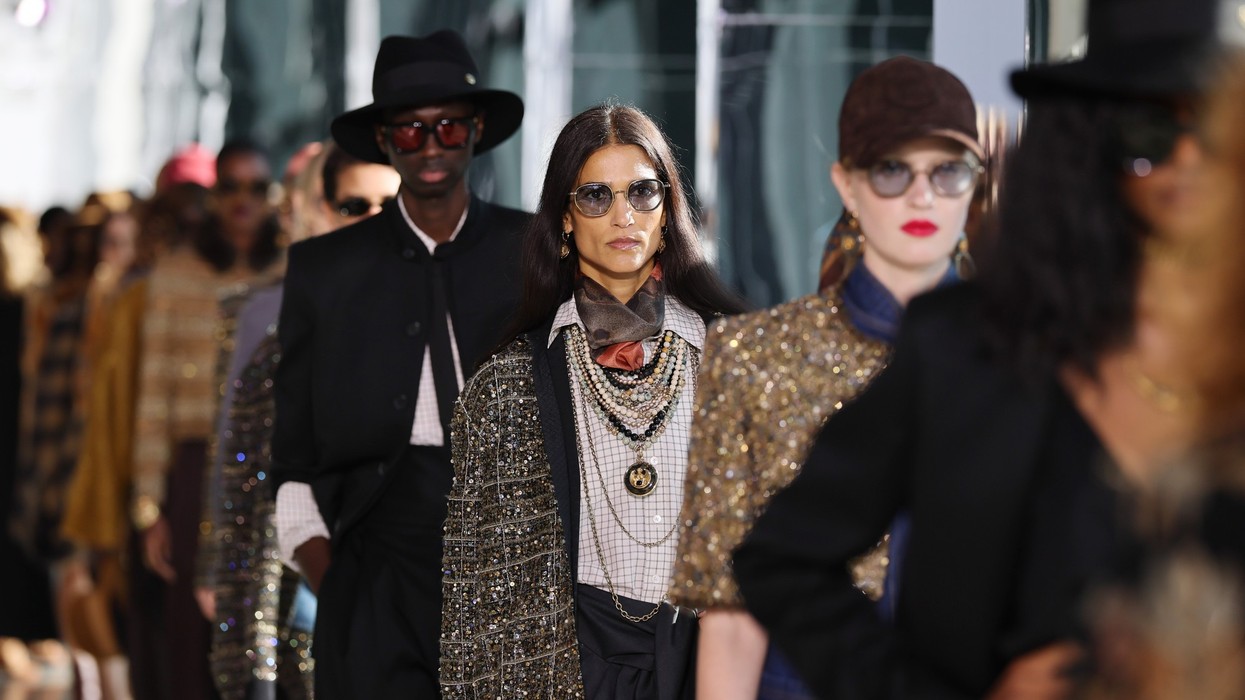
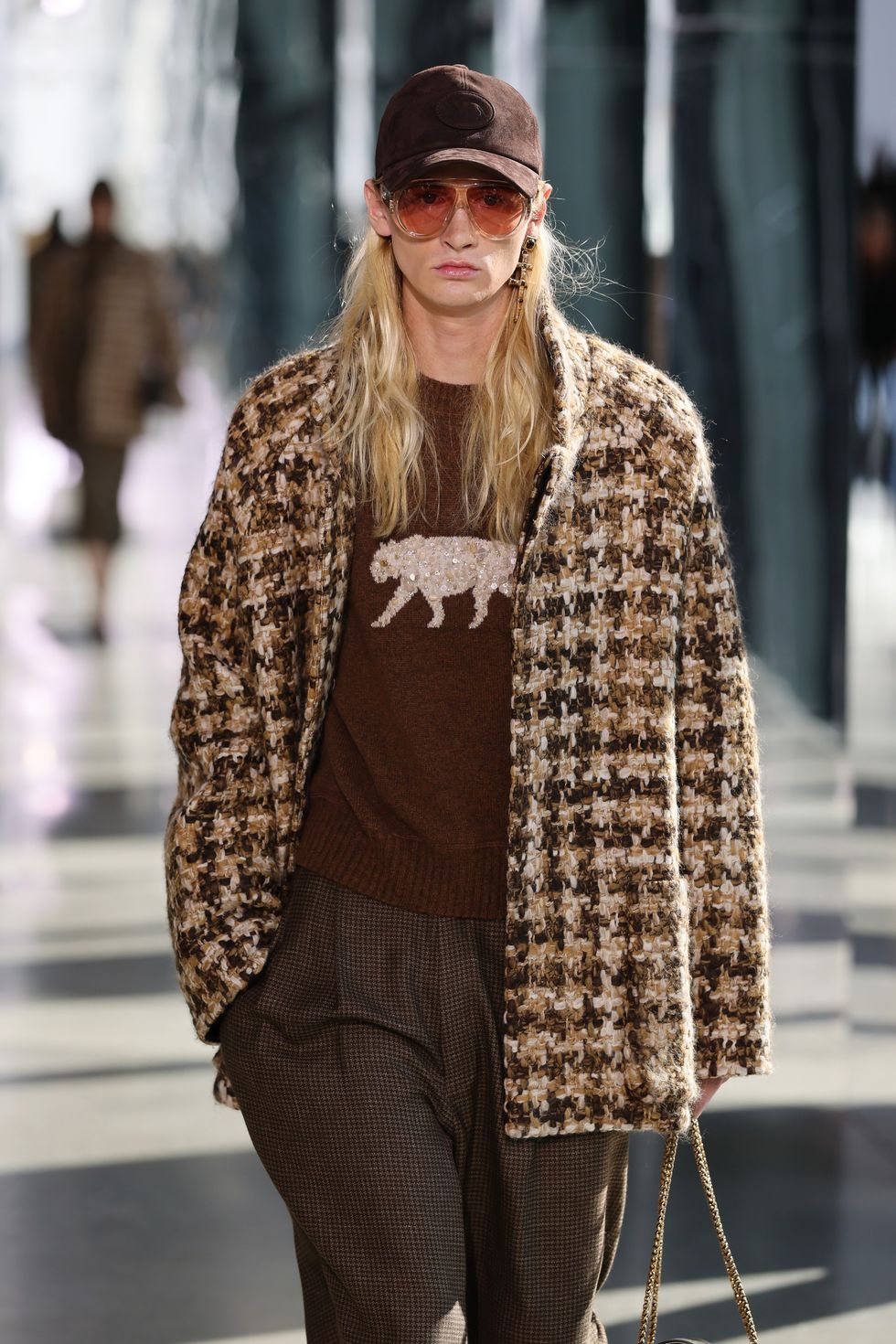
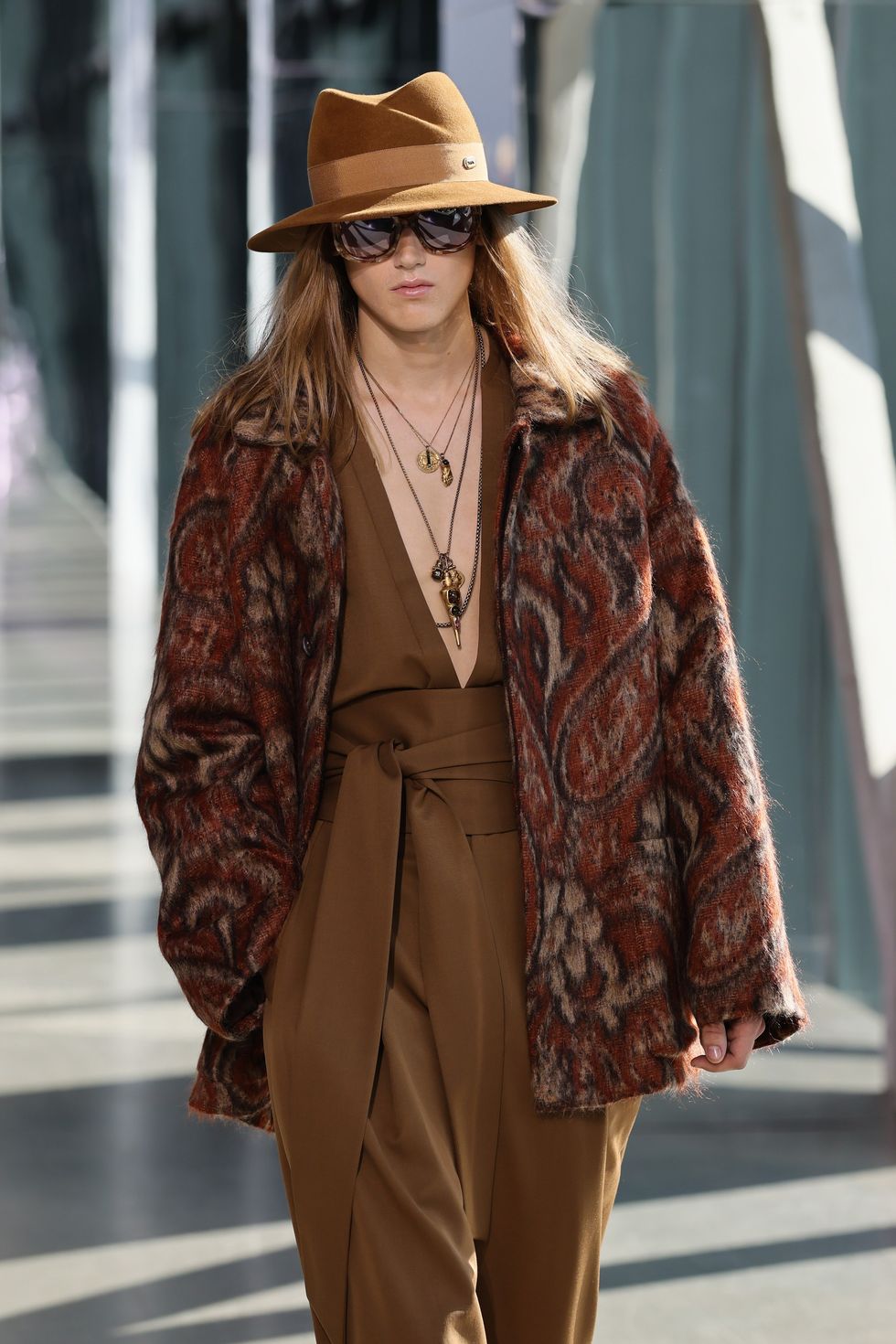
The collection moved between worlds. There were indigo denims, plaid shirts, cowboy hats and tailored jackets, but also Bengali embroidery, brocades, hand-painted silks and elaborate jewelry. GQ India described the collection as a meeting point between Constantinople, Calcutta and New York, with references stretching from Japanese denim and British tweed to 1970s bohemia and cowboy culture.
The title, “Bengal Byzantine Broadway,” suddenly made sense. Sabyasachi was not trying to make Western fashion look Indian in an obvious way. Instead, he was taking pieces of Western dressing and allowing them to pass through his own visual vocabulary.
Speaking to Vogue ahead of the show, he explained: “It’s a lot of Western, but there’s a lot of influence from the East.”
Then came the line that almost works as the collection’s manifesto: “It’s actually all Western clothing, but through a slightly Indian lens.”
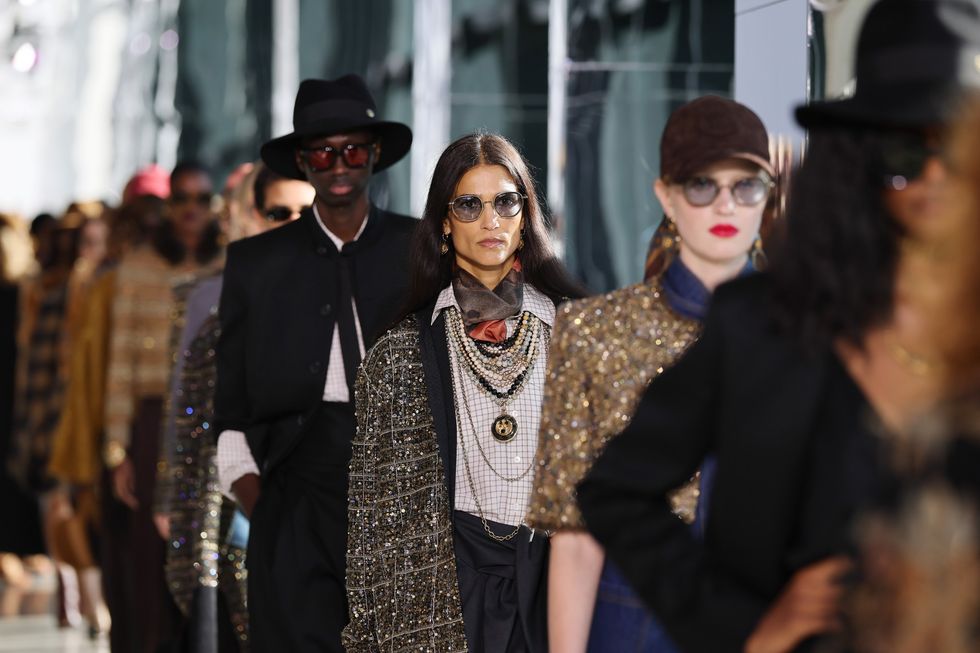 Models showcase looks from the Bengal Byzantine Broadway collectionx
A denim look could have been completely American. Add Sabyasachi jewelry, Indian embroidery and his particular sense of excess, and suddenly the same denim had another story.
Texas became part of his imagination for the collection, even though he had never visited the state. The cowboy hats and sharp denim silhouettes therefore became less about recreating Texas and more about how an Indian designer imagines an American mythology.
Turlington’s appearance was another full-circle moment. She had previously closed Sabyasachi ’s 25th-anniversary show in Mumbai, alongside Deepika Padukone, and now returned to open his New York presentation. This time, she became the first glimpse of the designer’s new collection.
The choice was significant in its simplicity. The supermodel appeared in denim, wearing pieces from Sabyasachi’s new high jewelry collaboration with The Metropolitan Museum of Art.
 x
x
It was almost the perfect introduction to what the designer was trying to do: everyday America, Indian craftsmanship and museum history, all on one body.
Alongside the clothing came the first chapter of Sabyasachi’s multiyear collaboration with The Metropolitan Museum of Art.
The jewelry draws from the Met’s vast collection, particularly Byzantine and Roman references, and translates historic forms through Indian goldsmithing and gem-setting traditions. On Sabyasachi’s official Instagram, the house described the collaboration as an exploration of “how culture travels, evolves, and endures, ” drawing from 5,000 years of history preserved in the Met’s collection.
The pieces, the brand said, are “modern heirlooms, rooted in the past, crafted for today.”
The collaboration takes historic references and translates them into contemporary pieces, bringing the museum’s collections into a luxury fashion setting. As Galerie noted in its coverage of the show, the jewelry draws inspiration from multiple civilizations while sitting alongside the “Bengal Byzantine Broadway” collection on the runway.
For all the talk around the Met, the celebrity presence and Sabyasachi’s return to New York, the clothes remained central. There were richly worked jackets, embroidered pieces, dramatic coats and evening silhouettes, but also quieter looks. Vogue noted Sabyasachi’s preference for a simple cashmere slip dress and a straight-line linen jacket when asked to choose some of his favorite pieces.
 x
x
His response was telling. “So lovely,” he said. “It’s so simple and easy, and you can wear it with big or small jewelry.”
Then, with a little humor, he added: “Don’t tell my retail team I said that, they’d slap me!”
It is perhaps this contrast that makes the collection interesting. Sabyasachi is known for grandeur, but here, grandeur sits comfortably beside simplicity, denim beside diamonds, cowboy hats beside Byzantine-inspired jewelry and Bengali textiles alongside distinctly American references.
India was not being presented as a costume or a decorative reference. It was being used as a point of view.
The evening has a longer story behind it.
Sabyasachi was born and brought up in Kolkata, and Bengal has remained central to the identity of his fashion house. Over the years, his work has grown from Indian couture into a wider luxury universe encompassing jewelry, accessories, beauty and home.
His New York return therefore feels less like an Indian designer trying to enter an international fashion system and more like an established Indian house speaking to that system on its own terms. For decades, Indian artisans have contributed embroidery, beading, textile work and craftsmanship to global luxury. But the name attached to the finished product has often been someone else’s.
Here, the Indian house is not hidden behind the craftsmanship; it is the name on the door. And perhaps that is the most interesting part of Sabyasachi’s New York return, not simply that Bengal traveled to Broadway, but that this time, Bengal arrived carrying its own name.









 Outlook
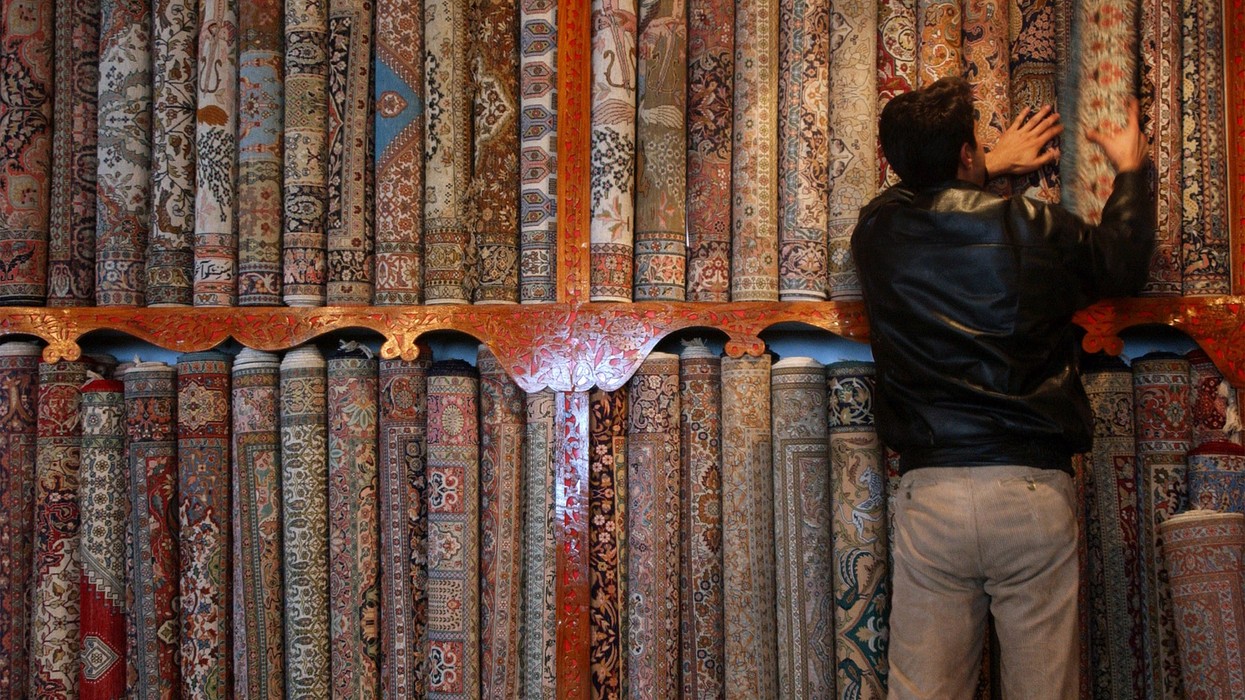
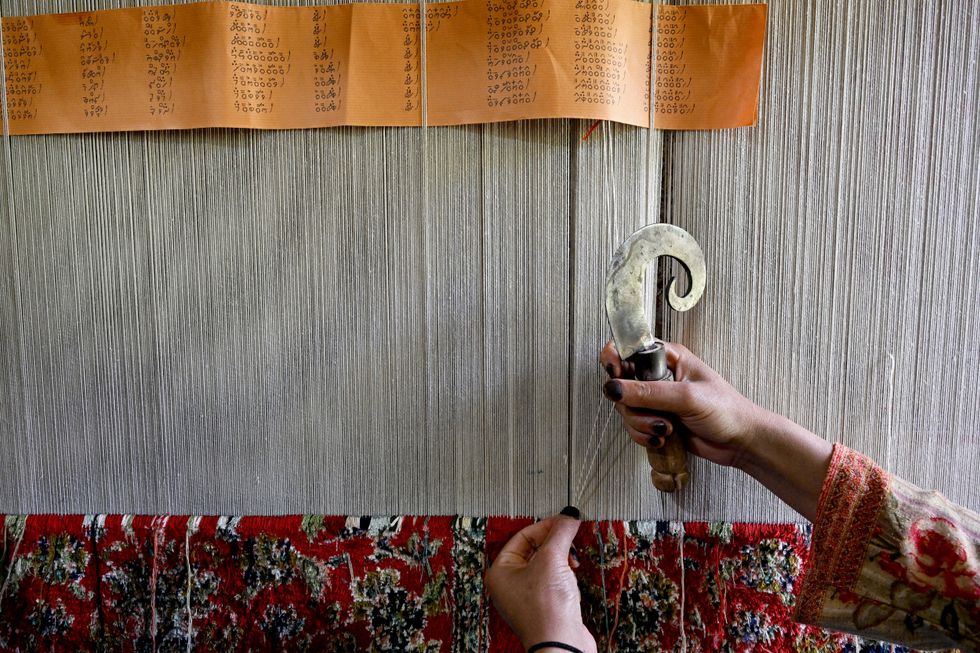 A Kashmiri craftswoman weaves a silk carpet at a factory in SrinagarTauseef Mustafa/AFP via Getty Images
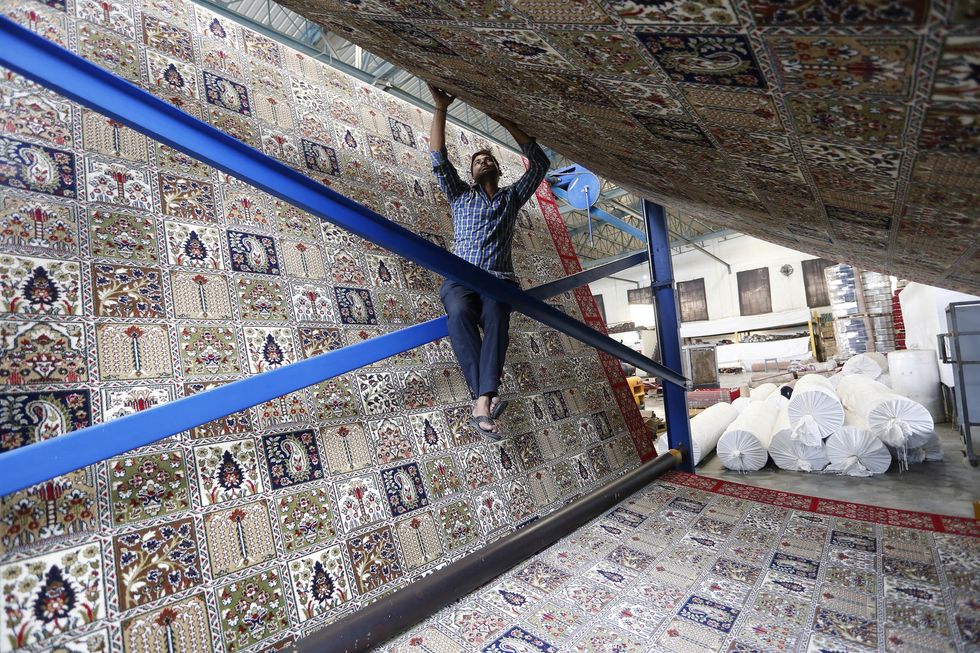 A worker weaves a carpet at a factory on the outskirts of JammuAlok pathania/AFP via Getty Images
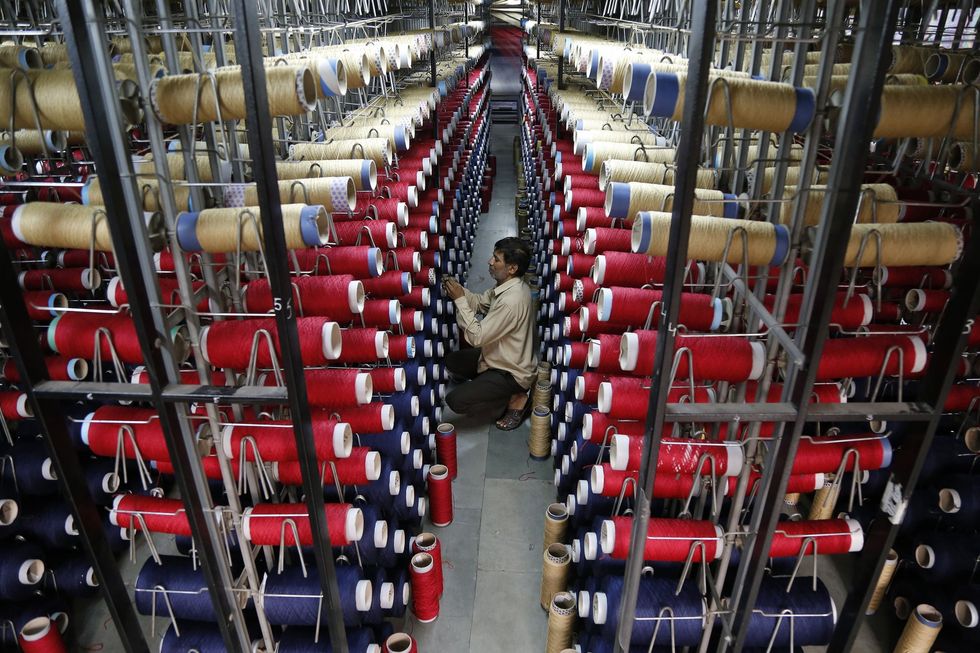 A worker checks thread reels at a carpet factory in JammuAlok pathania/AFP via Getty Images