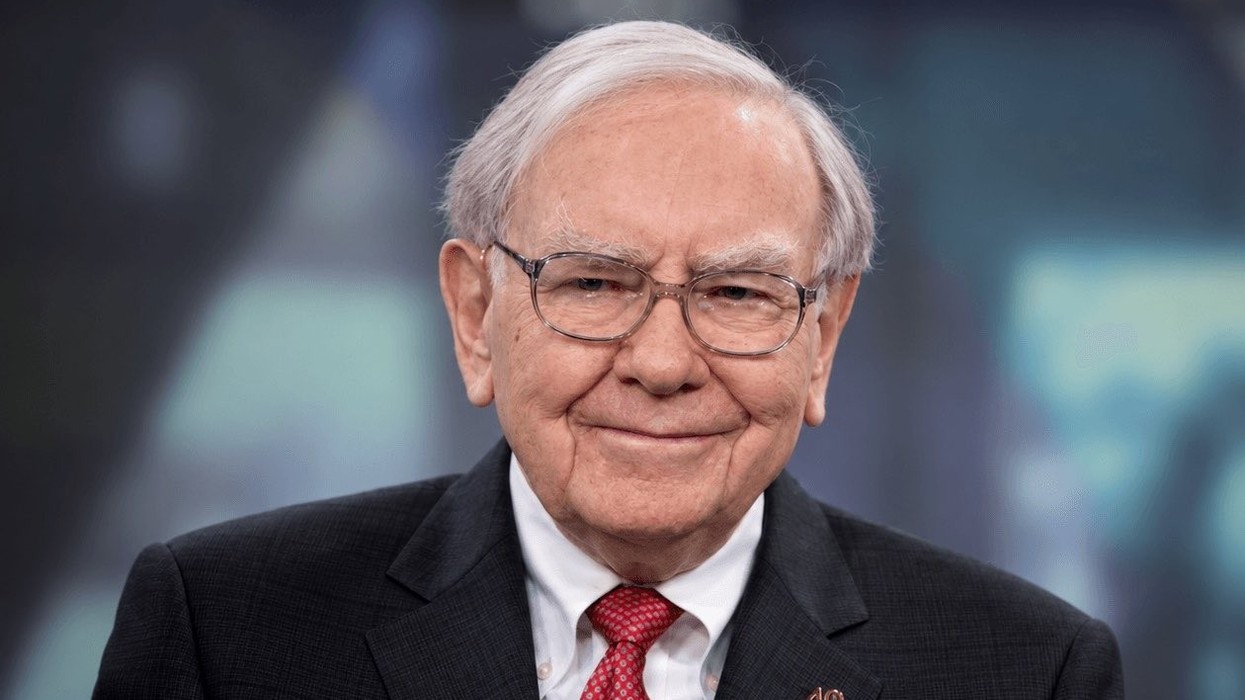

- Buffett took control of Berkshire Hathaway in 1965 when it was still a struggling textile company.
- The company has grown into a conglomerate valued at more than $1 trillion, spanning insurance, railroads, energy and other businesses.
- Berkshire shareholders enjoyed a compounded annual return of nearly 20 per cent during Buffett's tenure.
When Warren Buffett took control of Berkshire Hathaway in 1965, he was buying into a struggling textile company. Six decades later, the business has become a sprawling conglomerate worth more than $1 trillion, with operations stretching from insurance and railroads to energy, manufacturing, retail and investments.
That transformation is the clearest measure of what Buffett actually did at Berkshire. He did not simply build a successful investment portfolio. He turned the company into a collection of businesses that could generate cash, reinvest it and help fund the next acquisition.
Buffett's association with Berkshire has now entered a new phase. The 96-year-old stepped down as chairman on Friday (18), becoming chairman emeritus while remaining on the board. His son, Howard Buffett, has taken over as chairman, while Greg Abel remains CEO after taking over the top executive role at the beginning of 2026.
But the significance of the change becomes clearer when measured against what happened during Buffett's six decades with the company.
From textiles to a business empire
Berkshire's roots were hardly promising. Buffett began acquiring shares in the textile manufacturer in the 1960s and eventually took control of the company in 1965.
The textile operation itself did not become the foundation of the modern Berkshire. Buffett eventually shifted the company's focus towards insurance and other businesses, using the cash generated by those operations to make investments and acquisitions.
Over time, Berkshire accumulated businesses across sectors including insurance, railroads, energy, manufacturing and retail. The company also became a major investor in publicly traded businesses.
That model made Berkshire unusual. Rather than operating as a conventional investment company, it built a decentralised group of businesses under one corporate umbrella, with Buffett and his team allocating capital between them.
The results were extraordinary.
During Buffett's tenure as Berkshire's chief executive, the company's shares produced a compounded annual return of 19.9 per cent, compared with 10.4 per cent for the S&P 500, according to figures reported by the Associated Press.
That difference compounded over decades, turning Berkshire into one of the world's most valuable companies and making Buffett one of the most closely followed investors in the world.
The Buffett model
The numbers tell only part of the story.
Buffett developed a distinctive approach to running Berkshire. He favoured businesses he believed were understandable and durable, gave managers considerable independence and generally preferred holding strong businesses for long periods rather than constantly trading investments.
Berkshire's insurance operations also played an important role. The premiums collected by its insurers provided capital that could be invested until it was needed to pay claims. That model gave Buffett a large pool of capital to allocate across the wider group.
His approach also became part of Berkshire's identity. The company's annual shareholder meeting grew into a major event, attracting investors who came not only to discuss Berkshire's results but also to hear Buffett's views on markets, business and investing.
That culture became one of the company's most valuable intangible assets.
Buffett's influence extended beyond the boardroom too. He repeatedly warned investors against excessive debt, short-term thinking and speculative behaviour. As recently as May, he said markets appeared to be in an unusually strong “gambling mood”.
The philosophy was relatively simple, but applying it consistently across six decades was much harder.
What comes next
Buffett's departure from the chairmanship does not mean the Berkshire model disappears overnight.
Howard Buffett, who has served on Berkshire's board since 1993, is now chairman. Greg Abel is responsible for running the business and making capital allocation decisions, while Warren Buffett remains on the board as chairman emeritus.
That distinction matters because Berkshire has entered a very different investment environment from the one Buffett encountered in 1965.
The company ended June with about $364.7 billion in cash, leaving Abel with an enormous pool of capital to deploy. Berkshire has also been making significant moves in areas beyond Buffett's traditional investment interests, including a roughly $6.8bn acquisition of homebuilder Taylor Morrison and a significant investment in Alphabet, Google's parent company.
Abel has highlighted opportunities linked to artificial intelligence and the huge electricity demand created by data centres.
So, the legacy Buffett leaves behind is not simply a bigger Berkshire.
It is a system for owning businesses, generating cash and deciding where that capital should go. The next test is whether that system can continue producing results when Buffett is no longer the person making the final calls.
After 60 years, that may ultimately be the most important thing Buffett has done to Berkshire Hathaway: he turned his own investment philosophy into an institution that now has to work without him at the centre.