
- Tata Sons’ board approved a fresh five-year term for Chandrasekaran after he had said he would not seek reappointment.
- Noel Tata, chairman of Tata Trusts, voted against the move, while the board approved it by a majority.
- The board also moved to begin the process of listing Tata Sons after the RBI rejected its bid to surrender its NBFC registration.
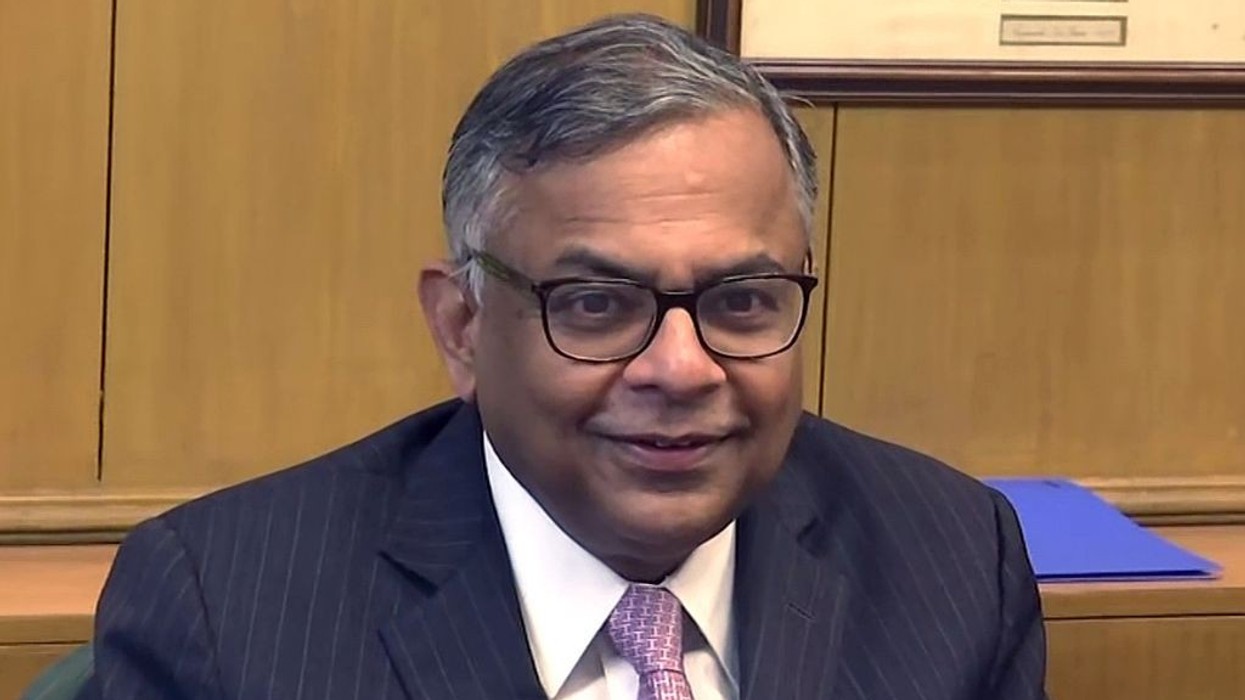
Just weeks ago, it looked as though the Tata Group was preparing for a leadership change. N Chandrasekaran had told the Tata Sons board in August that he did not intend to seek another term when his current tenure ends on February 20, 2027. On Thursday (17), that decision was reversed.
The Tata Sons board approved a fresh five-year term for Chandrasekaran as executive chairman, after the Nomination and Remuneration Committee unanimously asked him to reconsider his decision. The board said it acted in recognition of his contribution to the Tata Group and in the broader interests of the group.
But the move has immediately opened another question: why did Tata Sons suddenly decide that continuity at the top was more important than the succession process already underway?
The timing matters. The board met less than a week after the Reserve Bank of India rejected Tata Sons’ request to surrender its registration as a core investment company. That decision brought the possibility of a stock-market listing back into focus for the holding company.
Why Chandra is back
Chandrasekaran has led Tata Sons since 2017 and was reappointed for a second five-year term in 2022. His decision in August not to seek another term had prompted the Sir Dorabji Tata Trust to begin the process of finding his successor.
Several names had reportedly emerged as potential candidates, including Tata Steel CEO TV Narendran, Tata Sons group CFO Saurabh Agrawal and National Stock Exchange CEO Ashish Chauhan.
That succession process now looks set to be paused.
The board said its Nomination and Remuneration Committee had unanimously requested Chandrasekaran to reconsider his decision at a September 3 meeting. At Thursday’s board meeting, he agreed to do so, after which the board voted to recommend his reappointment for another five years.
Chandrasekaran had explained his original decision by saying he had completed 40 years of professional life at the Tata Group.
“I have decided not to offer myself for reappointment when my term ends on February 20, 2027,” he had said.
The reversal now gives Tata Sons leadership continuity at a particularly complicated moment.
A potential listing would require the holding company to navigate regulatory requirements, shareholder questions and the restructuring of its relationship with investors. Reports have suggested that some directors viewed continuity under Chandrasekaran as useful as Tata Sons faces those challenges.
But not everyone on the board agreed.
Noel Tata, who chairs Tata Trusts, voted against Chandrasekaran’s reappointment. Tata Trusts collectively controls about 66 per cent of Tata Sons, making its position central to what happens next.
Tata Trusts has challenged the validity of the board decision, describing the reappointment as “illegal” and a “legal nullity.” The Trusts’ position is based on its interpretation of Tata Sons’ Articles of Association and the voting rights attached to its nominee directors.
That does not mean the decision has been legally determined to be invalid. It is the position taken by Tata Trusts, and the dispute could now move to the company’s shareholder level or potentially into legal proceedings.
The IPO changes the equation
The leadership dispute is unfolding alongside an equally important change: Tata Sons is now moving toward a potential public listing.
The RBI classified Tata Sons as an upper-layer non-banking financial company in 2022. Such entities face listing requirements, and Tata Sons had sought to surrender its registration to avoid that route. The RBI’s rejection of that request has brought the listing issue back to the center of the company’s strategy.
Tata Sons had previously repaid more than Rs 21,000 crore in debt as part of its attempt to qualify for an exemption from the listing requirement.
The board has now said it will initiate steps to comply with the applicable RBI guidelines and seek guidance from the RBI, Tata Trusts and other stakeholders on the requirements.
For Tata Sons, a listing would be a major shift. The holding company has controlling stakes in major Tata businesses spanning technology, automobiles, steel, hospitality and aviation.
It would also have implications for shareholders. The Shapoorji Pallonji Group, which owns roughly 18 per cent of Tata Sons, has long pushed for a listing as a way to unlock value from its stake.
The two decisions taken on Thursday — keeping Chandrasekaran at the helm and moving toward a listing — therefore cannot be viewed entirely separately.
The board has chosen continuity just as Tata Sons enters a potentially transformative period. But with Tata Trusts challenging the chairman’s reappointment, the question of who ultimately leads the holding company may not be settled by Thursday’s board vote alone.
Both the reappointment and listing-related decisions will face further corporate approvals, making the upcoming shareholder process an important next stage in the Tata Sons dispute.