
Highlights:
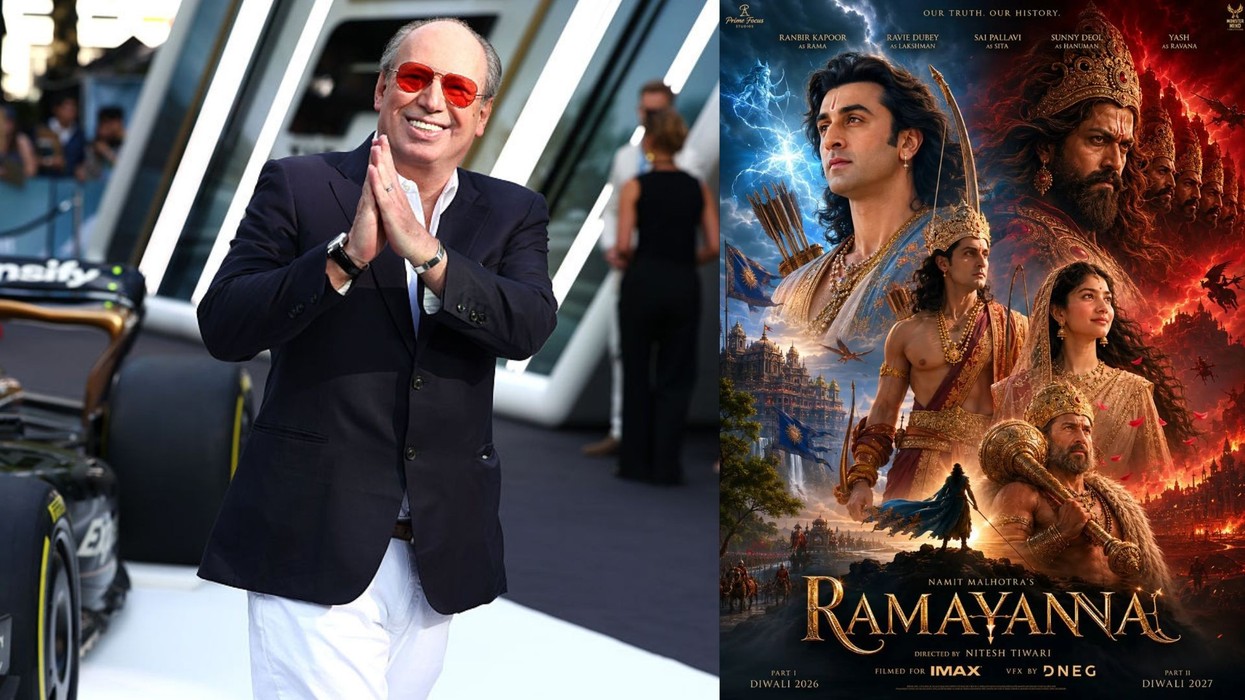
What does it take to convince one of Hollywood's most celebrated music composers to become part of a film based on an ancient Indian epic? For Hans Zimmer, apparently, it did not take a complete script, an elaborate presentation or even a detailed explanation of the story.
The Oscar-winning composer agreed to join Nitesh Tiwari's upcoming two-part adaptation of Ramayana while producer Namit Malhotra was still in the middle of his pitch. The unexpected response came after Zimmer had seen only six or seven slides of Malhotra's presentation, leaving the producer surprised by how quickly the composer understood the project's vision.
The film has brought together Zimmer and Indian musical legend AR Rahman to create its music and score. Starring Ranbir Kapoor as Rama, Sai Pallavi as Sita and Yash as Ravana, the ambitious production aims to bring one of India's most celebrated epics to audiences around the world.
What convinced Hans Zimmer to join Ramayana?
In a promotional video released by the makers on Monday, Malhotra recalled meeting Zimmer in New York a few years ago. The producer had prepared an elaborate pitch deck, complete with the film's worldbuilding and creative vision, hoping to convince the composer to join the project.
However, the meeting took an unexpected turn.
“When I met Hans, I’d made my whole pitch deck and worldbuilding. I showed him six or seven slides, and he said, ‘I don’t need to see it,” said Malhotra.
Zimmer's response suggested that he had already understood what the project was trying to achieve. Explaining his decision, the composer said, “The two cultures that are so different can be so the same.”
It was this connection between two distinct musical and cultural worlds that appears to have drawn Zimmer towards the project. Rather than requiring a lengthy explanation, he recognized the opportunity to bring different traditions together through music.
AR Rahman and Hans Zimmer's musical partnership
The collaboration brings together two composers with distinctive musical backgrounds. While Rahman is known for blending Indian classical influences with contemporary sounds, Zimmer has created scores for several major Hollywood productions.
In the video, Rahman spoke about the ability of music to connect people across cultures.
“Music has always had the power to bring people together,” he remarked.
Zimmer described their collaboration as an opportunity to create something that connects India's ancient traditions with audiences in the West.
“Together, we’re setting off on a journey that’s never been done together — to make music that’s thousands of years old about the gods, the traditions, and the stories that make India so important to us in the West,” he said.
Rahman revealed that the two composers work on different musical pieces separately before exchanging their ideas and deciding what works best.
“The process is constant exchange and seeing what works best,” he said.
Zimmer also spoke about their musical understanding, describing how they can communicate through instruments without necessarily exchanging words.
“Our friendship is just speaking to each other without exchanging words; just take an instrument and start playing,” he added.
Nitesh Tiwari describes the experience
Director Nitesh Tiwari said watching the two composers work together was an extraordinary experience. He described their ability to understand what a musical composition needed without making the process appear complicated.
“These guys are not legends without any reason. They just know what needs to be done and excel at it. It’s so effortless,” he said.
Tiwari also recalled watching them create music alongside a live musical ensemble in the studio.
“Suddenly, the emotions are overflowing. You’re just mesmerised. It sounds so out of the world when so many people are in sync,” he added.
Malhotra said the fact that Ramayana brought Zimmer and Rahman together was particularly special, given their mutual respect.
The film also features Ravi Dubey, Sunny Deol, Arun Govil, Lara Dutta, Rakul Preet Singh, Shobana, Kunal Kapoor, Vivek Oberoi and Anupam Kher, among others.
The first part of Ramayana is scheduled to release worldwide in cinemas on November 5, three days before Diwali. The two-part production is reportedly being made on a budget of $460 million.