INDIAN defence minister Rajnath Singh had told former chief of the country's army, Gen MM Naravane, to do whatever he deemed appropriate on the night of August 31, 2020, following a tense situation arising out of China's People's Liberation Army moving tanks and troops at Rechin La mountain pass on the Line of Actual Control between the two neighbours in eastern Ladakh.
In his memoir 'Four Stars of Destiny', the 63-year-old Naravane, who served as the army chief between December 2019 and April 2022, recounted Singh's direction and a flurry of phone calls between the defence minister, external affairs minister, national security adviser and the chief of defence staff on the same night on the sensitive situation at the northern borders.
After Singh's call, Naravane says a hundred different thoughts "flashed through" his mind.
"I conveyed the criticality of the situation to the RM (Raksha Mantri or defence minister), who said he would get back to me, which he did, by about 2230 hours," writes Naravane.
"He said that he had spoken to the PM and that it was purely a military decision. 'Jo ucchit samjho woh karo' (Do whatever you deem is appropriate)."
"I had been handed a hot potato. With this carte blanche, the onus was now totally on me. I took a deep breath and sat silently for a few minutes. All was quiet save for the ticking of the wall clock," he says.
"I was in my den at Army House, with the map of J and K and Ladakh on one wall, Eastern Command on another. They were unmarked maps, but as I looked at them, I could visualise the location of each and every unit and formation. We were ready in all respects, but did I really want to start a war?" he writes.
In the memoir, Gen Naravane reflects on his thought process that night.
"The country was in bad shape, reeling under the Covid pandemic. The economy was faltering, global supply chains had broken down. Would we be able to ensure a steady supply of spares, etc., under these conditions, in case of a long-drawn-out action?"
"Who were our supporters in the global arena, and what about the collusive threat from China and Pakistan? A hundred different thoughts flashed through my mind," he writes.
"This was no war game being played in a sand model room of the Army War College, but a life and death situation." Naravane says after a few moments of quiet reflection, he called up Northern Army Commander Lt Gen YK Joshi.
'It would provide the Chinese with an excuse'
"'We cannot be the first ones to fire,' I told him, as it would provide the Chinese with an excuse, a casus belli, to escalate and paint us as the aggressors "Even at Mukhpari (on the Kailash Range) the previous day, it had been the PLA who had fired first (being only two rounds by the PLA and three rounds by us, it had escaped the attention of the media)," he writes.
Naravane says he felt that the army should maintain this stance.
"Instead, I told him to move a troop of our tanks right to the forward slopes of the pass and depress their guns so that the PLA would be staring down the barrels of our guns," he writes.
"This was done forthwith and the PLA tanks, which had by then reached within a few hundred metres of the top, stopped in their tracks," he says.
"Their light tanks would have been no match for our medium tanks. It was a game of bluff and the PLA blinked first." Naravane writes the PLA moved troops from Moldo to the area of Chuti Changla towards the South Bank of the Pangong Tso on the intervening night of August 29-30.
(With PTI inputs)




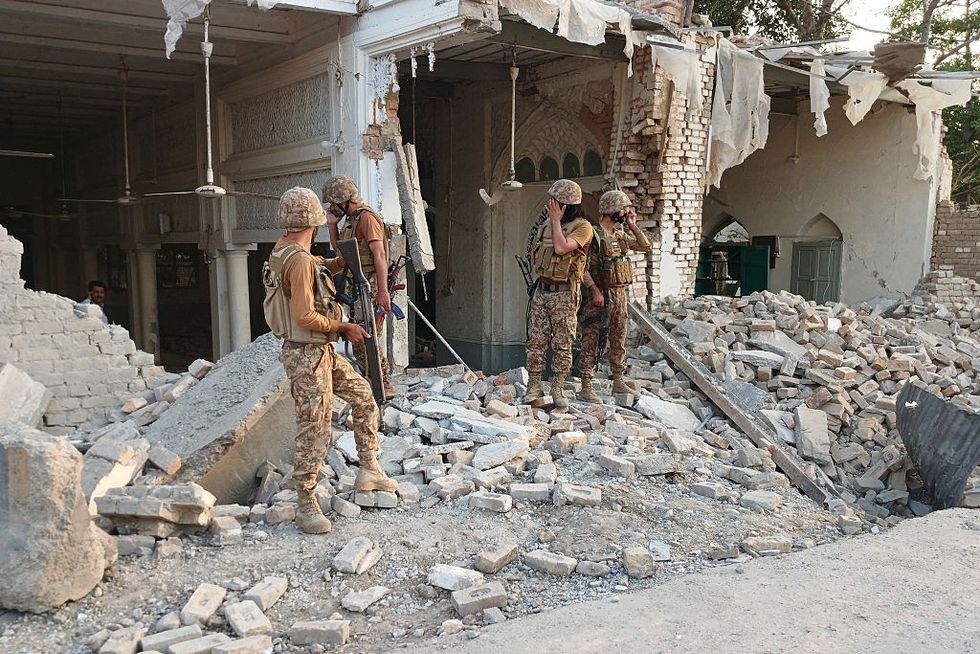 Army personnel stand amid the rubble following an explosion inside the police headquarters at Kohat in Pakistan's Khyber Pakhtunkhwa province on September 18, 2026. An explosion at a historic police headquarters in northern Pakistan on September 18 killed at least eight people and wounded 35 more, officials said, with the country's president swiftly blaming a militant group. Getty Images
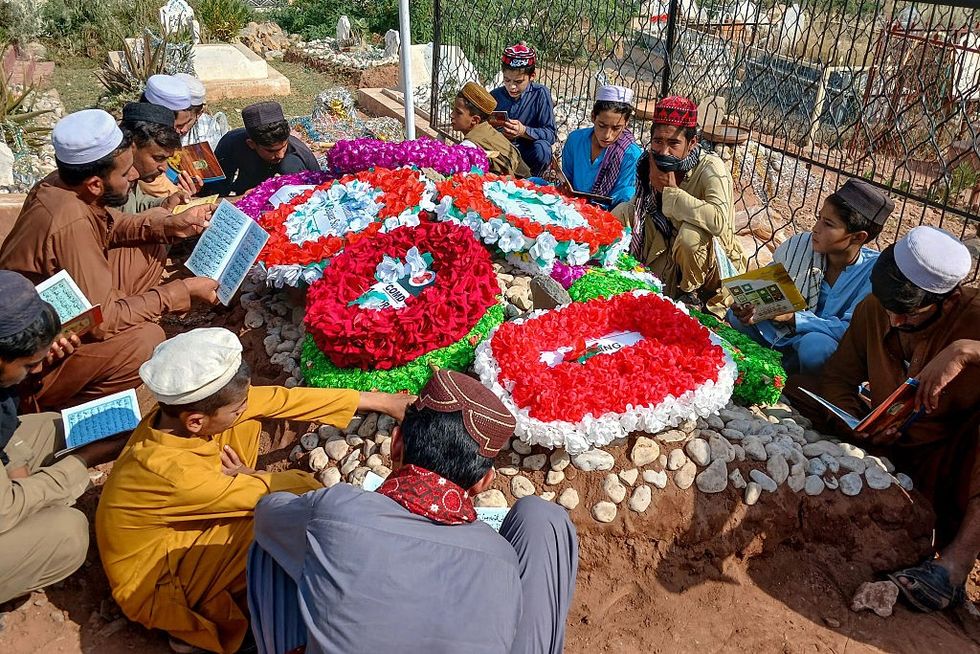 Mourners read the holy Quran while sitting around the grave of a paramilitary personnel of the Frontier Corps (FC) who was killed during the Afghanistan-Pakistan border clashes, in Kohat on October 17, 2025. A ceasefire along the frontier between Afghanistan and Pakistan was holding on October 16, officials on both sides said, after dozens of troops and civilians were killed in cross-border clashes.Getty Images