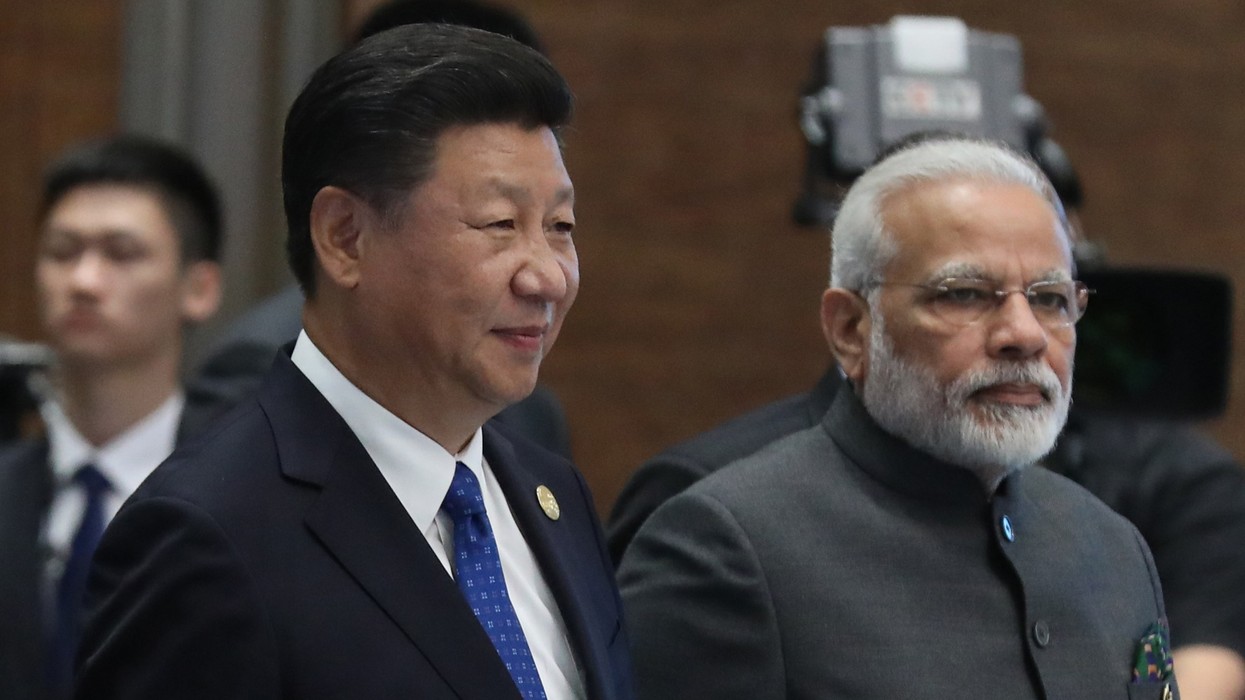

Chinese president Xi Jinping is confirmed to travel to New Delhi this Saturday (12) for the 18th BRICS Summit, marking his first visit to India in seven years. He will be joined by Russian president Vladimir Putin and Iranian president Masoud Pezeshkian, both expected to hold separate talks with Indian prime minister Narendra Modi, as the 11-member bloc meets September 12-13 against the backdrop of wars in Ukraine and the Middle East.
For the Indian diaspora watching from abroad, Xi's presence in Delhi carries a significance well beyond the summit agenda. It comes six years after a deadly military clash along the disputed Himalayan border brought the world's two most populous nations to their most dangerous standoff in decades — and it lands at a moment when both governments appear more willing than at any point since to test whether that damage can be repaired.
A slow thaw, accelerating since 2024
Ties between India and China have been warming gradually since the 2020 clash, with flights, visas and high-level contacts steadily restored. That process has picked up pace over the past two years. Modi and Xi met at the Shanghai Cooperation Organisation summit in Bishkek earlier this month, and diplomatic contact has continued at multiple levels. India's national security adviser Ajit Doval met Chinese foreign minister Wang Yi in Beijing on August 25 for the 25th round of Special Representative talks on the boundary question, a meeting that produced an eight-point consensus, including a commitment to keep negotiating a framework for settling the dispute.
On trade and investment, the shift has been just as concrete. In March, the government relaxed rules to let state-run power equipment maker Bharat Heavy Electricals Limited source 21 critical items from China for five years. In June, the finance ministry went further, exempting four Chinese power equipment manufacturers with Indian factories — TBEA Energy, Nanjing Electric India, New Northeast Electric India and Taikai Electric (India) — from procurement rules that otherwise require companies from countries sharing a land border with India to register with Indian authorities before bidding for government contracts. Those rules were themselves a product of the 2020 clash, introduced to require Chinese bidders to clear security vetting by the external affairs and home ministries.
The border talks that just happened
The most tangible sign of the current push, however, came just days before Xi's arrival. India and China held their first Senior Highest Military Commander-Level Flag Meeting on Sunday (6) and Monday (7), with Indian officers meeting their Chinese counterparts at Wacha in Arunachal Pradesh and Damai on the Chinese side, amid tensions in the Taksing area of the state's Upper Subansiri district. The talks were led on the Indian side by Lieutenant General Girish Kalia of the Army's III Corps.
The meeting followed a mechanism that has operated in eastern Ladakh since 2020, where India and China have held 23 rounds of Corps Commander-level talks at the Chushul-Moldo border point to manage the military standoff there. According to the India's ministry of external affairs, this latest round in the eastern sector flowed from understandings reached between the two countries' Special Representatives in August 2025 and August 2026, along with follow-up meetings of the Working Mechanism for Consultation and Coordination in Beijing and New Delhi in May and August this year.
Not every gap has closed, though. Manoj Kewalramani, chairperson of the Geostrategy Programme at Bengaluru's Takshashila Institution, pointed to a telling difference in how the two sides characterized the latest Special Representative talks: India wants dialogue on trans-boundary rivers, he noted, but China's official readouts do not even acknowledge the issue.
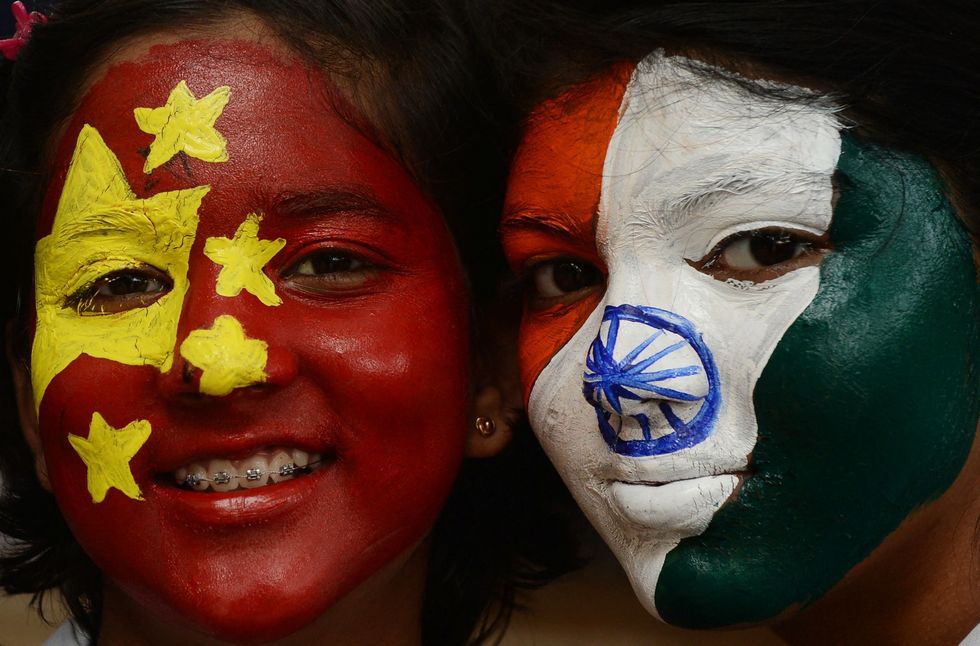 Indian school students pose with their faces painted with India's and China's national flags in Chennai on October 10, 2019, ahead of a Modi-Xi meet in the outskirts of the city. Getty Images
Trade is rising and cushioning India against US tariffs
Away from the border, commerce between the two countries has been quietly accelerating. Indian exports to China rose more than 28 per cent to $5.55 billion in April-June this financial year compared with the same period a year earlier, according to official trade data — a jump that has helped offset the hit to India's fishery exports from US tariffs. Ahead of the summit, Beijing has also stepped up imports from India in recent months.
That momentum is expected to shape the sidelines of the summit itself. Xi is expected to bring a sizeable business delegation to Delhi, and India's ministry of commerce and industry has been consulting domestic industry groups ahead of likely high-level talks with Chinese counterparts on trade friction.
The sticking point: Rare earths, chips and grid technology
That friction centers on a run of Chinese export restrictions that Indian industry says has intensified over roughly the past 12 to 15 months. A senior executive in the renewable energy sector, who has sourcing exposure in China, told The Indian Express that Beijing has restricted exports of ingot and wafer technology, battery cells and cell technology, and — in the transmission sector — High Voltage Direct Current systems and specialized components critical for moving power over long distances with minimal loss.
India's automobile industry has separately had to find workarounds because of delays in rare earth magnet exports from China.
"I think it is very critical that the government finds a way to tide over some of these issues," the executive said, warning that otherwise India's efforts at backward integration — the domestic manufacturing base that underpins its competitiveness — "will unfortunately be stopped and won't be successful."
Pratik Agarwal, managing director of Sterlite Electric and chairman of Serentica Renewables and Resonia, talking to The Indian Express, framed the stakes in terms of India's infrastructure ambitions: restrictions on technology needed for HVDC and advanced transmission systems expose the strategic vulnerabilities of global supply chains at a moment when India is undertaking one of the world's most ambitious transmission build-outs to meet growing electricity demand and integrate renewable energy.
Where the relationship goes from here
Whether Xi and Modi hold a full bilateral meeting on the summit's sidelines remains unconfirmed, but analysts say it would matter well beyond the optics. "An India-China bilateral would be very important — if it takes place," said Pradeep Taneja, a China-India expert at the University of Melbourne told The Indian Express.
The stakes reach beyond the two countries. Xi's Delhi visit comes weeks before his first official visit to the United States under the second Trump administration, at a time when Washington's tariff policies have unsettled trade relationships worldwide — giving both India and China added incentive to hedge with alternative partnerships. How far the two governments are willing to go, particularly on the unresolved river-sharing and border questions that continue to divide their official positions, will determine whether this month's visit marks a genuine turning point or another cautious step in a relationship still shadowed by 2020. (With input from agencies)




 x
x
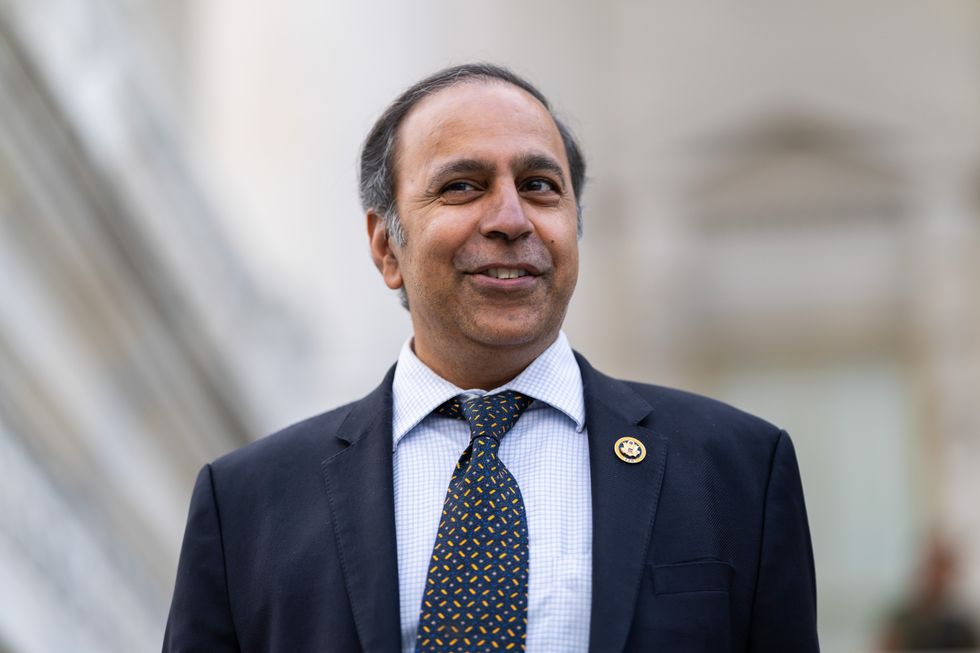 Raja KrishnamoorthiGetty Images
 Sarah Shah Indian American Impact
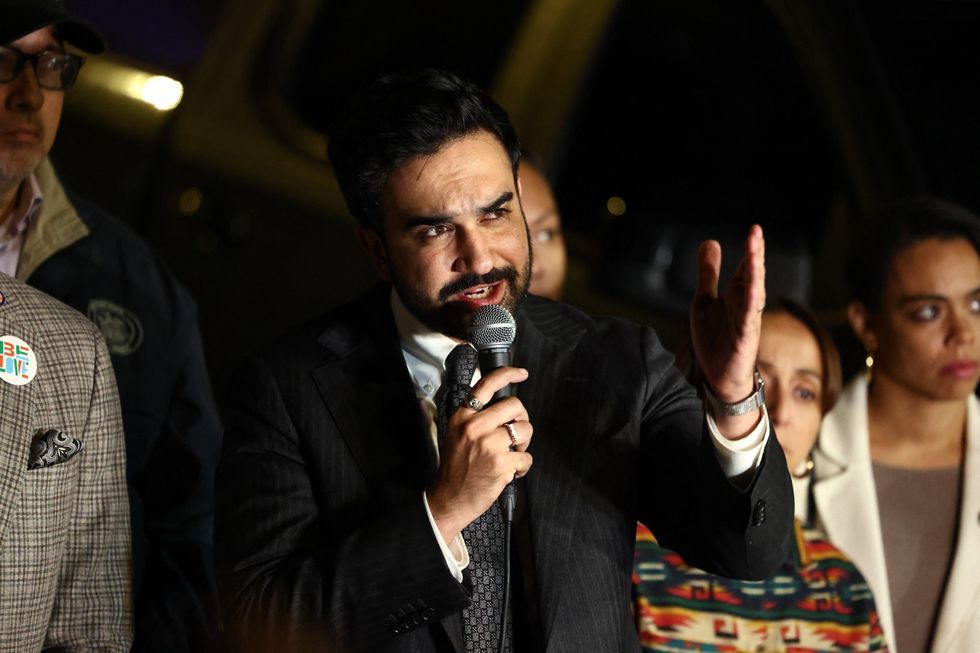 New York mayor Zohran Mamdani Getty Images
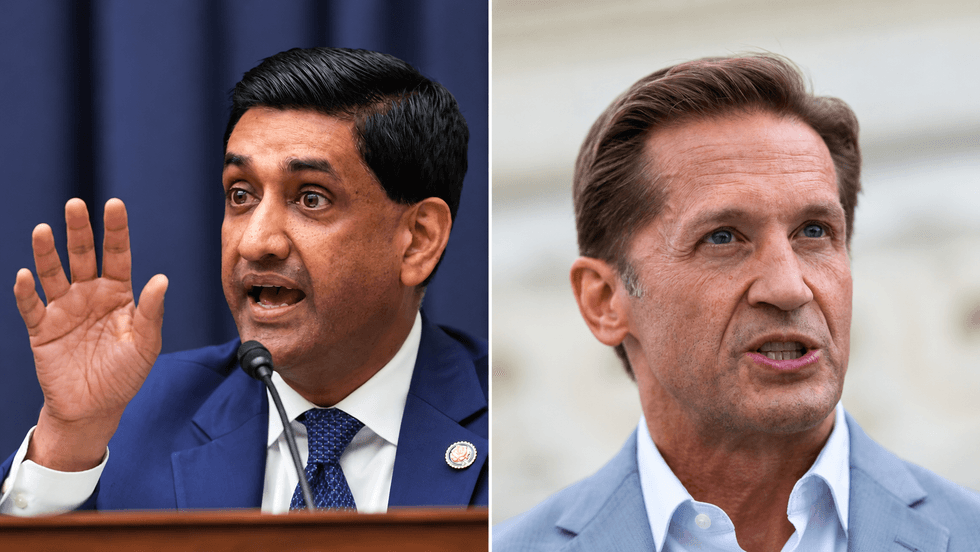 Rich McCormick and Ro KhannaGetty Images