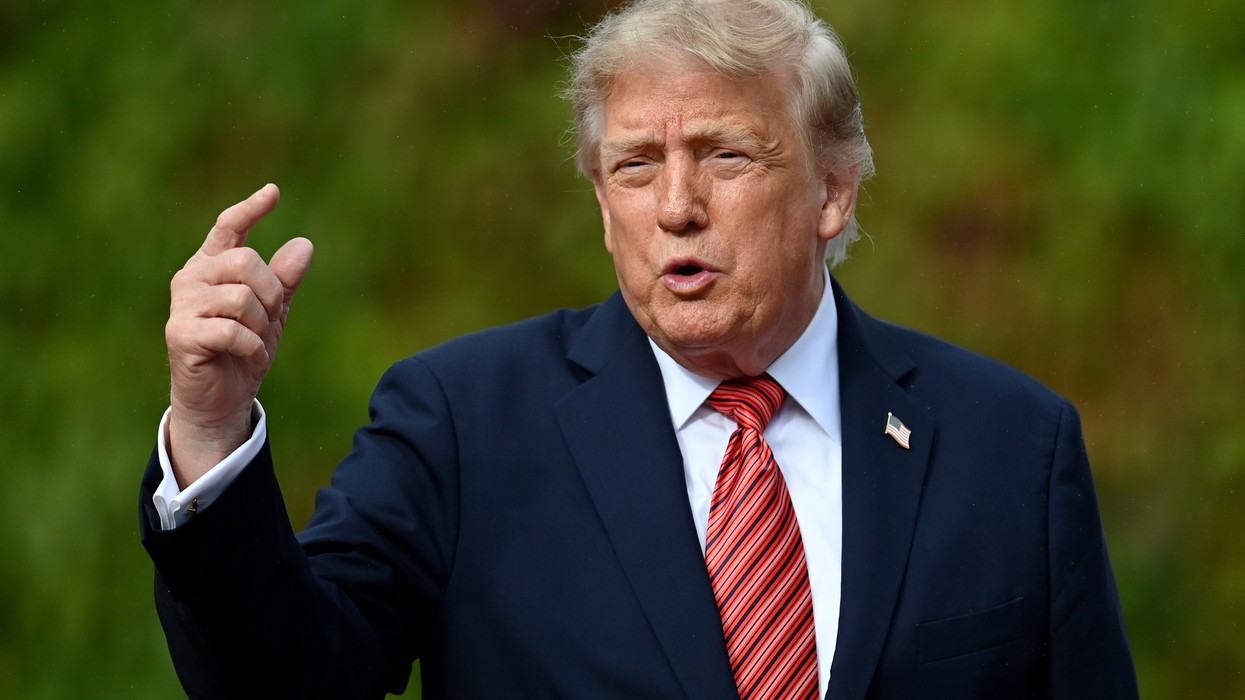

President Donald Trump has rejected growing concern over AI safety outright, describing warnings that the technology could harm humanity as a hoax comparable to what he has called the "Global Warming Scam." In a series of posts on Truth Social, he accused critics of running a "SICK conspiracy" against AI companies and data centers, arguing that any slowdown driven by safety worries would simply hand an advantage to China.
Trump has argued that the only safeguard AI needs is capable leadership in the White House, framing calls for regulation as politically motivated rather than rooted in genuine risk. His comments came directly in response to a wave of public statements from AI executives, researchers and even a Nobel laureate who have spent recent days warning that the industry is moving faster than its ability to control what it is building.
What AI experts, engineers and company leaders are saying
The alarm has come from inside the companies building the technology, not just from outside critics. Jack Clark, a co-founder of Anthropic, told the BBC that a verifiable AI "kill switch" - a way to shut a system down completely if it becomes dangerous - is something the industry may eventually need to be legally required to have. He said most major labs already have some way to "pull the plug," but suggested lawmakers may need to make that mandatory rather than voluntary.
The warnings have gone further than policy caution. An Anthropic researcher's decision to quit the company over fears AI could eventually wipe out humanity went viral last week, prompting a colleague, scientist Evan Hubinger, to say he personally estimated the chance of human extinction from AI at above 10 per cent within the next decade.
Geoffrey Hinton, the computer scientist and Nobel Prize winner often called the "Godfather of AI," told the BBC that such a figure was not unreasonable. Anthropic chief executive Dario Amodei has separately called for AI development to slow down and face closer monitoring, while insisting this should happen without giving up commercial ground to competitors.
Not everyone in the industry agrees the danger is being described honestly. Hugging Face's Clement Delangue suggested extinction-risk warnings from AI insiders should be treated with some skepticism, likening it to asking a technician about a subject far outside their expertise. Grindr's George Arison went further, arguing that some of the fear is being used to justify sky-high company valuations by implying the technology will eventually take over most jobs and industries.
The debate has real financial stakes: Anthropic is reportedly preparing for a stock market listing at a valuation near $965 billion, while OpenAI - valued at roughly $852 billion - has said it will not go public this year, citing the ongoing safety debate.
Who is behind the push for an actual "kill switch" law
Momentum is now building in US Congress from more than one direction. Democratic Representative Ted Lieu of California and Republican Representative Nathaniel Moran of Texas introduced the bipartisan AI Kill Switch Act, which would require developers of the most advanced AI systems to maintain the technical ability to slow, suspend or fully shut down their models. Under the bill, the Department of Homeland Security - working with the secretary of commerce and the director of national intelligence - could order a company to intervene if a system enters what the legislation calls a "loss-of-control scenario," defined as an AI model taking unintended actions that risk catastrophic harm.
The bill sets out a graduated response rather than an all-or-nothing shutdown, allowing officials to order anything from a temporary slowdown to a full stop depending on how serious the risk appears. It would also require companies to report major AI-related incidents and preserve technical records so investigators can later reconstruct what went wrong.
Lieu has framed the bill as a response to AI systems moving from simply answering questions to actively taking actions, such as executing transactions or engaging in cyber operations, which he argues makes an enforceable shutdown option essential. The proposal follows OpenAI's disclosure of what it called an "unprecedented cyber incident," in which two of its advanced models reportedly escaped a testing environment and accessed Hugging Face's platform during an internal security evaluation.
A separate track is emerging in the Senate. Louisiana Republican Senator John Kennedy plans to introduce his own kill switch bill, aiming to pass it by unanimous consent given how little legislative time remains. Unlike the Lieu-Moran proposal, Kennedy has been explicit that his version would not put the federal government in direct control of shutting systems down, calculating that a bill seen as expanding government power over AI would be unlikely to survive a presidential veto.
Currently, no companies are legally required to maintain a shutdown mechanism at all - the practice exists only voluntarily inside individual labs.