
Highlights:
- Taliban FM Amir Khan Muttaqi’s visit marks the highest-level engagement with India since 2021.
- India to reopen its embassy in Kabul, maintaining an “engagement-without-recognition” stance.
- The approach mirrors India’s dealings with Taiwan and Myanmar—functional ties without formal recognition.
- The Taliban’s strained relations with Pakistan have boosted India’s comfort in re-engaging.
- Kabul seeks Indian investment in mining and connectivity projects amid economic isolation.
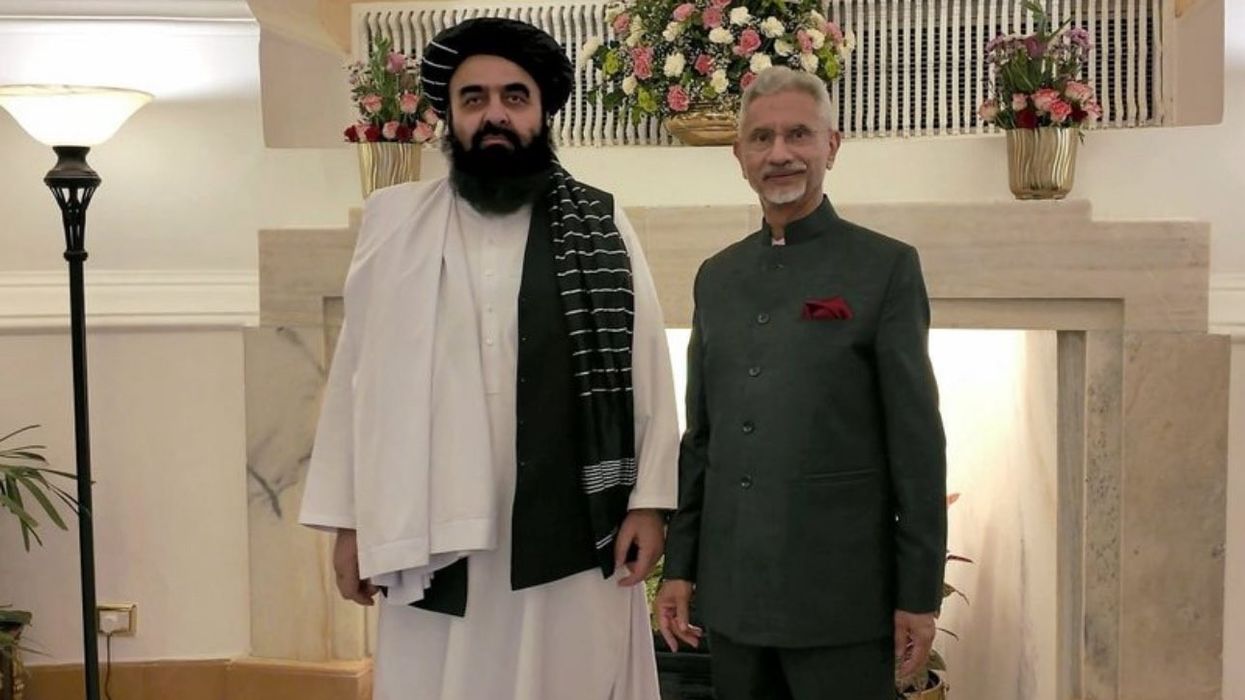
When Afghanistan’s Foreign Minister Amir Khan Muttaqi landed in New Delhi this week, it marked the highest-level visit by a Taliban official to India since the group seized Kabul in 2021. His eight-day stay signifies a major turning point in India-Afghanistan relations—one built on engagement without recognition.
During the visit, India confirmed plans to re-establish its embassy in Kabul, which since June 2022 had been operating as a “technical mission” to coordinate humanitarian aid. Yet, despite reopening full diplomatic operations, New Delhi remains cautious, continuing to withhold formal recognition of the Taliban-led Islamic Emirate of Afghanistan.
This approach encapsulates India’s evolving foreign policy: a pragmatic mix of realism, engagement, and restraint. In diplomatic terms, opening an embassy does not equate to recognizing a government. Recognition is a political act that carries legitimacy, while engagement is about functionality and ground-level cooperation. India has used this “engagement-without-recognition” playbook before—with Taiwan and Myanmar—and is now applying it to Afghanistan.
What happened between India and Afghan embassy?
India’s calibrated approach stems from both legal prudence and geopolitical strategy. International law allows states to interact with de facto authorities without formally recognizing them. For India, this flexibility enables continued humanitarian aid, infrastructure collaboration, and dialogue on terrorism, without legitimizing the Taliban’s violent rise to power.
Interestingly, this arrangement has also reshaped the Afghan Embassy in New Delhi. Once a symbol of the ousted Republic, it now quietly functions under diplomats who, though not officially appointed by the Taliban, operate in tacit cooperation with Kabul. As Muttaqi himself confirmed, “Even those from the former government now work with us.”
This steady evolution reflects India’s assertive use of soft diplomacy, recognizing realities without endorsing them.
What are global context and regional shifts?
India’s policy stands in contrast to the global community’s divided stance. While the United Nations continues to deny the Taliban Afghanistan’s official UN seat due to its poor record on women’s rights and counterterrorism, several nations have found their own versions of engagement.
Russia formally recognized the Taliban in July 2025, while China, the UAE, and Uzbekistan have accepted Taliban-appointed ambassadors. The United States and most Western allies, however, remain opposed to granting legitimacy, citing ongoing human rights abuses.
India’s approach has therefore been shaped by both pragmatism and necessity. The Taliban’s control over nearly all Afghan territory, coupled with the absence of viable opposition forces, has forced regional players—including India—to adopt flexible engagement policies that prioritize stability over ideology.
What was the relationship of India with the Taliban?
Unlike the 1990s, when India supported the anti-Taliban Northern Alliance, New Delhi now acknowledges that the Taliban is a political reality. Three factors have driven this shift.
First, the Taliban has actively courted India, assuring New Delhi that Afghan soil will not be used for anti-India terror activities. This commitment was underscored when Muttaqi condemned the Pahalgam terror attack earlier this year—a gesture that earned praise from External Affairs Minister S. Jaishankar.
Second, the Taliban’s deteriorating relations with Pakistan have opened diplomatic space for India. Clashes along the Durand Line and Kabul’s refusal to suppress the Tehreek-e-Taliban Pakistan (TTP) have strained ties, pushing the Taliban to seek more balanced regional partnerships—including with India.
Third, economic urgency has made Kabul more receptive to Indian engagement. With US aid cut off, Afghanistan is desperate for regional investment. The Taliban has invited Indian firms to invest in the mining sector and reaffirmed support for connectivity projects like the Turkmenistan-Afghanistan-Pakistan-India (TAPI) gas pipeline and the Chabahar Port route through Iran.
Is the act balanced for better future relations?
India’s cautious yet deepening engagement underscores a key tenet of its foreign policy: realism rooted in long-term strategy. Reopening its embassy, continuing humanitarian aid, and encouraging private investment signal confidence in the Taliban’s control without granting legitimacy to its rule.
For New Delhi, Afghanistan remains both an opportunity and a test. The Taliban’s stability, Pakistan’s shifting dynamics, and the return of US interest in the region could all reshape this fragile engagement. For now, India’s approach which is measured, adaptive, and grounded in regional balance—represents a new form of diplomacy for a volatile neighborhood.