
Highlights:
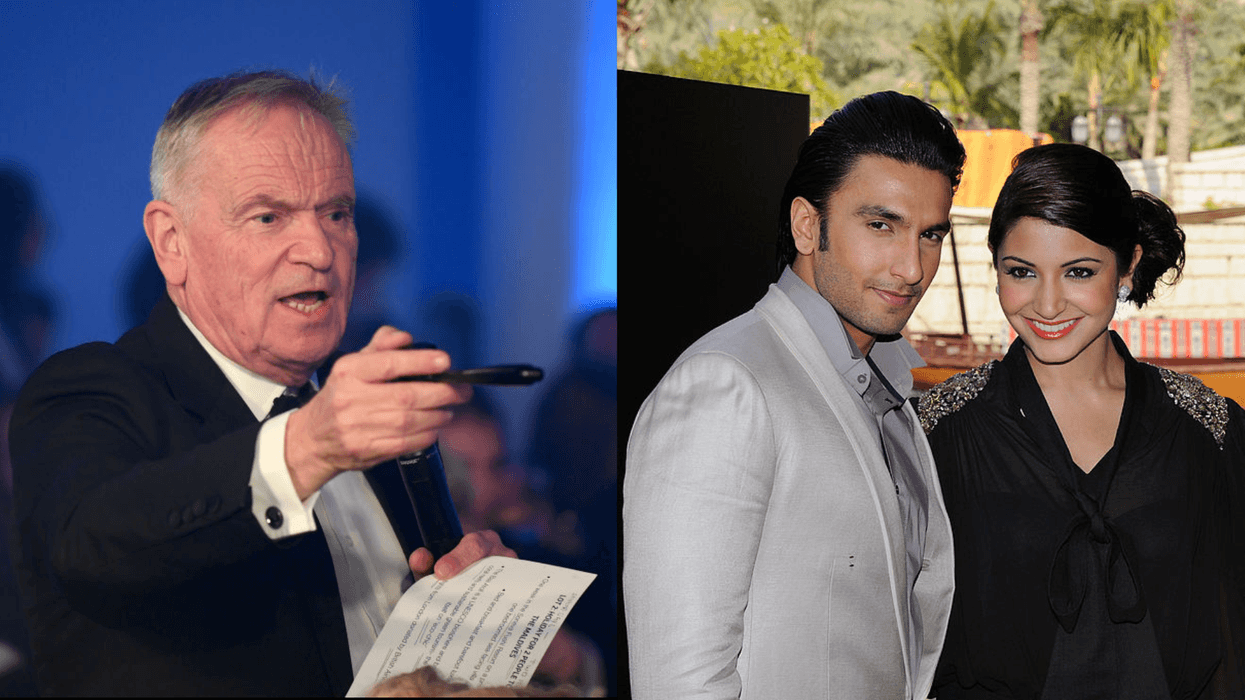
Jeffrey Archer, the British author whose bestselling novels made him one of the most recognizable names in popular fiction, had a complicated relationship with Bollywood. Before his death at 86, Archer made a striking accusation: he claimed that several Hindi films had borrowed plots from his bestselling books without permission.
Two films in particular stood out in his allegations: Ladies vs Ricky Bahl and Khudgarz.
Archer died suddenly and peacefully at his home on Monday, according to his publisher HarperCollins. He had completed Adam and Eve, which was being promoted as the final novel of his five-decade writing career.
But one of the more unusual chapters of his career involved his repeated complaints about the Indian film industry.
Why Did Archer Accuse Ladies vs Ricky Bahl’?
In a 2015 interview, Archer openly criticized Bollywood while discussing his efforts to have his own novels adapted for the screen.
“Just look at your Bollywood! These bunch of thieves have stolen several of my books without so much as a ‘by your leave’. Ladies Vs Ricky Bahl and Khudgarz, and several others,” he said.
One of his claims involved Ladies vs Ricky Bahl, the 2011 romantic crime comedy directed by Maneesh Sharma and starring Ranveer Singh, Anushka Sharma, Dipannita Sharma and Parineeti Chopra.
Archer claimed the film was based on his 1976 bestseller Not a Penny More, Not a Penny Less.
The basic similarity he pointed to was the story of people who have been conned coming together to take on the conman responsible. In Archer’s novel, three men attempt to get revenge on a con artist. In Ladies vs Ricky Bahl, the genders were changed, with three women joining forces against Ranveer Singh’s character, a professional conman who targets women.
The similarities led Archer to publicly question whether his work had been used without authorization.
However, his accusation was never established as a legal finding of plagiarism, and the film was officially released by Yash Raj Films.
What about Khudgarz?
Archer also pointed to Rakesh Roshan’s 1987 directorial debut, Khudgarz.
He alleged that the film drew from his 1979 bestseller Kane and Abel, which follows two men from very different backgrounds whose lives become intertwined through rivalry and ambition.
Khudgarz similarly centered on two feuding brothers, played by Shatrughan Sinha and Jeetendra. The film also featured Amrita Singh, Govinda and Neelam.
Again, Archer publicly made the comparison, but there was no court ruling establishing that the film had plagiarized his novel.
The strange twist in Archer’s Bollywood story
What makes Archer’s relationship with Bollywood particularly intriguing is that his criticism did not stop him from pursuing official collaborations with Indian filmmakers.
He had been seeking an Indian partner to adapt his books and reportedly sold adaptation rights to First Among Equals and the short story A La Carte.
He was also in discussions involving Kane and Abel, while filmmaker Hansal Mehta had previously developed a television project loosely based on the novel.
Archer even planned a novel set partly in India and centered around a Bollywood heroine. That project, however, was never published.
For an author who once called Bollywood “a bunch of thieves,” his continued fascination with the Indian film industry created an unusual contradiction.
He accused Bollywood of taking his stories, while simultaneously hoping that Bollywood would officially bring those stories to the screen.
Whether the similarities he identified were coincidence, adaptation or something more remains a matter of interpretation. But Archer’s accusations left behind one enduring question: Did Bollywood really borrow from Jeffrey Archer, or did familiar storytelling simply bring two very different worlds together?












 Dia Mirza's second marriage, to businessman Vaibhav Rekhi Instagram/diamirzaofficial
 Dhurandhar BTSInstagram/@adityadharfilms
 Gaurav Gera in DhurandharInstagram/@