
Highlights:
Pakistan has deployed around 8,000 troops, fighter jets, drones, and an air defense system to Saudi Arabia under a mutual defense agreement, even as Islamabad continues to present itself as a mediator in the Iran conflict.
According to a Reuters report, three Pakistani security officials and two government sources confirmed the deployment. They described it as a large combat-ready force meant to strengthen Saudi Arabia’s defenses if more attacks take place in the region.
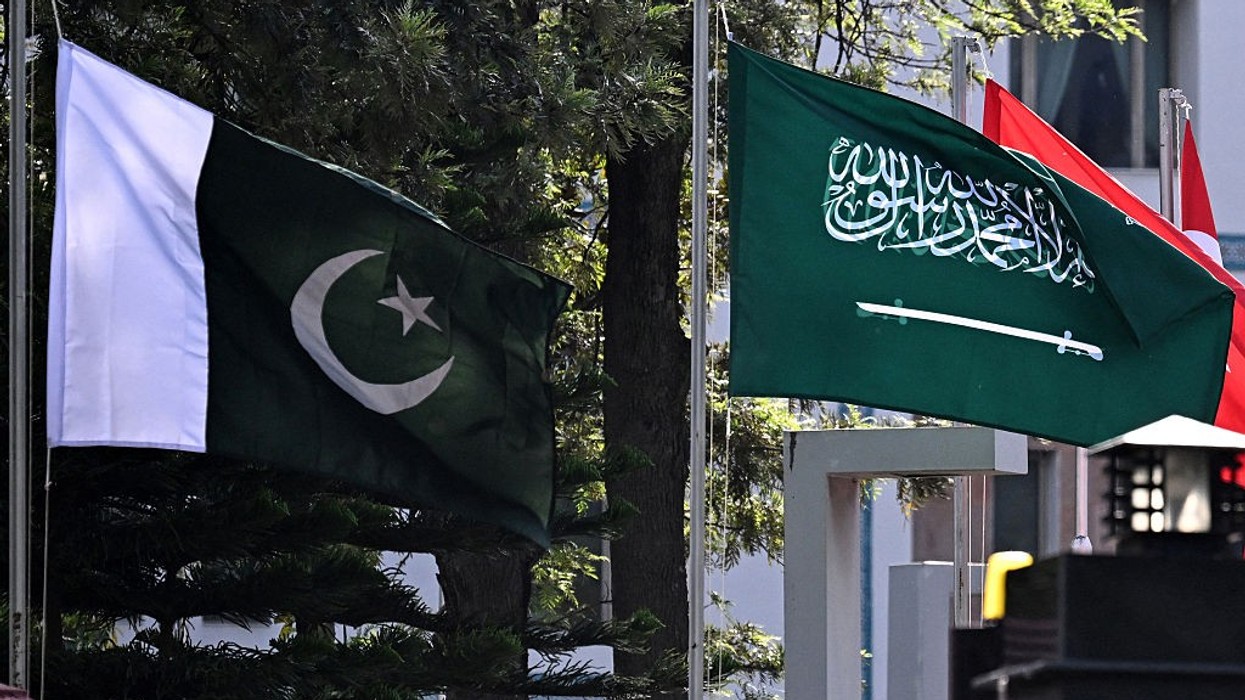
The deployment comes under a defense agreement signed last year between Pakistan and Saudi Arabia. The full details of the pact have not been made public. However, both countries have stated that the agreement requires each side to defend the other if either country comes under attack.
Pakistan’s defense minister Khawaja Asif had earlier suggested that the arrangement effectively extends Pakistan’s nuclear protection to Saudi Arabia.
The report said Pakistan deployed around 16 aircraft, most of them JF-17 fighter jets jointly developed with China. The aircraft were sent in early April. Two security officials also said that two squadrons of drones were included in the deployment.
All five sources quoted in the report said the package also includes a Chinese HQ-9 air defense system. The military equipment is being operated by Pakistani personnel, while Saudi Arabia is paying for the deployment.
According to two security officials cited in the report, the Pakistani military and air force personnel deployed as part of the response to the Iran conflict are mainly carrying out advisory and training roles.
The latest deployment adds to the thousands of Pakistani troops already stationed in Saudi Arabia under earlier agreements. Three security officials said some of those forces are already serving in combat-support positions.
One government source familiar with the confidential defense agreement said the pact allows for the possible deployment of as many as 80,000 Pakistani troops to Saudi Arabia. The troops would mainly help secure borders alongside Saudi forces.
Two officials also said the arrangement includes a naval component involving Pakistani warships. However, the report said it could not independently confirm whether any warships have already been deployed.
The combination of combat aircraft, air defense systems, drones, and thousands of troops suggests that the mission goes beyond a limited advisory role, according to the report.
Pakistan had previously sent fighter jets to Saudi Arabia after Iranian strikes on important energy facilities that resulted in the death of a Saudi national. At the time, Gulf countries feared the conflict could grow larger. That deployment happened before Pakistan emerged as a major intermediary in the crisis and helped support ceasefire efforts between Washington and Tehran.
Later, several reports claimed that Saudi Arabia carried out covert strikes on Iranian targets in response to attacks inside Saudi territory.
Pakistan and Saudi Arabia have maintained close defense ties for many years. Pakistan has provided military training and advisory support to Saudi Arabia, while Riyadh has often offered financial assistance to Pakistan during economic crises.
The latest developments also highlight Pakistan’s increasingly difficult position in the West Asia conflict.
Since late March, Pakistan has tried to act as a key backchannel between the United States and Iran. Islamabad hosted the only publicly known round of direct talks between US and Iranian officials. Senior US leaders, including Vice President JD Vance, also traveled to Islamabad for meetings with Iranian representatives.
Pakistan’s army chief, Field Marshal Asim Munir, reportedly held several conversations with US President Donald Trump during the conflict. Trump later said he paused further military escalation against Iran after discussions with Munir and Prime Minister Shehbaz Sharif.
Iran’s Supreme National Security Council later agreed to participate in negotiations hosted in Pakistan.
However, while Islamabad continues to mediate between Washington and Tehran, it has also deployed combat-capable forces to support Saudi Arabia, a key American ally in the Gulf. The development reflects the growing pressures shaping Pakistan’s regional strategy