
Highlights:
The United States considered its nearly finalized trade deal with India when deciding to waive sanctions targeting buyers of Russian oil, Secretary of State Marco Rubio said Monday (19), signaling how energy security and bilateral economic ties are shaping Washington’s approach to New Delhi.
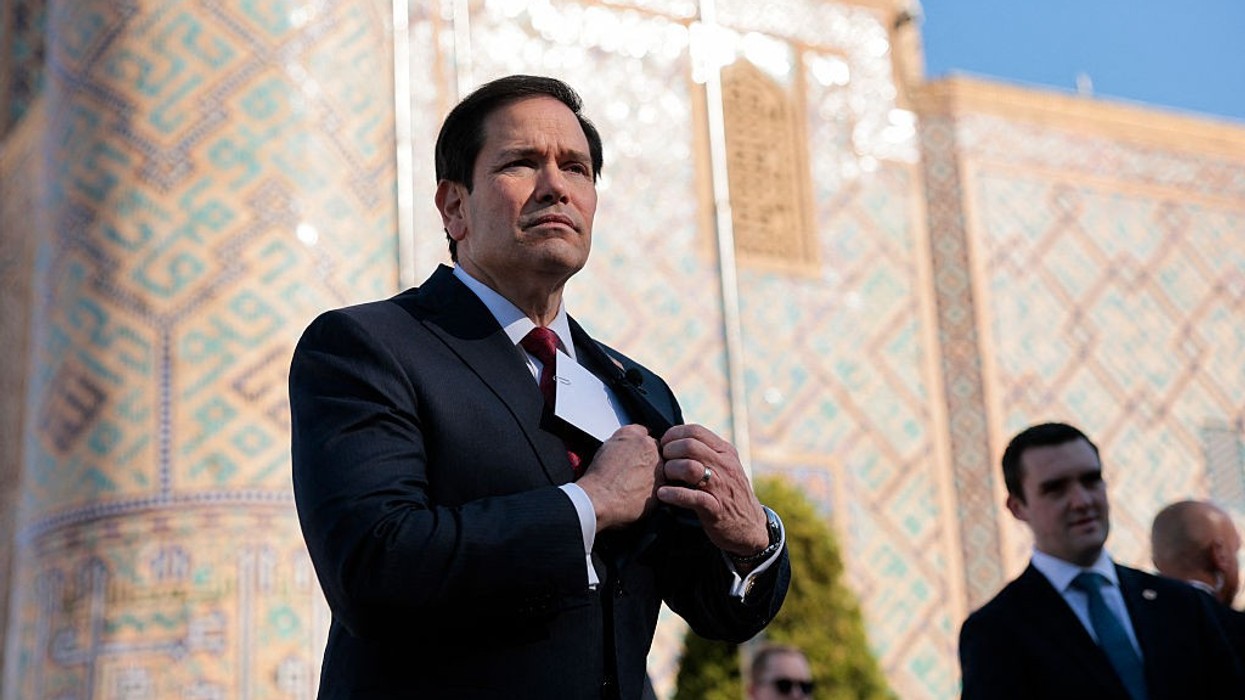
“We’re trying to finalise a trade deal with India right now. We’re very close to doing that. So that’s one of the things we’ve taken into consideration..” Rubio said during a press conference in Uzbekistan on Monday (19).
His remarks offer a significant indication that India-US trade negotiations were among the factors considered in Washington’s decision to pause provisions of the Lindsey O. Graham Sanctioning Russia and Iran Act of 2026. The move has eased the immediate threat of steep US tariffs linked to purchases of Russian oil, a major point of contention between the two countries.
For India, the decision comes amid mounting pressure to secure affordable energy supplies while managing rising domestic inflation. It also offers a potential opening for New Delhi and Washington to resolve a key obstacle to their trade agreement.
Why India’s Russian oil purchases matter
India’s dependence on imported energy has made Russian crude a sensitive issue in its relationship with Washington. The United States has sought to pressure Moscow over its war against Ukraine, while India has maintained that its energy procurement decisions must account for domestic requirements, market conditions and the availability of alternative suppliers.
Rubio acknowledged that countries face different constraints when sourcing energy and said those realities must inform US foreign policy.
“We have had to waive sanctions over the past few months, looking at the global supplies, looking at global prices, and the impact it was having on other countries. I know diesel prices are high in the United States, but they’re really, really high in a bunch of other countries around the world, and then we have to manage all of these things,” he said.
He added that replacing Russian energy supplies is not equally straightforward for every country.
“That’s not an excuse, but all that has to be balanced when you make foreign policy,” Rubio said.
His comments suggest that Washington’s approach is being shaped not only by its objective of pressuring Russia but also by the economic consequences of restricting energy supplies for countries that rely on them.
Trade negotiations and energy security intersect
The potential trade agreement has gained added importance as both governments work to narrow their differences over tariffs and market access. The threat of 100 per cent US tariffs linked to Russian oil purchases had emerged as a major sticking point in negotiations.
Rubio emphasized that Washington’s foreign policy calculations extend beyond the Russia-Ukraine conflict.
“The foreign policy of the United States, of course, takes into account what’s happening with the war between Russia and Ukraine, but it is not solely dominated by that. It hasn’t taken into account a variety of other factors, including our bilateral relationships with other countries, and what they realistically are capable of being able to do in terms of their own energy supplies. You also can’t unravel the economy of other countries because of one central issue. So that’s the complex part of having to balance all this,” he said.
For New Delhi, the comments reinforce the importance of framing energy purchases as a matter of national economic stability rather than solely as a geopolitical choice.
India’s Ministry of External Affairs has said the government remains committed to ensuring energy security “through diversified sourcing and based on evolving market dynamics.” It has also said the implications of the proposed US legislation for bilateral relations and global energy markets were raised in discussions with American representatives.
Rising fuel prices add pressure
The sanctions decision comes as both countries face domestic concerns over energy costs and inflation. In the United States, diesel prices averaged $6.18 per gallon as of October 12, up from $3.48 at the beginning of the year, according to figures cited by the Council on Foreign Relations and the US Energy Information Administration.
India is also facing inflationary pressures. Retail inflation rose to 5.54 per cent in September from 4.83 per cent in August, while food inflation increased to 7.74 per cent, according to the figures cited in the report.
Higher energy costs can place additional pressure on households, businesses and policymakers, making access to reliable supplies an important economic consideration for New Delhi.
Rubio is expected to visit Mumbai on October 20 for talks with India's external affairs minister S. Jaishankar. The discussions will take place as both countries seek to advance their trade negotiations and manage differences over India’s energy ties with Russia.
While Rubio’s remarks do not confirm that a trade agreement is imminent or that the sanctions waiver guarantees a final deal, they make clear that Washington has considered its relationship with India in weighing its Russia-related policy. For New Delhi, the immediate priority remains securing energy supplies while converting the diplomatic opening into progress on trade.